
Tire pressure and TPMS play a critical role in your vehicle’s safety, fuel efficiency, and tire lifespan. Simply put, correct tire pressure keeps your car stable and efficient, while TPMS (Tire Pressure Monitoring System) alerts you when pressure drops to unsafe levels.
Many drivers rely only on the dashboard warning light, but in real world driving, that’s not enough. Understanding how tire pressure and TPMS work together helps you prevent blowouts, improve traction, and avoid unnecessary tire wear.
What Tire Pressure Actually Does
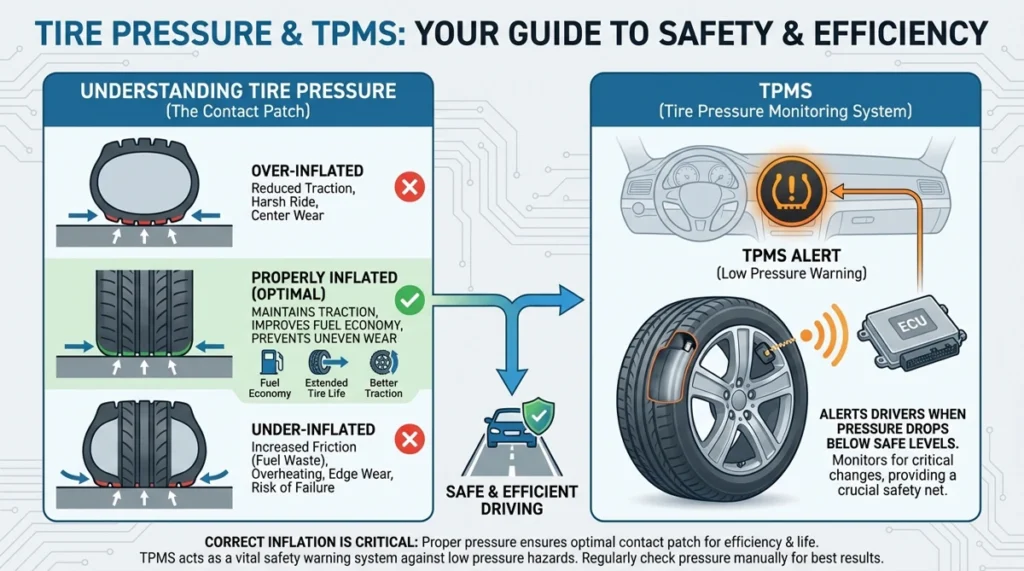
Tire pressure controls how much of your tire touches the road. This area is called the contact patch.
When pressure is correct:
- The tire grips the road evenly
- Braking feels stable
- Fuel efficiency improves
- The tire flexes more
- Heat builds up (major cause of blowouts)
- Steering feels heavy
When pressure is too high:
- The center of the tire wears faster
- Ride becomes stiff
- Traction drops, especially in rain
In real driving, underinflated tires often feel draggy, while overinflated tires feel bouncy and unstable on rough roads.
What is an ideal tire pressure
Many drivers think that 30-32 is an ideal tire pressure for CAR and 32-35 for an SUV but in reality it is not.
Why Tire Pressure Matters More Than You Think
Tire pressure determines how much of the tire touches the road. Engineers call this the contact patch.
When tires are inflated correctly, the contact patch spreads weight evenly across the tread. This allows the tire to grip the road properly during braking, acceleration, and cornering.
However, when tire pressure drops too low, the tire begins to deform. The sidewalls flex excessively while driving, which generates heat inside the tire. Over time, this heat weakens the tire structure and can lead to blowouts.
On the other hand, overinflated tires create a smaller contact patch. This concentrates the vehicle’s weight in the center of the tread and reduces traction.
Maintaining proper tire pressure ensures:
Better braking performance
Longer tire life
Improved fuel efficiency
More stable handling
Because of these benefits, tire pressure is one of the simplest ways to improve vehicle safety.
Recommended Tire Pressure
Most vehicles require between 30 and 35 PSI, but the exact number depends on your vehicle.
Instead of using the number printed on the tire sidewall, always check your driver side door sticker or owner’s manual.
TPMS Warning Lights (What They Mean)
Your dashboard tire pressure light usually turns on when one or more tires are significantly underinflated.
However, the meaning can vary depending on whether the light is solid or flashing.
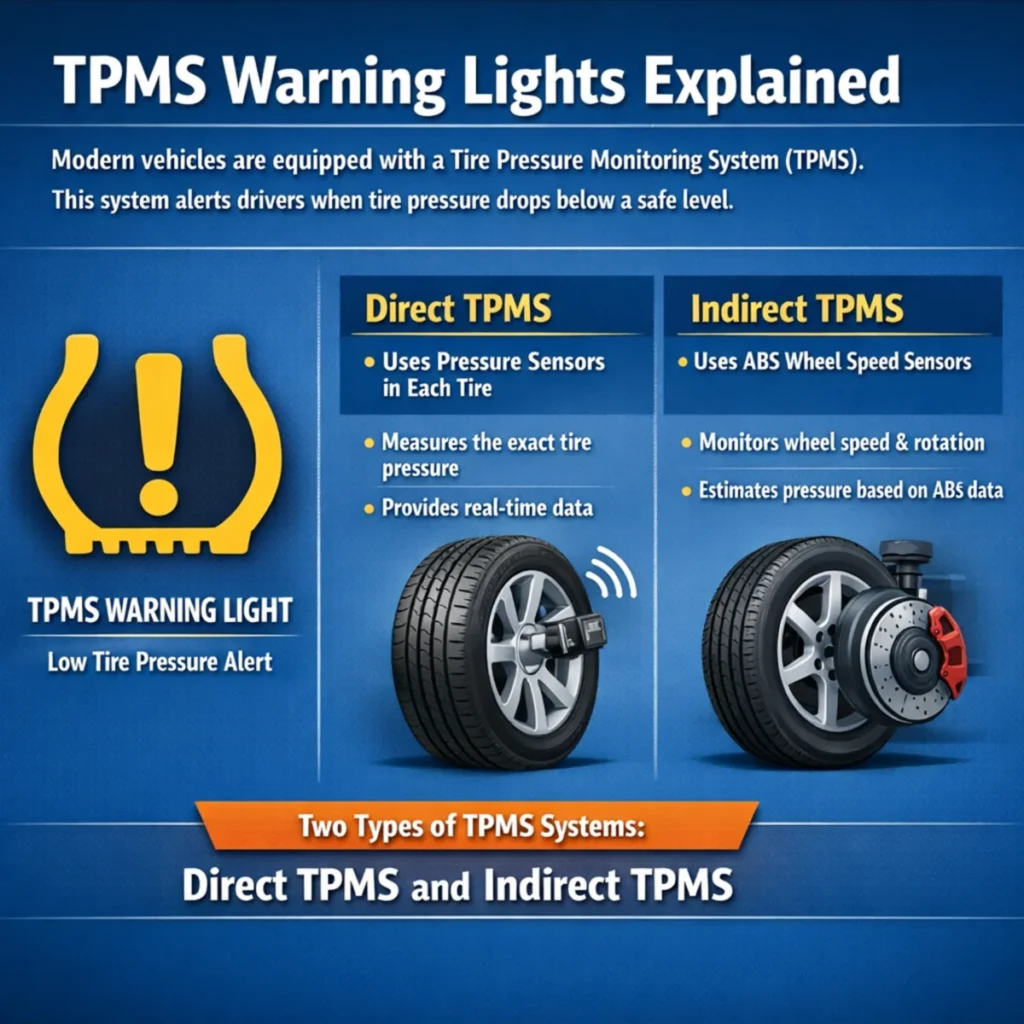
Important TPMS Limitation
Although TPMS is helpful, it has limitations. Most systems trigger only when tire pressure drops about 25% below the recommended level.
In other words, your tires may already be significantly underinflated before the warning light appears. For this reason, manual pressure checks remain important.
Nitrogen vs Air in Tires
Some tire shops offer nitrogen inflation instead of regular compressed air. Nitrogen is often marketed as a premium option that improves tire performance.
In reality, regular compressed air already contains about 78% nitrogen.
The main advantage of pure nitrogen is that it escapes through rubber slightly slower than oxygen. This means tire pressure may remain stable for a longer period.
However, for everyday driving, the difference between nitrogen and regular air is relatively small. What matters most is maintaining the correct pressure.
Nitrogen inflation is mainly beneficial for racing vehicles, aircraft, and heavy commercial fleets where precise pressure control is essential.
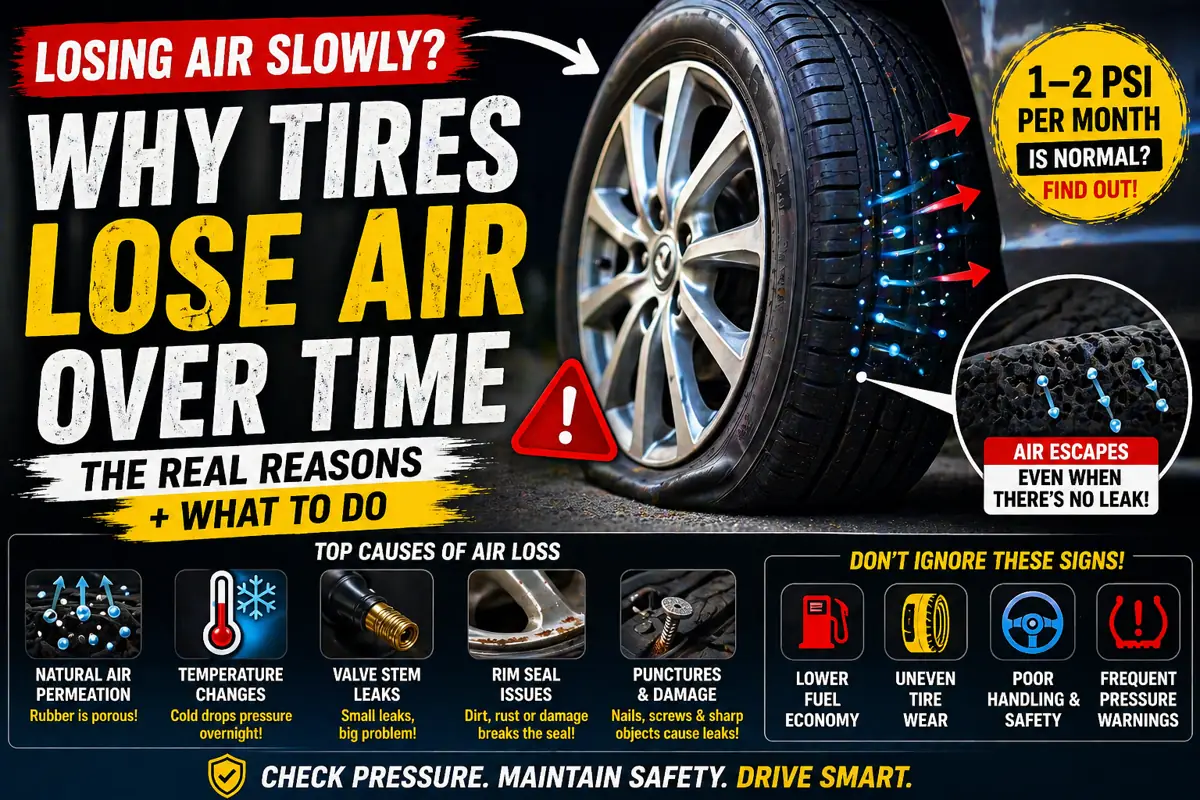
Why Tires Lose Air Over Time
Even perfectly sealed tires gradually lose air. This process occurs because small air molecules slowly pass through the rubber structure.
On average, tires lose 1–2 PSI per month due to natural air diffusion.
Other common causes of air loss include:
Temperature changes
Small punctures
Valve stem leaks
Rim corrosion
Damaged tire beads
Slow air leaks may not immediately trigger the TPMS warning light. Therefore, regular tire pressure checks help identify problems early.
If a tire consistently loses pressure faster than normal, it should be inspected by a professional.
Underinflation vs Overinflation Risks
Incorrect tire pressure affects how a vehicle handles and how quickly tires wear.
Underinflated Tires
Underinflated tires flex more while driving. This increases rolling resistance and causes excessive heat buildup.
Common problems caused by underinflation include:
Reduced fuel economy
Faster shoulder tread wear
Poor steering response
Increased blowout risk
Underinflation is considered one of the most common causes of tire failure.
Overinflated Tires
Overinflated tires create a smaller contact patch with the road. This reduces traction and causes uneven center tread wear.
Drivers may also notice a harsher ride because the tire absorbs fewer road vibrations.
Both underinflation and overinflation shorten tire lifespan and reduce safety.
Temperature Effects on Tire Pressure
Temperature has a direct impact on tire pressure.
As temperature drops, the air inside the tire contracts. When temperature rises, the air expands.
A common rule used by mechanics is:
Tire pressure changes about 1 PSI for every 10°F change in temperature.
During winter, this effect can cause tire pressure to drop quickly. Many drivers notice the TPMS warning light appear on cold mornings for this reason.
Checking tire pressure regularly during seasonal changes helps maintain proper inflation.
How to Check Tire Pressure Correctly
Checking tire pressure is simple and takes only a few minutes.
However, accurate measurements require checking the tires when they are cold. This means the vehicle has been parked for several hours or driven less than one mile.
To check tire pressure:
Remove the valve cap from the tire.
Press a tire pressure gauge firmly onto the valve stem.
Read the pressure value displayed on the gauge.
Compare the reading with the recommended PSI.
Add or release air as necessary.
Replace the valve cap.
Experts recommend checking tire pressure once per month and before long trips.
Common Tire Inflation Myths
Many tire maintenance mistakes come from common myths.
One widespread misconception is that the PSI number printed on the tire sidewall indicates the correct inflation pressure. In reality, this number represents the maximum pressure the tire can safely hold.
Another myth is that TPMS eliminates the need for manual pressure checks. While TPMS provides helpful warnings, it does not detect small pressure losses immediately.
Some drivers also believe that slightly higher tire pressure improves fuel economy. Although higher pressure may reduce rolling resistance slightly, it also reduces traction and increases uneven wear.
The safest approach is always to follow the vehicle manufacturer’s recommended tire pressure.
Conclusion:
Tire pressure affects safety, efficiency, and tire lifespan more than many drivers realise.
Maintaining proper tire pressure ensures that the tire’s contact patch distributes weight evenly, allowing the tire to grip the road effectively.
Although modern vehicles include TPMS systems, drivers should still check tire pressure regularly. Temperature changes, natural air loss, and small leaks can gradually reduce pressure without immediate warning.
By monitoring tire pressure and maintaining correct inflation levels, drivers can improve vehicle safety and extend the life of their tires.
Tire Pressure, Air & TPMS FAQ
How often should tire pressure be checked?
Most experts recommend checking tire pressure once per month and before long trips.
What is the correct tire pressure for my car?
The recommended tire pressure is listed on the driver-side door jamb sticker or in the vehicle owner’s manual.
Does cold weather lower tire pressure?
Yes. Tire pressure drops about 1 PSI for every 10°F decrease in temperature.
Can I rely only on TPMS?
No. TPMS alerts drivers when tire pressure drops significantly, but it does not replace regular manual pressure checks.
Is nitrogen better than air in tires?
For most drivers, nitrogen provides only a small benefit. Maintaining proper tire pressure is more important than the type of gas used.
What happens if tire pressure is too high?
Overinflated tires reduce traction, cause uneven center tread wear, and create a harsher ride.
