


How Long You Can Drive on a Spare Tire (Complete Safety Guide)
A flat tire can happen anytime, and installing a spare tire is often the quickest way to get moving again. However, many drivers are unsure how long you can drive on a spare tire and what limits they should follow.
Driving too far or too fast on a spare tire can lead to serious safety risks, including reduced control, tire failure, or damage to your vehicle. Understanding how long you can drive on a spare tire helps you stay safe and reach a repair shop without causing further problems.
How Long Can You Drive on a Spare Tire?
The answer depends on the type of spare tire you are using.
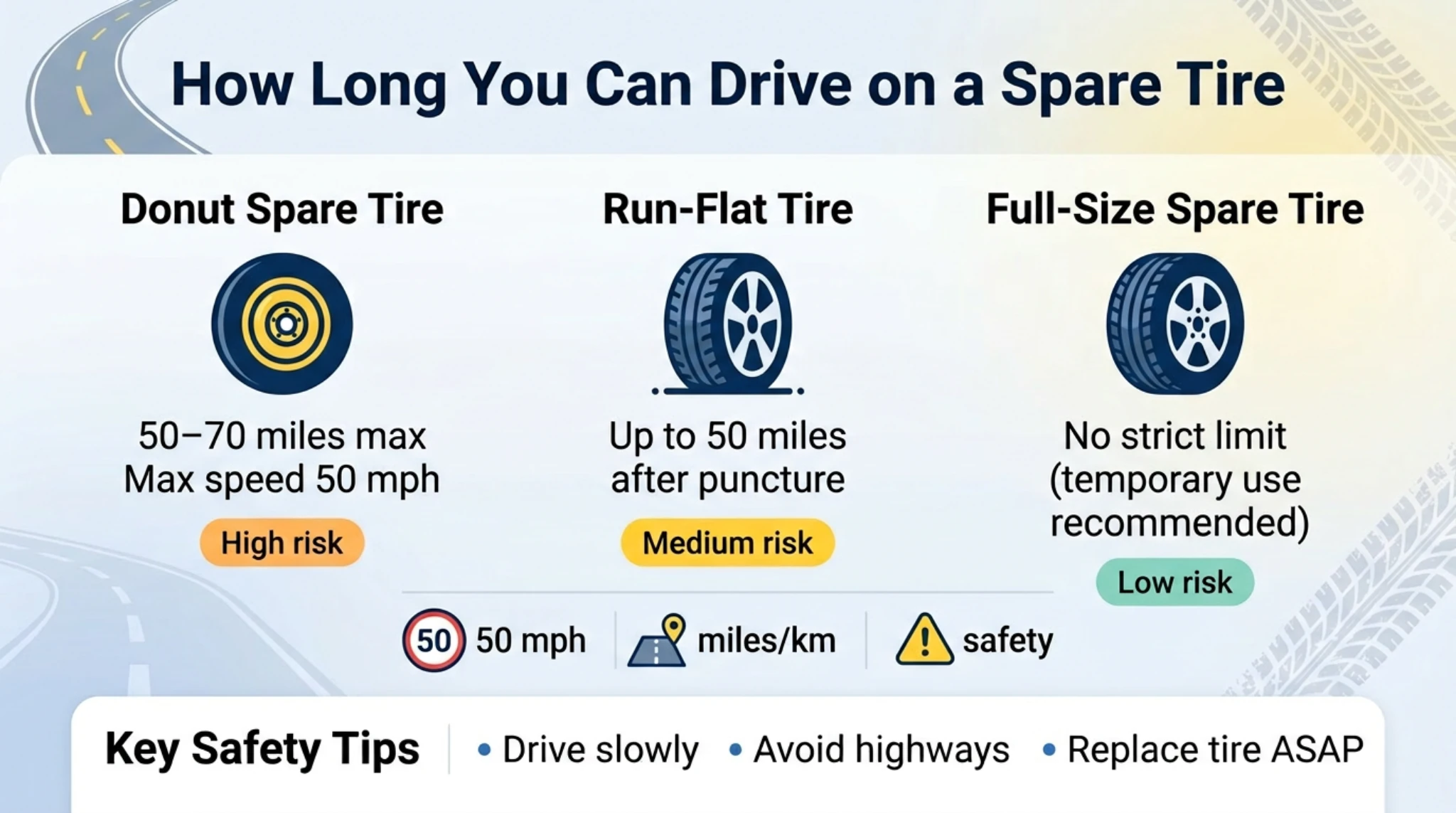
- Donut spare: 50–70 miles at up to 50 mph
- Run-flat tires: up to 50 miles after air loss
- Full-size spare: longer use possible (temporary recommended)
Spare Tire Limits by Type
| Tire Type | Max Distance | Max Speed | Risk Level |
|---|---|---|---|
| Compact (Donut) | 50–70 miles | 50 mph | High |
| Run-flat | ~50 miles | 50 mph | Medium |
| Full-size spare | No strict limit | Normal speeds | Low |
This table helps drivers quickly understand how long you can drive on a spare tire based on the type installed.
Why Spare Tire Limits Matter
Spare tires are not built for long-term driving. Ignoring limits can lead to:
Tire overheating
Reduced braking performance
Poor handling and stability
Increased risk of blowouts
Therefore, knowing how long you can drive on a spare tire is essential for safe driving.
Real Driving Scenarios: What Happens in Real Life
Most drivers don’t drive under perfect conditions. Here’s what to expect:
Driving on the Highway
High speeds increase heat and pressure on the spare tire, which can lead to failure.
👉 Avoid highways if possible when using a donut spare.
Driving at Night or in Traffic
Limited visibility and reaction time increase risks when your vehicle handling is reduced.
Driving to “Just Get Home”
Many drivers push beyond safe limits to reach home. However, this increases the chance of breakdown or damage.
It’s safer to stop at the nearest repair shop instead.
Should You Keep Driving or Stop Immediately?
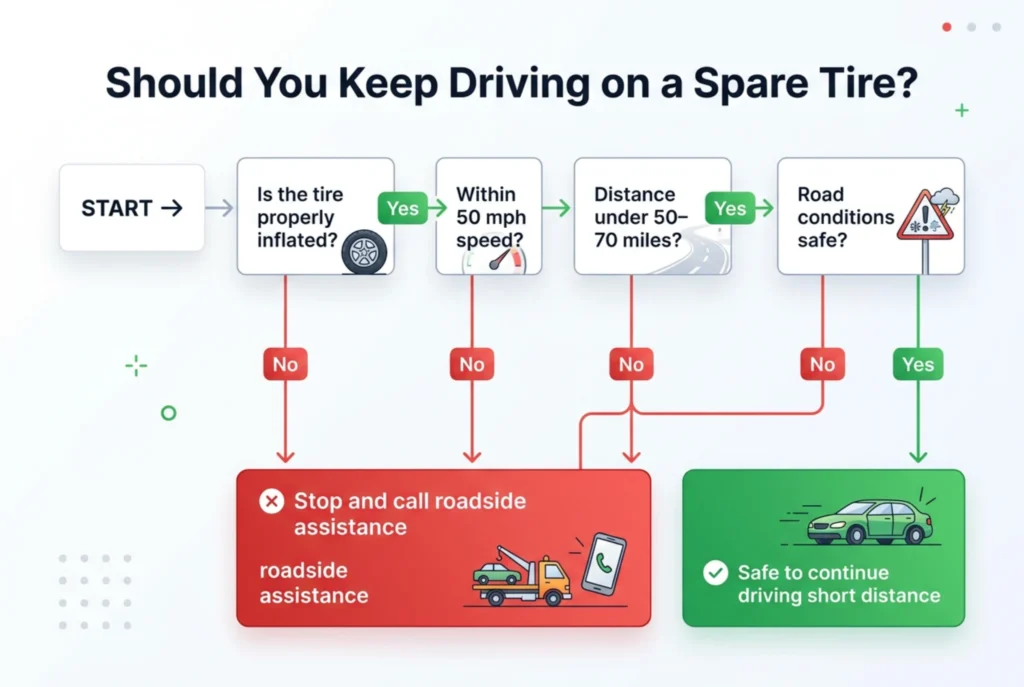
Use this quick decision guide:
You Can Continue Driving If:
- The spare tire is properly inflated
- You are within speed limits
- The road conditions are safe
- The distance is short
Stop Driving Immediately If:
- You feel vibration or instability
- The tire looks damaged
- You exceed recommended distance
- You are driving in unsafe conditions
This helps drivers decide how long you can drive on a spare tire in real situations.
Why Spare Tires Are Risky for AWD Vehicles
Vehicles with all-wheel drive (AWD) are more sensitive to tire differences.
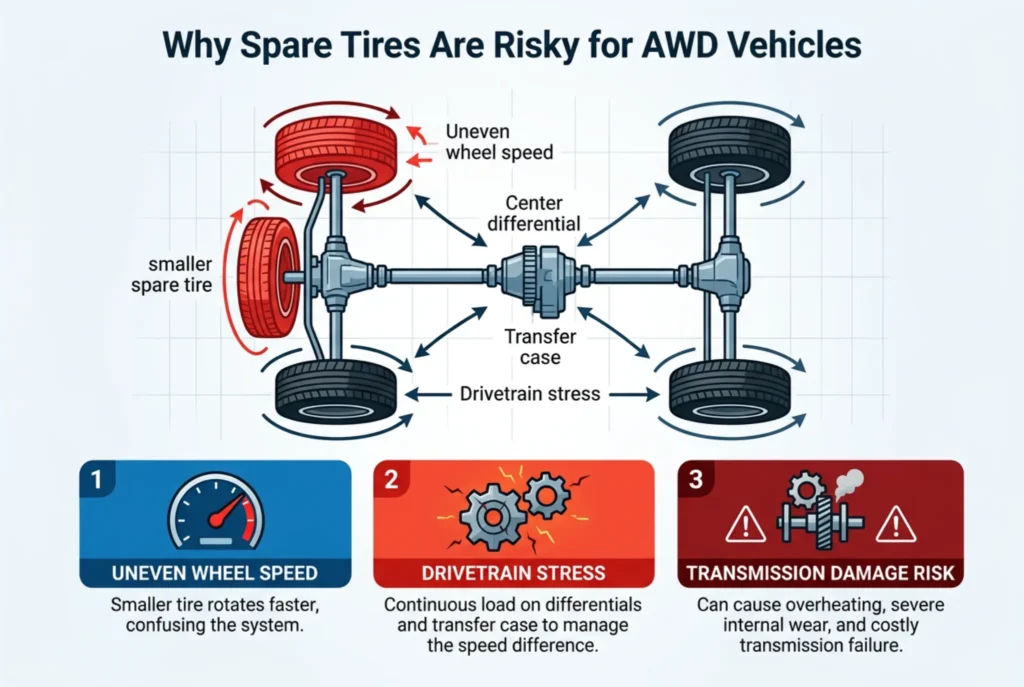
Using a spare tire can:
- Cause uneven wheel rotation
- Stress the drivetrain
- Damage the transmission over time
For AWD vehicles, driving even short distances on a spare tire should be minimized.
Where Should You Install a Spare Tire?
This is a commonly overlooked detail.
- If a front tire fails, move a rear tire to the front
- Install the spare tire on the rear axle
This improves stability and reduces steering risk.
Factors That Affect How Long You Can Drive on a Spare Tire
Several conditions can shorten safe driving distance:
Driving Speed
Higher speeds generate heat, increasing failure risk.
Road Conditions
Wet, rough, or uneven roads reduce traction and stability.
Vehicle Load
Heavy loads put more pressure on the spare tire.
Tire Condition
Old or underinflated spare tires fail faster.
What Most Drivers Do Wrong
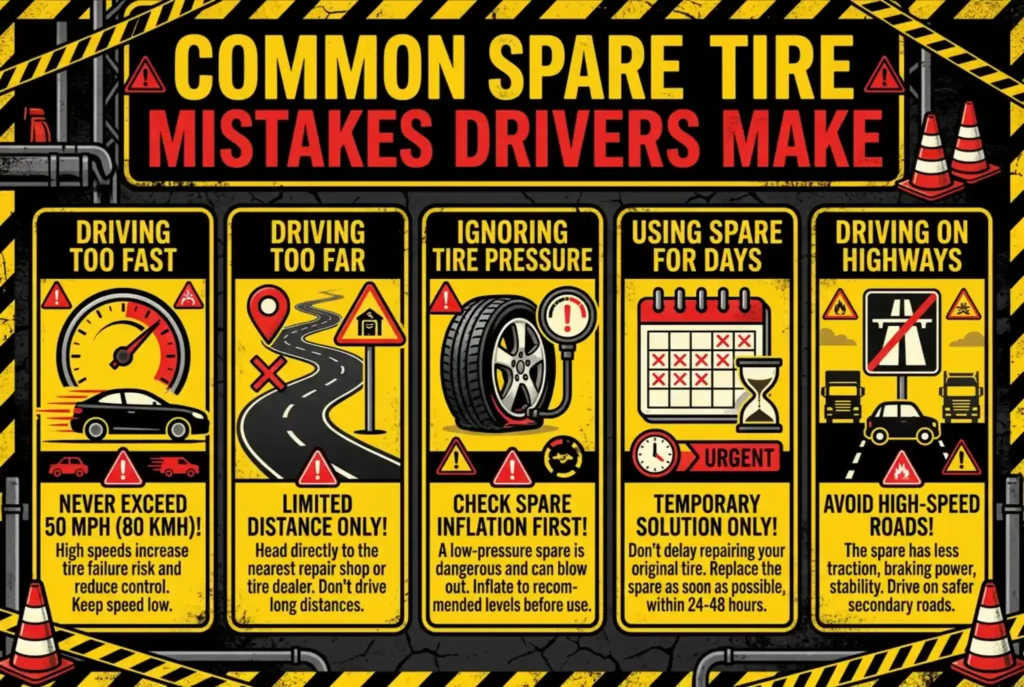
Many drivers make mistakes that increase risk:
- Driving too fast on a spare tire
- Using a spare tire for days or weeks
- Ignoring tire pressure
- Driving long distances unnecessarily
- Assuming all spare tires are the same
Avoiding these mistakes helps you stay within safe limits.
Risks of Driving Too Long on a Spare Tire
Driving beyond limits can cause serious problems:
Tire Failure
Temporary tires wear out quickly and may fail suddenly.
Reduced Handling
Spare tires often have less grip, affecting control.
Vehicle Damage
Extended use can damage suspension or drivetrain components.
What to Do After Installing a Spare Tire
After installing a spare:
- Drive slowly and carefully
- Avoid highways and long trips
- Head to the nearest repair shop
- Replace or repair the damaged tire immediately
A spare tire should always be treated as a temporary solution.
Safety Tips for Driving on a Spare Tire
✔ Keep speed under 50 mph
✔ Avoid sharp turns and sudden braking
✔ Check tire pressure before driving
✔ Drive the shortest distance possible
✔ Replace the tire as soon as possible
Conclusion: Drive Safely and Replace Quickly
Understanding how long you can drive on a spare tire helps you avoid accidents and costly damage. While spare tires are useful in emergencies, they are not designed for long-term use.
By following recommended limits and driving carefully, you can safely reach your destination. Knowing how long you can drive on a spare tire ensures better decisions and safer driving in unexpected situations.
Frequently Asked Questions
How far can you drive on a donut spare tire?
Most donut spare tires can be driven for 50–70 miles at speeds below 50 mph.
Can you drive on a spare tire for a week?
No, spare tires are temporary and should only be used until the original tire is repaired or replaced.
What happens if you drive too fast on a spare tire?
Driving too fast can cause overheating, reduced control, and possible tire failure.
Is it safe to drive on the highway with a spare tire?
It is not recommended, especially with compact spare tires due to speed limitations.
Can AWD vehicles use spare tires safely?
They can, but only for short distances. Prolonged use may damage the drivetrain.
