

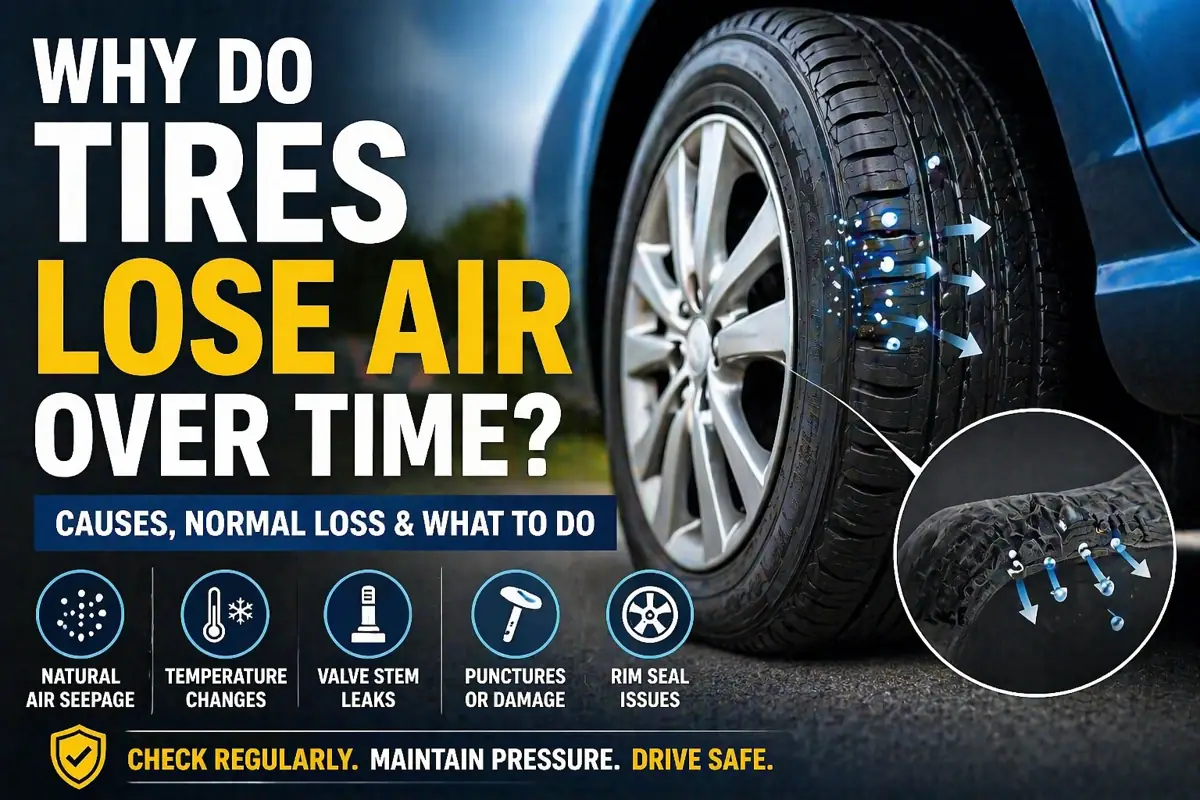
Tires lose air over time due to natural air seepage, temperature changes, and everyday driving conditions. On average, a tire can lose about 1–2 PSI per month even without damage.
However, if your tire is losing air quickly or repeatedly, it may indicate a problem such as a puncture, valve leak, or rim issue.
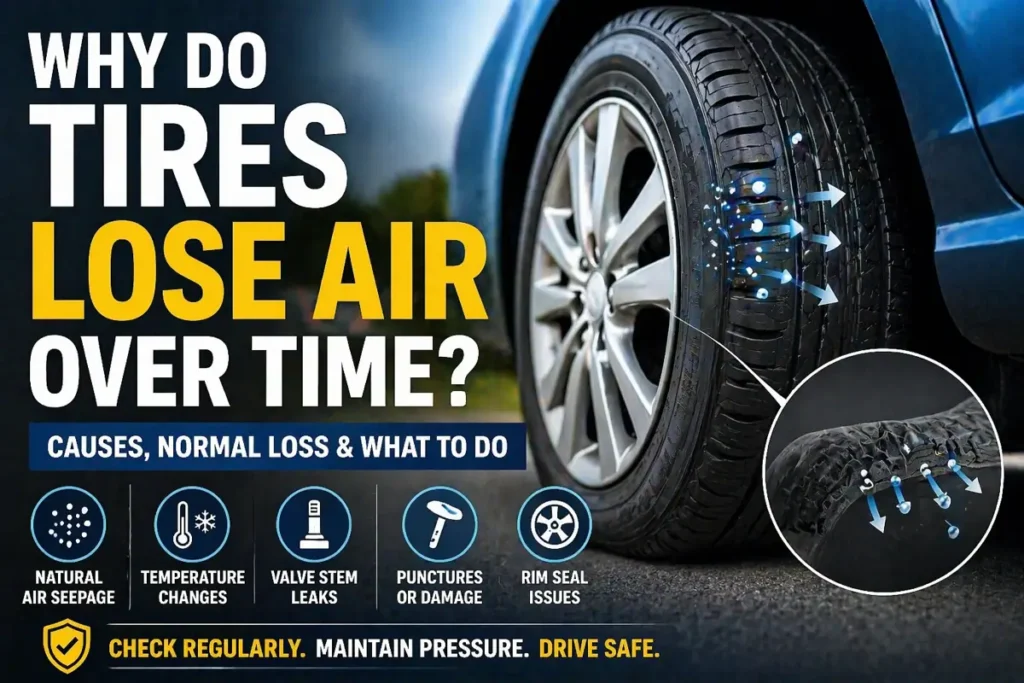
- Tires naturally lose air slowly over time
- Cold weather can reduce tire pressure overnight
- Small leaks or damage can cause faster air loss
- Regular pressure checks help maintain safety
Is It Normal for Tires to Lose Air?
Yes, it is completely normal.
Even high quality tires from brands like Michelin and Bridgestone gradually lose air because tire rubber is slightly porous.
What’s considered normal:
- Around 1–2 PSI loss per month
- Small drops during colder weather
This is expected and not a sign of damage.
Why Do Tires Lose Air Over Time
1. Natural Air Permeation
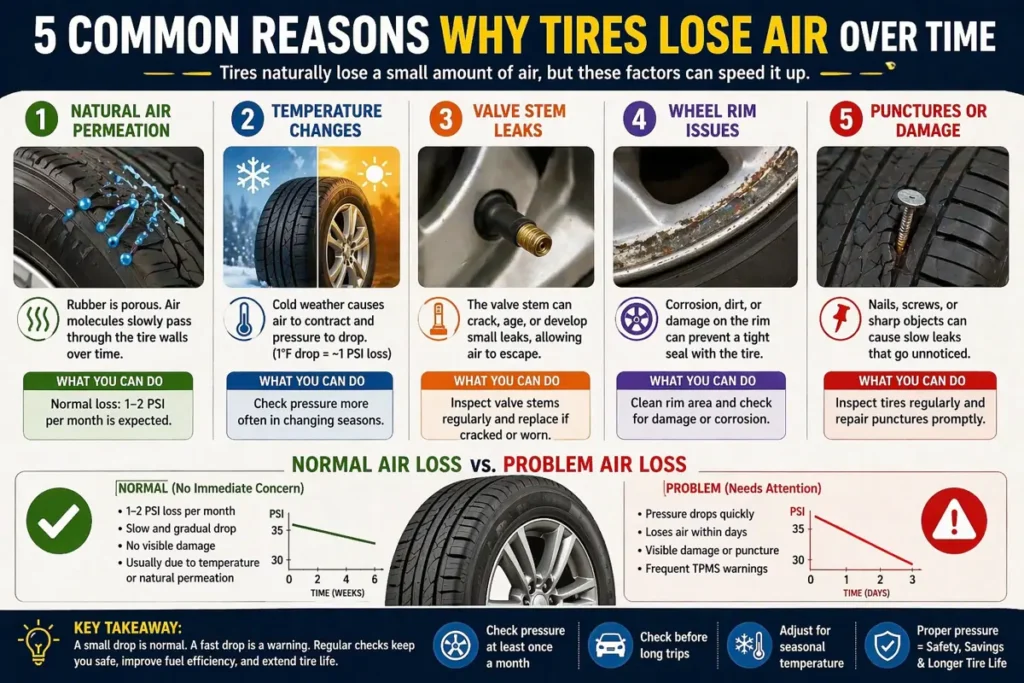
Tires are not perfectly airtight. Air molecules slowly escape through microscopic pores in the rubber.
This happens even in brand new tires and is the most common reason for gradual pressure loss.
2. Temperature Changes
Temperature has a direct impact on tire pressure.
- Cold weather → pressure drops
- Hot weather → pressure increases
Example:
Your tire pressure may drop overnight during winter without any leak.
3. Valve Stem Leaks
The valve stem can wear out, crack, or collect dirt over time.
Even a small valve issue can cause a slow air leak.
4. Wheel Rim Issues
Corrosion, dirt, or damage on the rim can prevent a proper seal between the tire and wheel.
This is more common in older vehicles or harsh climates.
5. Small Punctures
Nails, screws, or sharp debris can cause slow leaks that are not immediately visible.
These are often called slow tire leaks and may take days to notice.
How Air Loss Affects Tire Performance
Even small air loss has real effects on how your vehicle drives.
When pressure drops:
- Traction decreases, especially on wet roads
- Rolling resistance increases, reducing fuel efficiency
- Tread wear becomes uneven, shortening tire life
- Handling becomes less stable, especially at high speeds
Cause → Effect → Outcome
When a tire loses air, it flexes more while driving. This extra flex generates heat, which weakens the tire structure over time. As a result, the tire wears faster and becomes more prone to failure.
This is why even small pressure loss should not be ignored.
Normal vs Abnormal Air Loss
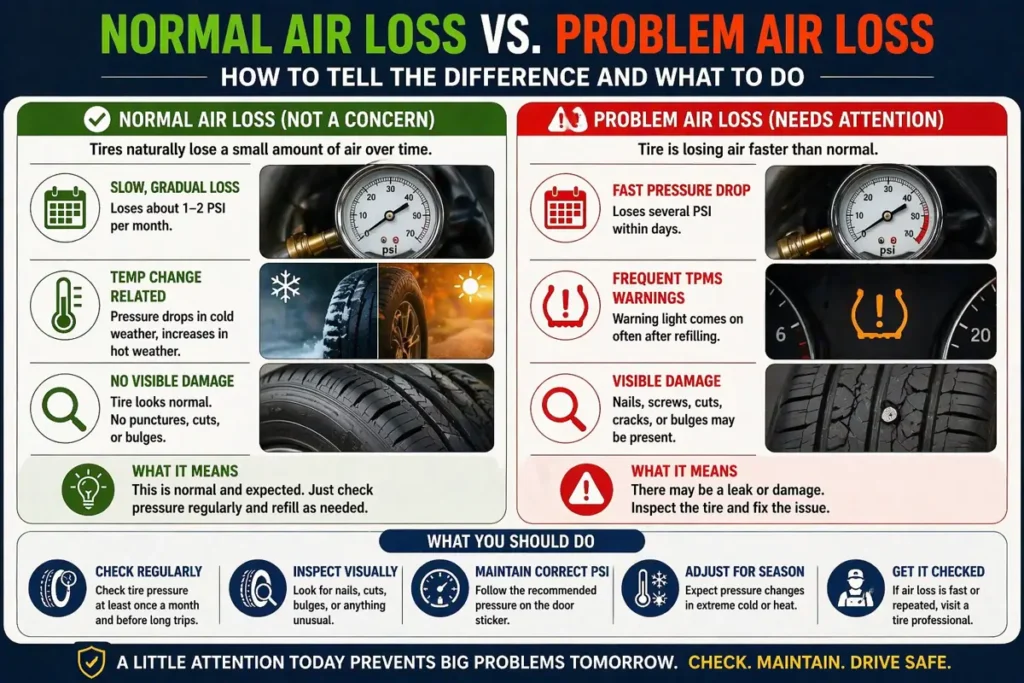
Normal air loss:
- 1–2 PSI per month
- Gradual drop over weeks
- No visible damage
Abnormal air loss:
- Tire loses air within days
- Pressure drops repeatedly after refilling
- TPMS warning appears frequently
This usually indicates a leak or mechanical issue.
How to Identify the Cause of Air Loss
You can often diagnose the issue based on patterns:
- Slow monthly drop → natural air permeation
- Overnight drop → temperature change
- Continuous rapid loss → puncture or valve issue
Understanding this helps you avoid unnecessary repairs.
Real World Driving Impact
Drivers often notice:
- Reduced fuel efficiency
- Slight steering changes
- Tires looking slightly underinflated
In many cases, this is due to slow air loss, not immediate damage.
What Should You Do (Simple Decision Guide)
- Pressure dropping slowly → check monthly and refill
- Sudden pressure drop → inspect tire immediately
- Repeated pressure loss → visit a mechanic
Always adjust pressure based on your recommended PSI
Common Mistakes Drivers Make
Ignoring slow air loss
Small drops add up and affect performance over time
Assuming every loss is a puncture
Temperature changes are often the real cause
Relying only on TPMS
Warning lights appear after pressure is already low
Safety Impact (Often Overlooked)
Driving with low tire pressure can:
- Increase braking distance
- Reduce control on wet or slippery roads
- Increase risk during emergency maneuvers
Proper tire pressure is critical for safe driving, especially on highways.
How This Connects to Your Tire Care
To manage tire pressure properly:
- Learn how to check tire pressure correctly
- Understand temperature effects on tire pressure
- Maintain recommended PSI consistently
These work together to prevent long-term damage.
Conclusion:
Tires losing air over time is normal, but the speed of air loss matters.
If you:
- Monitor pressure regularly
- Understand what’s normal
- Take action when needed
You’ll improve safety, extend tire life, and avoid unexpected issues.
FAQs
Is it normal for tires to lose air over time?
Yes. Tires naturally lose about 1–2 PSI per month due to air permeation through the rubber.
Why does my tire lose air overnight?
Temperature drops can cause pressure to decrease quickly, especially in cold weather.
How do I know if I have a slow tire leak?
If your tire loses air faster than normal or needs frequent refilling, it likely has a slow leak.
Can tires lose air without a puncture?
Yes. Air can escape naturally or through valve stems and rim issues.
Is it dangerous to drive with low tire pressure?
Yes. Low pressure reduces traction, increases braking distance, and can lead to tire damage.
