


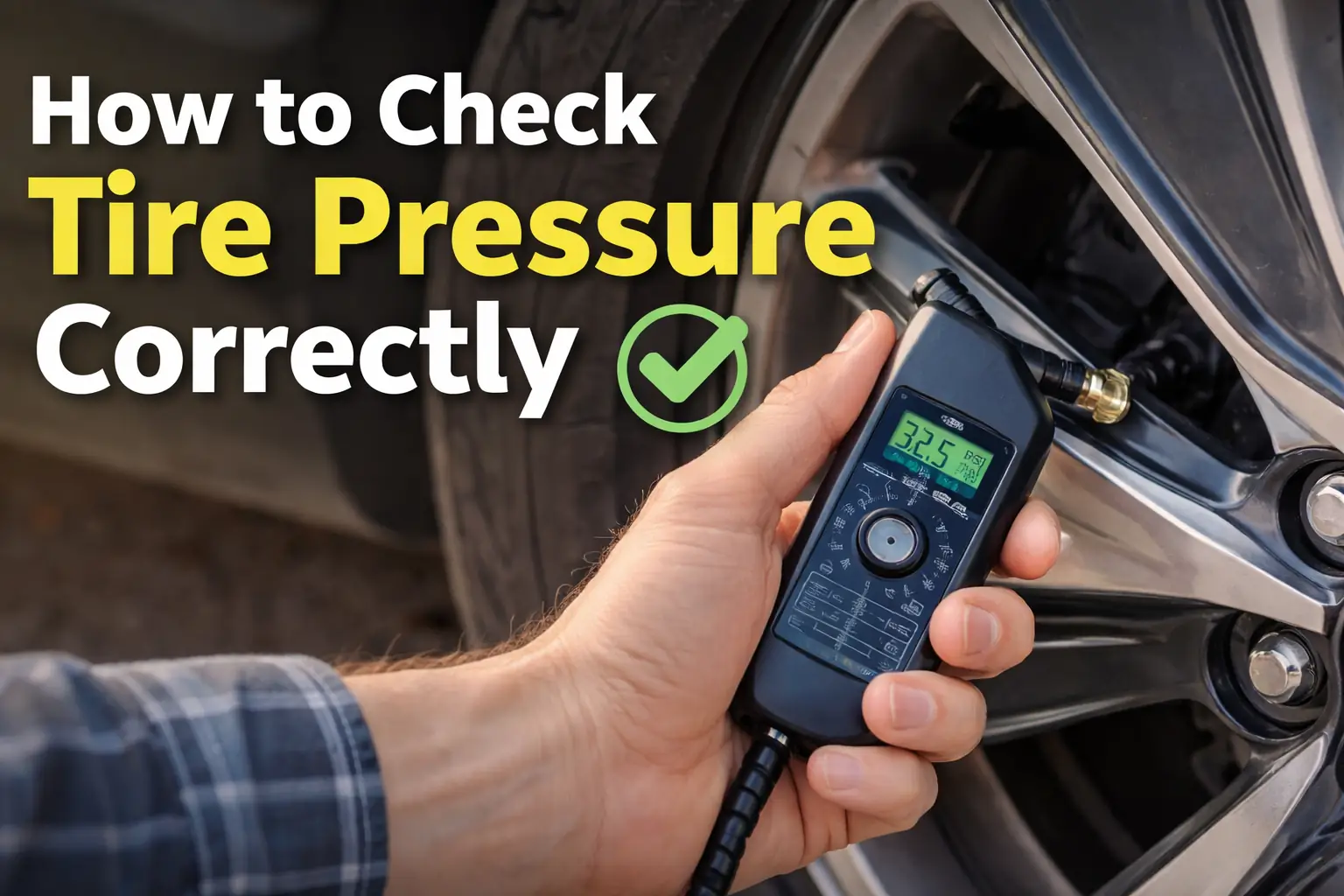
To check tire pressure correctly, you need to measure it when your tires are cold, use a reliable gauge, and match the reading to your vehicle’s recommended PSI. Many drivers check it the wrong way, which leads to poor fuel economy, uneven tire wear, and reduced safety.
If you want accurate results and better driving performance, this guide will show you exactly how to do it right.

To check tire pressure correctly:
- Check when tires are cold
- Use a digital or manual gauge
- Compare PSI with your vehicle’s recommended pressure
- Adjust air if needed
What Is Tire Pressure and Why It Matters
Tire pressure is the amount of air inside your tires, measured in PSI. It affects how your car grips the road, how evenly your tires wear, and how efficiently your vehicle uses fuel.
Well known brands like Michelin and Bridgestone emphasise proper tire inflation because incorrect pressure reduces traction and shortens tire life.
When Should You Check Tire Pressure

Always check tire pressure when the tires are cold.
This means:
- Before driving
- Or after the car has been parked for at least 3 hours
Real world insight:
Even a short 10-minute drive can increase tire pressure due to heat. This gives a false reading and can cause you to underinflate your tires without realising it.
In the US, this matters even more:
- In hot states like Texas or Arizona, tire pressure rises quickly in summer
- In colder states like Colorado or Minnesota, pressure drops overnight
Step-by-Step: How to Check Tire Pressure Correctly
Step 1: Find Your Recommended PSI
Check:
- Driver side door sticker (most accurate)
- Owner’s manual
Do not use the PSI written on the tire sidewall. That number shows the maximum pressure, not the correct one.
Step 2: Use a Reliable Tire Pressure Gauge
You can use:
- Digital gauge (more accurate and easier)
- Manual gauge (works fine with proper use)
Step 3: Remove the Valve Cap
Unscrew the cap from the tire valve and keep it somewhere safe.
Step 4: Press the Gauge Firmly
Place the gauge onto the valve stem quickly and firmly.
If you hear a hissing sound, air is escaping and your reading may be inaccurate.
Step 5: Check the PSI Reading
Compare the reading with your recommended tire pressure.
Step 6: Adjust the Pressure
- Add air if the pressure is too low
- Release air if the pressure is too high
Step 7: Replace the Valve Cap
Always put the cap back on to protect the valve from dirt and moisture.
Common Mistakes Drivers Make

Checking after driving
Heat increases tire pressure and leads to incorrect readings
Using the tire sidewall PSI
This is a maximum limit, not the recommended level
Ignoring seasonal changes
Temperature changes affect tire pressure more than most people expect
Not checking regularly
Many drivers wait for a warning light instead of checking proactively
Real World Driving Signs to Watch
Before any warning light appears, your car may already be showing signs:
- Slight steering pull
- Reduced traction on wet roads
- Lower fuel efficiency
- Tires looking slightly underinflated
These are early signals that your tire pressure may not be correct.
How Often Should You Check Tire Pressure
You should check tire pressure:
- Once every month
- Before long road trips
- During major temperature changes
For US drivers who frequently drive long highway distances, maintaining correct tire pressure is especially important for safety and fuel savings.
What Should You Do (Simple Decision Guide)
- Haven’t checked in a month → Check now
- Weather changed significantly → Recheck
- Car feels different → Inspect immediately
Do not wait for a TPMS warning light to appear.
How This Fits With Your Tire Knowledge
Checking pressure is just one part of proper tire care.
To understand the full picture, see:
- Your complete tire pressure guide
- Recommended tire pressure for your vehicle
- What TPMS warning lights mean
Conclusion:
Checking tire pressure correctly is simple, but doing it the right way makes a big difference.
If you:
- Check when tires are cold
- Follow your vehicle’s recommended PSI
- Do it regularly
You will improve safety, extend tire life, and avoid unnecessary problems.
FAQs
What is the correct way to check tire pressure?
Check tire pressure when the tires are cold using a reliable gauge and compare it with the recommended PSI on your vehicle door sticker.
Can I check tire pressure after driving?
No. Driving increases tire temperature and pressure, which leads to inaccurate readings.
How accurate are gas station tire gauges?
They can be inconsistent. A personal digital gauge usually provides more reliable results.
What PSI is considered too low?
Any pressure below your vehicle’s recommended PSI can reduce safety, traction, and tire lifespan.
How long does it take to check tire pressure?
It usually takes about 5 minutes to check all four tires properly.

