


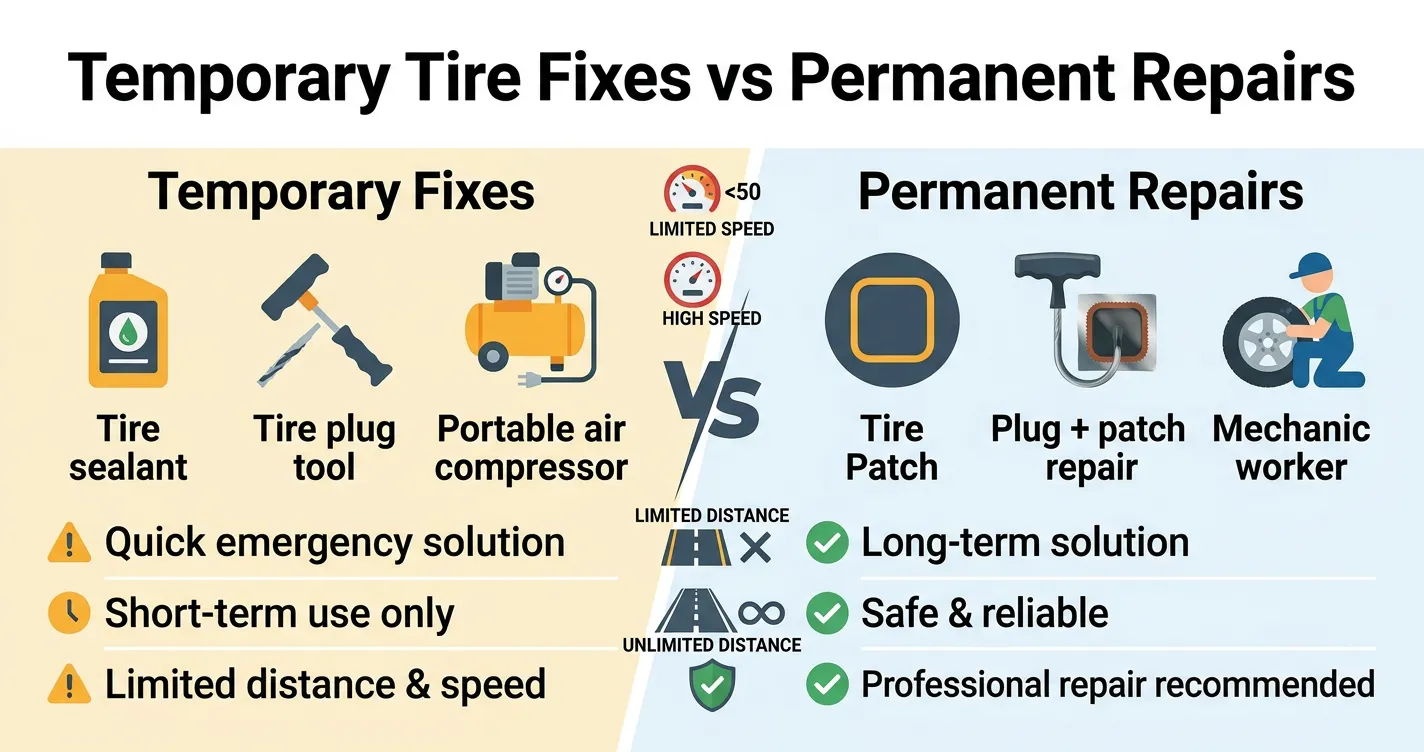
Temporary Tire Fixes vs Permanent Repairs: What Every Driver Should Know
A flat tire can happen anytime, but knowing whether to use a quick fix or seek a proper repair is essential. Understanding temporary tire fixes vs permanent repairs helps drivers stay safe, avoid further damage, and make the right decision in an emergency.
While temporary solutions can get you back on the road quickly, they are not designed for long-term use. This guide explains the differences, safety rules, and when each option should be used.
However, temporary solutions are not always safe for long-term use.
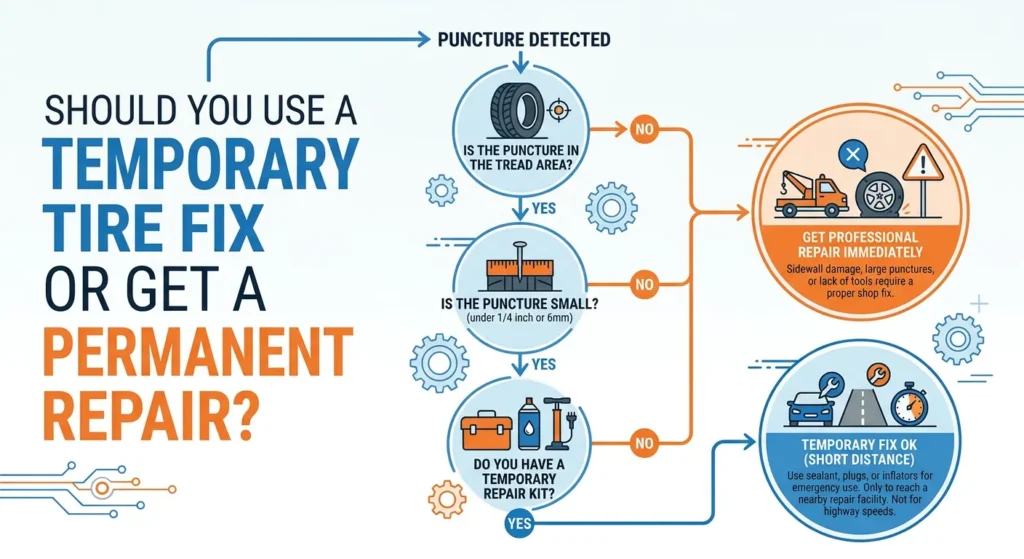
What Are Temporary Tire Fixes?
Temporary tire fixes are short-term solutions designed to help you reach a safe location or repair shop. They are useful during roadside emergencies but should never replace a proper repair.
For example, tire sealants can quickly restore air pressure in minor punctures.
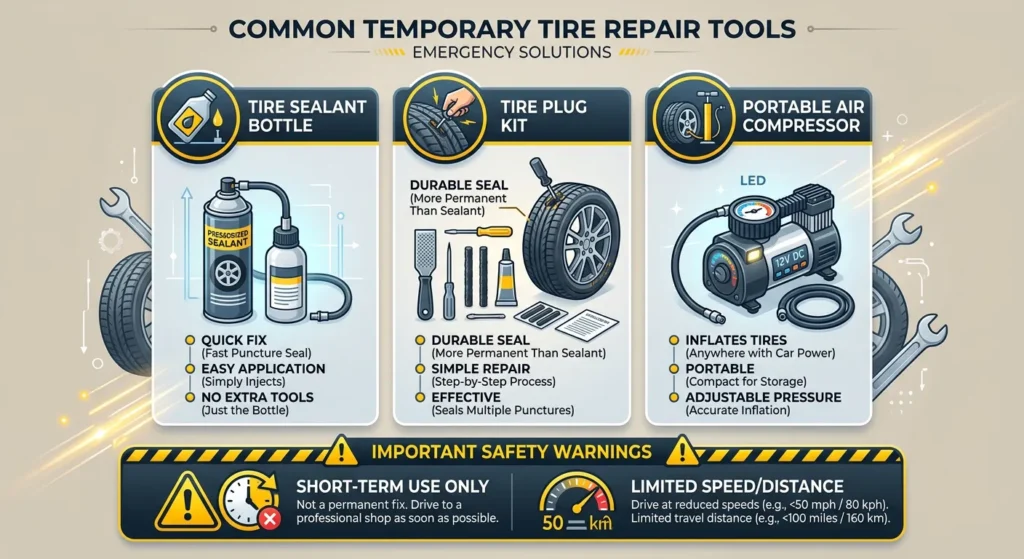
Common Temporary Fixes
- Tire sealant (liquid repair)
- Tire plug kits
- Portable air compressors
- Driving short distances on a damaged tire
When to Use Temporary Fixes
Temporary fixes are suitable when:
- The puncture is small
- You are stranded on the road
- A repair shop is not nearby
When comparing temporary tire fixes vs permanent repairs, temporary solutions are meant to buy time—not provide a permanent solution.
Limitations of Temporary Tire Fixes
Temporary fixes come with important limitations that drivers must understand. As a result, driving too far on a temporary fix can increase the risk of failure.
- Not suitable for sidewall damage
- Limited driving distance and speed
- Reduced structural strength
- Risk of air loss over time
Driving too long on a temporary fix can lead to:
- Tire failure or blowouts
- Reduced vehicle control
- Additional damage to the wheel
What Are Permanent Tire Repairs?
Permanent tire repairs restore the tire’s integrity and allow safe long-term use.Professionals perform these repairs using proper tools and inspection methods.
In addition, professional repairs restore the tire’s structural strength
Common Permanent Repair Methods
- Internal patch repair
- Plug and patch combination (industry standard)
Permanent repairs seal the puncture from the inside and reinforce the tire’s structural strength.
Tire Repair Safety Rules (Industry Guidelines)
Not all tires can be repaired safely. There are widely accepted guidelines that determine whether a tire is repairable.Therefore, drivers should always inspect the damage carefully before deciding.
You can repair a tire if:
- The damage is located in the tread area
- The puncture is small (typically under 1/4 inch)
- There is no structural or internal damage
You should NOT repair a tire if:
- The sidewall is damaged
- The puncture is too large
- There are multiple punctures close together
- The tire is severely worn
Understanding these rules is essential when deciding between temporary tire fixes vs permanent repairs.
Plug vs Patch vs Plug-Patch: What’s the Difference?
Different repair methods offer different levels of safety.On the other hand, a plug + patch combination provides a more reliable solution.
Tire Plug (Temporary)
- Inserted from outside the tire
- Quick and easy fix
- Not recommended for long-term use
Tire Patch (Internal)
- Applied inside the tire
- Seals the puncture area
- More reliable than a plug alone
Plug + Patch Combination (Best Option)
- Repairs from both inside and outside
- Provides a strong, long-lasting seal
- Considered the safest repair method
For long-term safety, professionals prefer the plug + patch method.
How a Professional Tire Repair Is Done
A proper tire repair involves more than just sealing a hole.
Step-by-Step Process
- Remove the tire from the wheel
- Inspect the inside for hidden damage
- Clean and prepare the puncture area
- Apply a patch or plug-patch from inside
- Reinstall and balance the tire
This process ensures the repair is safe and durable.
Do Tire Repair Kits Really Work?
Tire repair kits are common in modern vehicles, especially those without spare tires.However, these kits are only suitable for minor damage.
When They Work
- Small punctures in the tread
- Minor air leaks
- Emergency roadside situations
When They Don’t Work
- Sidewall damage
- Large punctures
- Structural tire damage
Repair kits are effective for temporary use, but the tire should always be inspected afterwards.
Temporary vs Permanent: Key Differences
| Feature | Temporary Fix | Permanent Repair |
|---|---|---|
| Purpose | Short-term use | Long-term safety |
| Safety | Limited | High |
| Lifespan | Very short | Full tire life (if proper) |
| Cost | Low | Moderate |
| Use Case | Emergency only | Daily driving |
This comparison helps drivers understand temporary tire fixes vs permanent repairs at a glance.
How Long Can You Drive on a Temporary Fix?
Temporary repairs are designed for short distances only.
General Guidelines
- Distance: up to 50–70 miles
- Speed: under 50 mph
Driving beyond these limits increases the risk of failure and unsafe conditions.
Common Mistakes Drivers Make
Many drivers misuse temporary fixes, which can lead to dangerous situations.
- Driving too far on a temporary repair
- Ignoring slow air leaks
- Using sealants on major damage
- Skipping professional inspection
- Assuming a plug is a permanent fix
Avoiding these mistakes improves safety and extends tire life.
Best Practices for Tire Safety
To handle tire damage correctly:
✔ Inspect tires regularly
✔ Maintain proper tire pressure
✔ Use temporary fixes only when necessary
✔ Get professional repairs as soon as possible
✔ Replace tires when they are unsafe
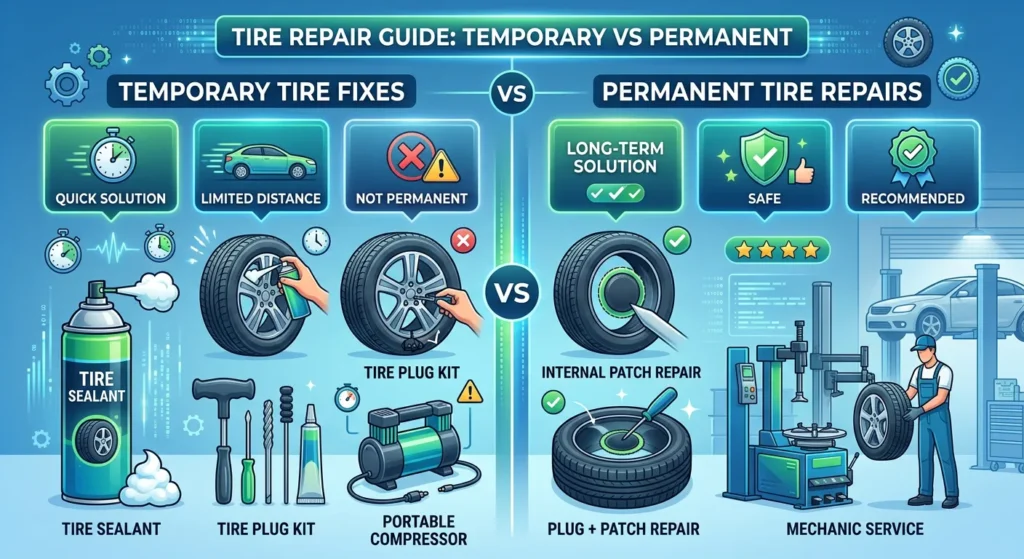
Conclusion: Choose Safety Over Convenience
Understanding temporary tire fixes vs permanent repairs helps drivers make safer and smarter decisions. While temporary fixes are useful in emergencies, they should never replace proper repairs.
For long-term safety and performance, always have your tire inspected and repaired professionally. Choosing the right solution at the right time can prevent accidents and extend the life of your tires.Ultimately, choosing the right repair method improves both safety and performance.
Frequently Asked Questions
Are tire sealants a permanent fix?
No, tire sealants are temporary solutions and should only be used in emergencies.
Can a tire plug be used long-term?
A plug alone is not recommended for long-term use. A plug + patch repair is much safer.
How do I know if my tire is repairable?
If the damage is small and located in the tread area, it can usually be repaired. Sidewall damage requires replacement.
Do tire repair kits damage tires?
Some sealants can make future repairs more difficult, so the tire should be inspected after use.
What is the safest tire repair method?
A professional plug + patch repair is considered the safest and most reliable method.
