

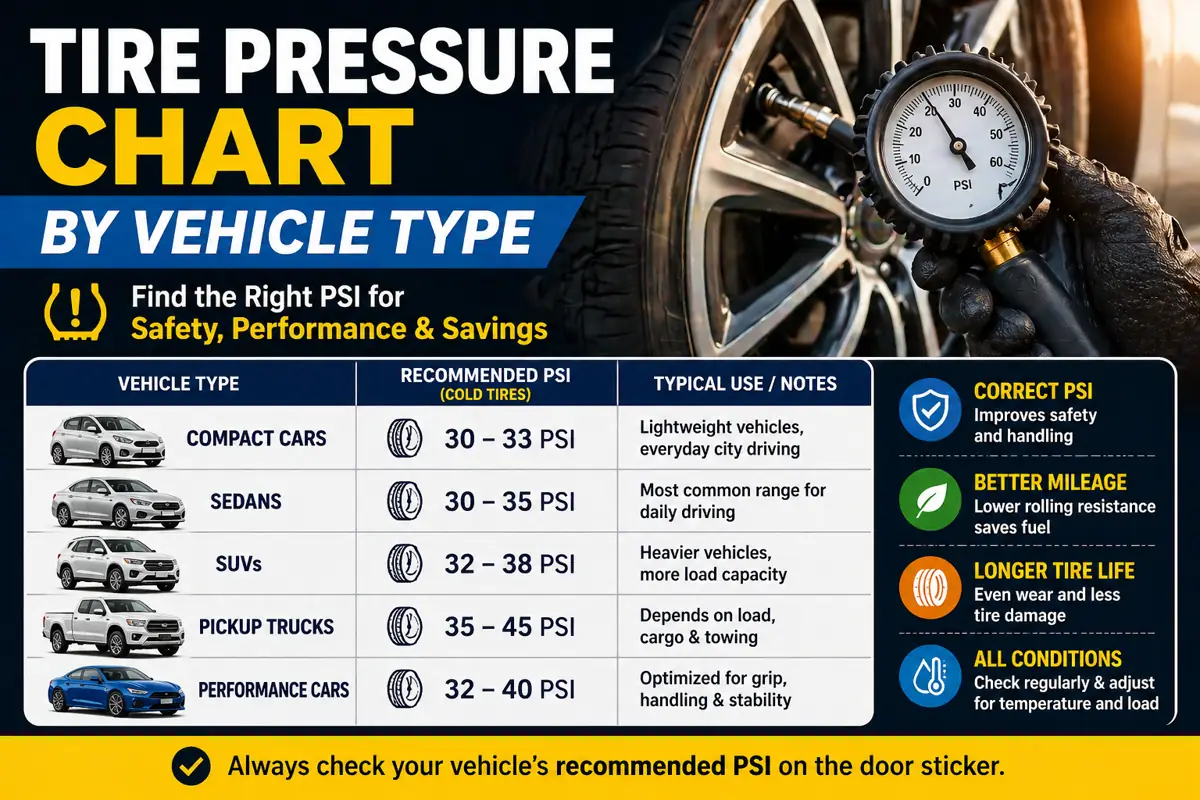
A tire pressure chart by vehicle type helps you find the correct PSI (pounds per square inch) for your car, SUV, or truck. Most vehicles run between 30–35 PSI, but the exact number depends on vehicle type, load, and driving conditions.
Using the correct tire pressure improves traction, fuel efficiency, and overall safety.

Recommended tire pressure by vehicle type:
- Sedans: 30–35 PSI
- SUVs: 32–38 PSI
- Pickup trucks: 35–45 PSI
- Compact cars: 30–33 PSI
Always follow the PSI listed on your vehicle’s door sticker
Tire Pressure Chart by Vehicle Type
| Vehicle Type | Recommended PSI | Notes |
|---|---|---|
| Compact Cars | 30–33 PSI | Lightweight vehicles |
| Sedans | 30–35 PSI | Most common range |
| SUVs | 32–38 PSI | Higher weight, more load |
| Pickup Trucks | 35–45 PSI | Varies with cargo/towing |
| Performance Cars | 32–40 PSI | Tuned for grip and handling |
Why Tire Pressure Varies by Vehicle Type
Tire pressure is not one size fits all. It changes based on how the vehicle is built and used.
Vehicle Weight
Heavier vehicles need higher PSI to support their weight.
More weight increases pressure requirements to maintain stability
Tire Size and Structure
Larger tires and stronger sidewalls behave differently than smaller ones.
This affects how the tire distributes load and maintains road contact
Driving Purpose
- Daily commuting → comfort and efficiency
- Trucks → load carrying and durability
- Performance cars → grip and handling
Tire pressure is adjusted to match these needs
How Tire Pressure Affects Performance
Tire pressure directly controls the contact patch, which is how much of the tire touches the road.
- Correct PSI → even contact, better traction
- Low PSI → more friction, heat buildup
- High PSI → reduced contact, less grip
Cause → Effect → Outcome
When pressure is too low, the tire flexes more during driving. This extra flex generates heat, which increases wear and weakens the tire over time. When pressure is too high, the center of the tire carries more load, leading to uneven tread wear and reduced stability.
How Load Affects Tire Pressure

Tire pressure should adjust based on how much weight your vehicle carries.
- Light driving → standard PSI
- Heavy load or passengers → slightly higher PSI
- Towing → follow manufacturer recommendations
Proper pressure prevents excessive tire flex and improves control
Tire manufacturers like Michelin and Goodyear emphasise adjusting pressure based on load for safety and tire longevity.
Real World Example
- In hot states like Arizona or Texas, tire pressure increases during the day
- In colder regions like Minnesota or Colorado, pressure drops quickly
A tire set at 35 PSI in warm weather may drop to 30–32 PSI in colder temperatures
How to Find the Exact PSI for Your Vehicle
A chart is helpful, but your vehicle’s recommended PSI is always more accurate.
Check here:
- Driver side door sticker
- Owner’s manual
- Manufacturer recommendations
Do NOT use the PSI on the tire sidewall that is the maximum limit, not the recommended level
Cold vs Hot Tire Pressure

Tire pressure should always be checked when tires are cold.
“Cold” means:
- The car hasn’t been driven for at least 3 hours
- Or driven less than 1 mile
Driving heats the tires and increases PSI, which can give inaccurate readings.
What Happens If You Use the Wrong PSI
Underinflation (Too Low)
- Increased rolling resistance
- Lower fuel efficiency
- Edge tread wear
- Reduced traction
Overinflation (Too High)
- Less road contact
- Rough ride
- Center tread wear
- Reduced grip
Compared to properly inflated tires, both extremes reduce performance and safety
Quick Decision Guide
- Not sure about PSI → check door sticker
- Daily driving → use recommended PSI
- Carrying heavy load → increase slightly
- Seasonal change → recheck pressure
This simple approach prevents most tire related issues
Common Mistakes Drivers Make
Using the same PSI for every vehicle
Different vehicles require different pressures
Ignoring temperature changes
Pressure changes with weather conditions
Relying on visual checks
Tires can look normal even when underinflated
Real World Observation
Many drivers either:
Overinflate thinking it improves fuel economy
Underinflate for a softer ride
Both reduce tire life and safety over time.
Safety Impact
Correct tire pressure helps:
- Maintain traction
- Improve braking performance
- Increase stability at high speeds
Proper inflation is critical for safe driving, especially on highways
Conclusion:
A tire pressure chart by vehicle type gives you a useful starting point, but your vehicle’s recommended PSI is always the most accurate.
If you:
- Follow the correct PSI
- Adjust for load and temperature
- Check regularly
You’ll improve safety, handling, and tire lifespan.
FAQs
What is the correct tire pressure for most cars?
Most cars use 30–35 PSI, but always follow the recommended PSI on your vehicle.
Is 40 PSI too high for tires?
It can be too high for many cars but may be normal for trucks or performance vehicles.
Where can I find recommended tire pressure?
Check the driver-side door sticker or the owner’s manual.
Does tire pressure change with temperature?
Yes. Tire pressure decreases in cold weather and increases in heat.
Should I use the PSI on the tire sidewall?
No. That number shows the maximum pressure, not the recommended level.

