

Emergency Flat Tire Scenarios: What Every Driver Should Do
Flat tires rarely happen at a convenient time. Whether you’re on a busy highway, driving at night, or stuck in bad weather, knowing how to handle emergency flat tire scenarios can prevent accidents and keep you safe.
Many drivers panic during a tire emergency, which often leads to poor decisions. Understanding emergency flat tire scenarios helps you stay calm, act quickly, and reduce risk on the road.
Why Emergency Flat Tire Scenarios Are Dangerous
A sudden flat tire can affect your vehicle’s stability and control. Common risks include:
- Loss of steering control
- Sudden vehicle pull
- Increased braking distance
- Risk of roadside collisions
Knowing how to react in emergency flat tire scenarios is critical for safety.
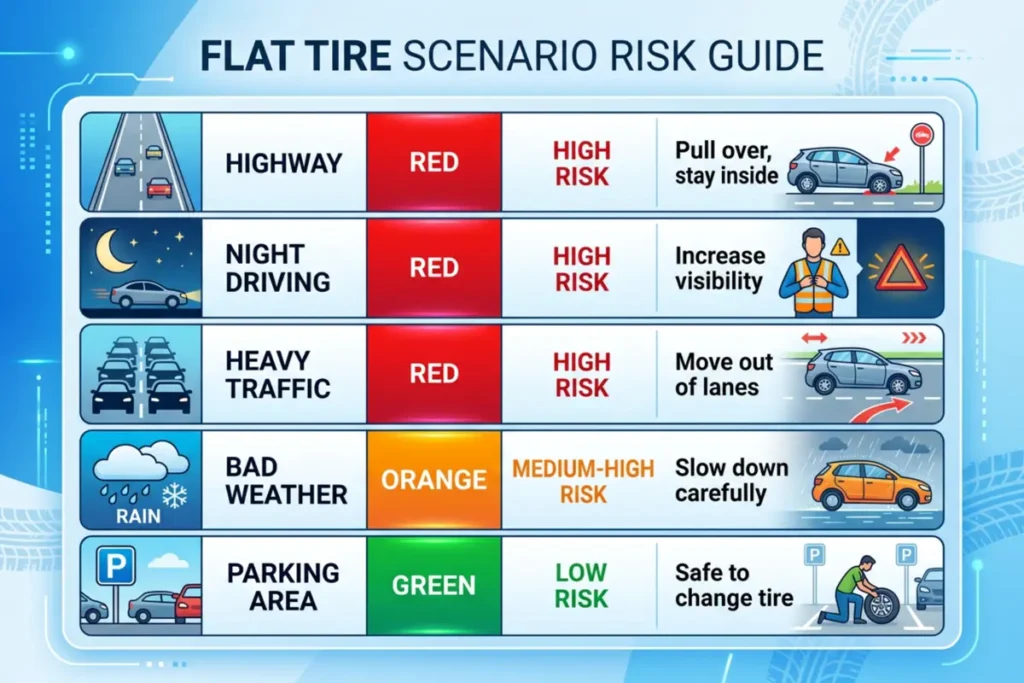
Quick Scenario Risk Guide
| Scenario | Risk Level | Best Action |
|---|---|---|
| Highway driving | High | Slow down, pull over, stay inside |
| Night driving | High | Increase visibility, use lights |
| Heavy traffic | High | Move out of lanes, avoid stopping |
| Bad weather | Medium–High | Reduce speed, avoid sudden moves |
| Parking area | Low | Safely change tire |
The table above is designed to help drivers quickly understand how to handle various emergency flat tire scenarios.
Scenario 1: Flat Tire on the Highway
This is one of the most dangerous situations.
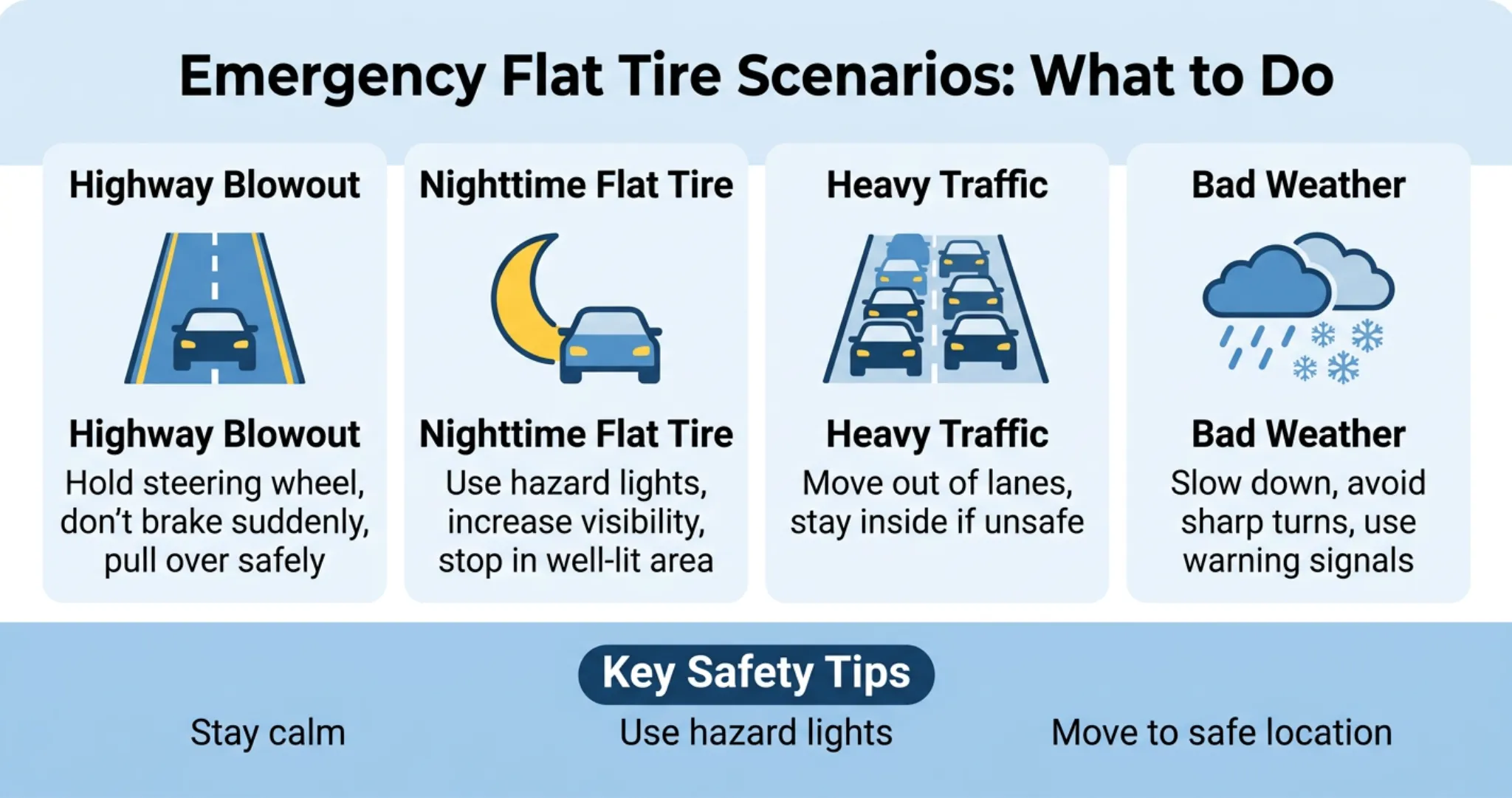
What to Do
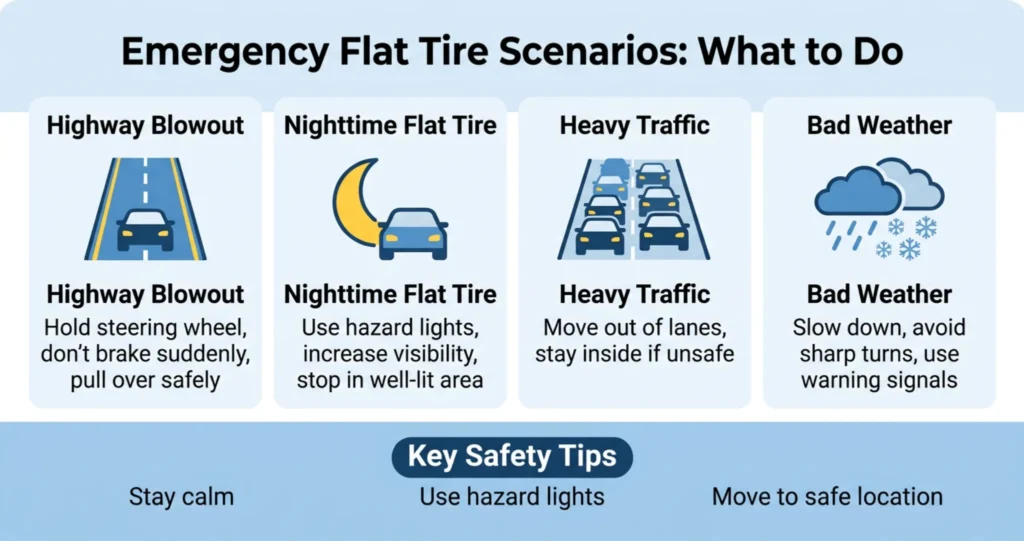
- Keep a firm grip on the steering wheel
- Do NOT brake suddenly
- Gradually reduce speed
- Turn on hazard lights
- Move to the shoulder
If traffic is heavy, stay inside your vehicle and call for help.
Scenario 2: Flat Tire at Night
Low visibility increases risk.
What to Do
- Turn on hazard lights immediately
- Use a flashlight or phone light
- Wear reflective gear if available
- Stop in a well-lit area
Visibility is the top priority in nighttime emergency flat tire scenarios.
Scenario 3: Flat Tire in Heavy Traffic
Stopping in traffic can be dangerous.
What to Do
- Signal early and move out of traffic
- Avoid stopping in active lanes
- Stay inside the vehicle if unsafe
Do not attempt repairs in moving traffic.
Scenario 4: Flat Tire in Bad Weather
Rain or snow reduces traction.
What to Do
- Slow down gradually
- Avoid sharp steering
- Move to a safe surface
- Use warning signals
Scenario 5: Tire Blowout at High Speed
A blowout is more severe than a slow puncture.
What to Do
- Hold the steering wheel firmly
- Do NOT slam the brakes
- Let the vehicle slow down
- Pull over safely
Sudden braking can cause loss of control.
Scenario 6: Flat Tire with No Spare Tire
Some vehicles don’t include a spare.
What to Do
- Use a tire repair kit if available
- Inflate using a portable compressor
- Call roadside assistance
Scenario 7: Flat Tire in a Remote Area
Being stranded adds extra risk.
What to Do
- Stay with your vehicle
- Use hazard signals
- Call for help if possible
Your car provides protection and visibility.
Scenario 8: Flat Tire on a Narrow Road
Limited space increases danger.
What to Do
- Drive slowly to a safer location
- Avoid stopping in unsafe areas
- Turn on hazard lights early
Should You Stay Inside or Exit the Vehicle?
This is one of the most important decisions.
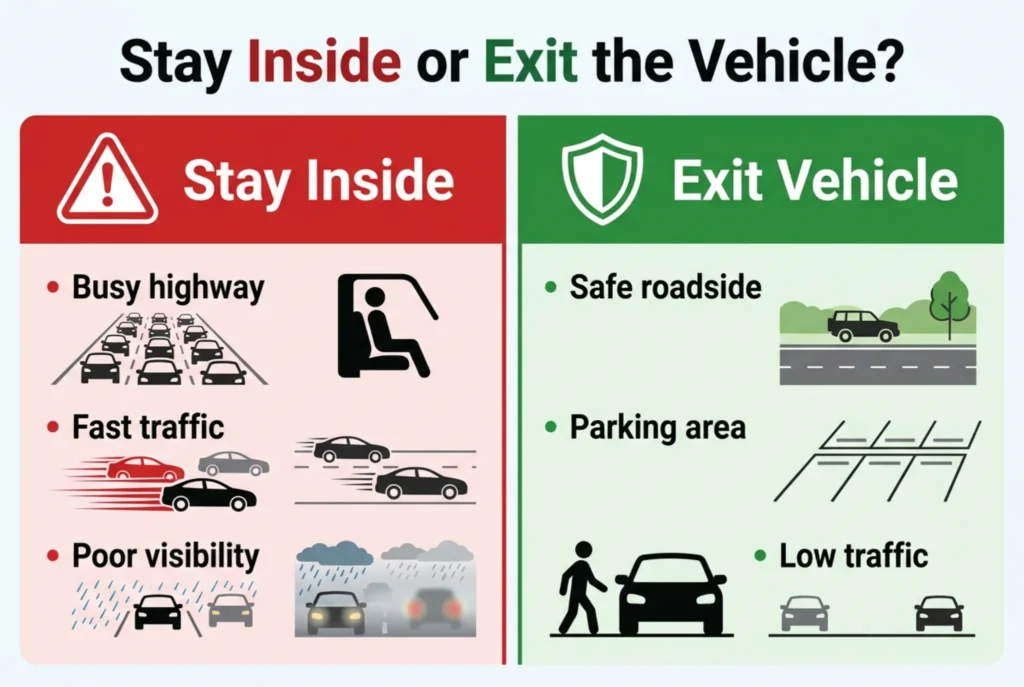
Stay Inside If:
- You are on a busy highway
- Traffic is fast-moving
- Visibility is poor
Exit the Vehicle If:
- You are in a safe area
- Traffic is minimal
- You can move away from the road
In many emergency flat tire scenarios, staying inside is safer.
Safe vs Unsafe Situations
Safe to Change Tire
✔ Parking lots
✔ Quiet roads
✔ Wide shoulders
Unsafe to Change Tire
❌ Highways with fast traffic
❌ Narrow roads
❌ Poor visibility conditions
Knowing the difference is critical in emergency flat tire scenarios.
What Most Drivers Do Wrong
Avoid these common mistakes during emergency flat tire scenarios to stay safe and prevent further damage
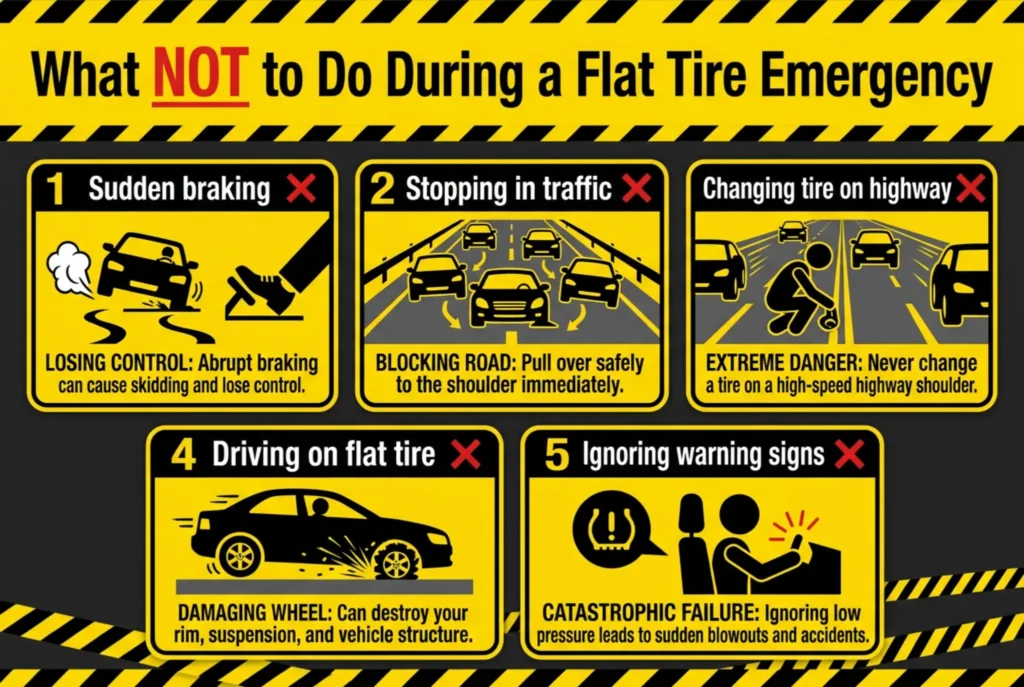
Panic often leads to mistakes:
- Braking suddenly during a blowout
- Stopping in unsafe areas
- Attempting repairs in traffic
- Driving on a completely flat tire
- Ignoring warning signs
Avoiding these mistakes improves safety significantly.
Essential Safety Tips for Tire Emergencies
✔ Stay calm and focused
✔ Keep both hands on the wheel
✔ Use hazard lights immediately
✔ Move to a safe location
✔ Carry an emergency kit
What to Keep in Your Emergency Tire Kit
Preparation makes a big difference.
- Spare tire
- Tire repair kit
- Portable air compressor
- Jack and lug wrench
- Reflective vest
- Flashlight
- Warning triangles
Conclusion: Stay Prepared for Any Tire Emergency
Tire emergencies can happen anytime, but knowing how to respond makes all the difference. Understanding emergency flat tire scenarios helps you avoid dangerous mistakes and stay safe in stressful situations.
Preparation, awareness, and quick decision making are key. With the right knowledge and tools, you can handle any tire emergency confidently.
Frequently Asked Questions
What should you do during a tire blowout?
Stay calm, hold the steering wheel firmly, avoid sudden braking, and slow down gradually.
Is it safer to stay in the car during a flat tire?
Yes, especially on busy roads or highways where exiting the vehicle is dangerous.
Can you drive with a flat tire for a short distance?
It is not recommended, as it can damage the tire and increase safety risks.
When should you call roadside assistance?
If the location is unsafe, you lack tools, or the tire cannot be repaired.
What is the safest place to stop during a flat tire?
A wide shoulder, parking lot, or any area away from traffic.
