


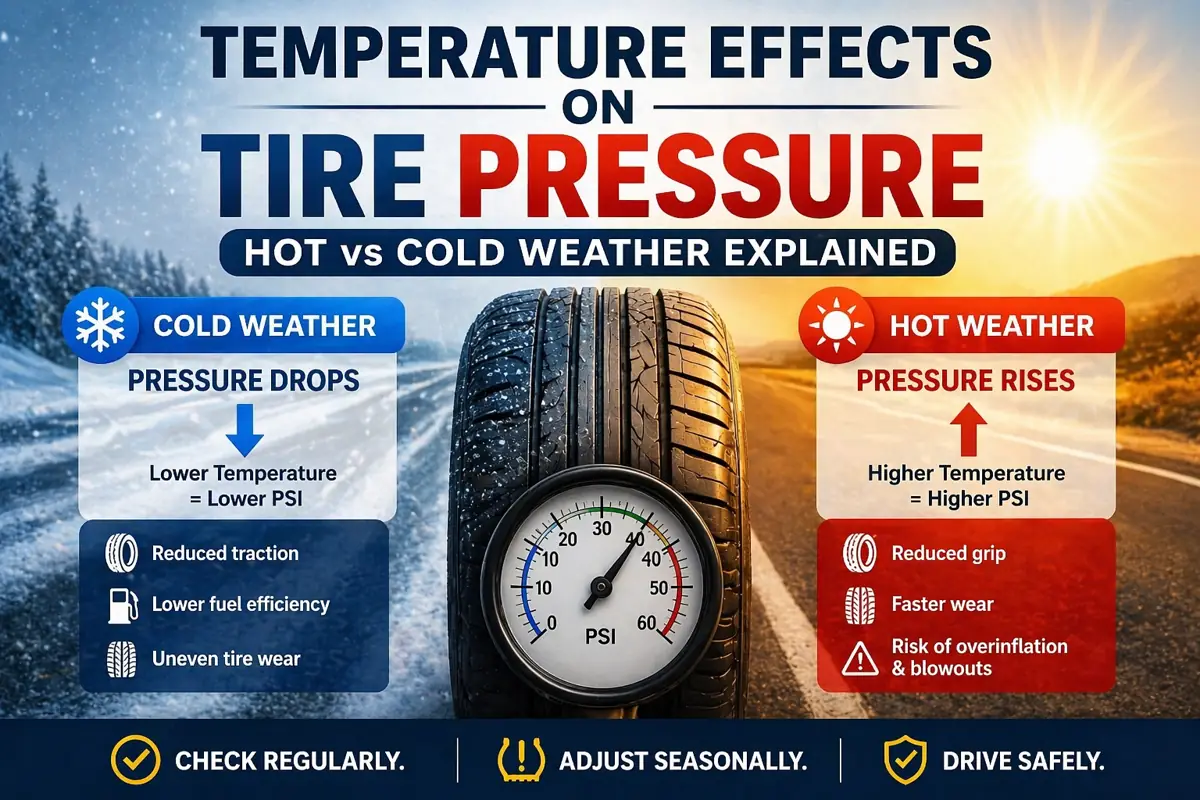
Temperature directly affects tire pressure. When the weather gets colder, tire pressure drops. When it gets hotter, pressure increases. Even a 10°F change can shift your tire pressure by about 1–2 PSI.
This is why your tires may look fine one day and slightly low the next morning. Understanding how temperature affects tire pressure helps you avoid underinflation, overinflation, and unexpected driving issues.

Why Temperature Affects Tire Pressure
Air inside your tires expands when heated and contracts when cooled.This behaviour follows the ideal gas law: when temperature rises, pressure increases if volume stays roughly the same.
You don’t need to think about physics just remember:
- Cold weather → pressure goes down
- Hot weather → pressure goes up
Real world example:
You park your car overnight in winter, and by morning, your tires look slightly deflated. Nothing is wrong the air inside simply contracted due to lower temperature.
What Happens to Tire Pressure in Cold Weather
Cold weather is where most drivers notice problems.
What actually happens:
- Tire pressure drops as temperature decreases
- Tires may look slightly underinflated
- TPMS warning light may turn on
Real world insight:
In colder US regions like Colorado or Minnesota, it’s common for tire pressure to drop overnight, especially during sudden temperature changes.
Why this matters:
Low tire pressure can:
- Reduce traction on wet or icy roads
- Increase tire wear
- Lower fuel efficiency
What Happens in Hot Weather
Hot weather causes the opposite effect.
What actually happens:
- Air expands inside the tire
- Tire pressure increases
- Risk of overinflation rises
Real world example:
In states like Texas or Arizona, long highway drives in summer can increase tire pressure significantly.
Heavier vehicles and heavily loaded tires warm up faster, so pressure can rise more quickly during long summer drives.
Why this matters:
Overinflated tires can:
- Reduce grip on the road
- Cause uneven tread wear
- Increase risk of blowouts in extreme heat
Manufacturers list the recommended ‘cold inflation pressure’ on the driver’s side door jamb, always compare your readings to that value when the tires are cold.
Everyday Situations Drivers Experience

Overnight Pressure Drop
You check your tires in the morning, and pressure seems low
This is normal in cold weather
Pressure Increase After Driving
After a long drive, your PSI reading is higher
This is due to heat buildup
Seasonal Changes
Pressure changes between summer and winter
Tires need adjustment during seasonal transitions
What Should You Do Simple Decision Guide

Here’s what actually works in real driving conditions:
- If temperature drops significantly → check pressure next morning
- If seasons change → recheck and adjust PSI
- If driving long distances in heat → monitor regularly
Always adjust tire pressure based on recommended PSI, not temporary readings
Common Mistakes Drivers Make
Ignoring seasonal changes
Many drivers set pressure once and forget it
Over correcting pressure
Adding too much air after a cold drop can lead to overinflation later
Checking at the wrong time
Checking pressure after driving gives inaccurate results
Real World Observation
Drivers often say:
- “My tires keep losing air”
- “Pressure warning comes on in winter”
In most cases, it’s not a leak, it’s temperature change.
How This Connects to Your Tire Care
Temperature is just one part of proper tire maintenance.
To manage it properly:
- Learn how to check tire pressure correctly
- Understand your recommended tire pressure
- Know what TPMS warnings mean
These work together as a complete system
Conclusion:
Temperature changes naturally affect tire pressure, but knowing how to respond makes all the difference.
If you:
- Monitor pressure during weather changes
- Adjust when needed
- Avoid overreacting
You’ll maintain better safety, performance, and tire lifespan.
FAQs
Does temperature really affect tire pressure?
Yes. Tire pressure decreases in cold weather and increases in hot weather due to air expansion and contraction.
How much does tire pressure change with temperature?
On average, tire pressure changes by about 1–2 PSI for every 10°F temperature change.
Why does my tire pressure drop overnight?
Temperature drops at night cause air inside the tire to contract, lowering pressure.
Should I adjust tire pressure in winter?
Yes. Cold weather lowers tire pressure, so regular checks and adjustments are necessary.
Can hot weather cause tire blowouts?
Yes. High temperatures can increase tire pressure and stress, especially if tires are already overinflated.


1 Comment
You can also choose to let cold pressure yust flow with ambiënt temperature.
Main goal of tiremakers is that tire-material wont overheat even once.
When cold more deflection , so heatproduction, but als better cooling down by more temperature differences between tire-material and in and outside tire air.
When hot outside the other way around, so then certainly dont lower the pressure.
So only check if cold pressure is line with ambiënt temperature, if so change nothing.
Porsche , BMW , Rimex , use index temperature 20 degrC/ 68 degr F of wich they calculate pressure from to temperature of gascompound in tire.
Tpms of Porsche and BMW , give besides actual pressure, also recomended pressure for the setting calculated for temperature in tire, also receved from the sensors.
This makes possible to fill warm at a tankstation.
Undamaged Tires wont blow from the relatively small pressure rising by higher temperature.
Nowadays carmakers recomend verry high pressures for fuel/energy saving, and dont mi d comfort and gripp, so why should we.