

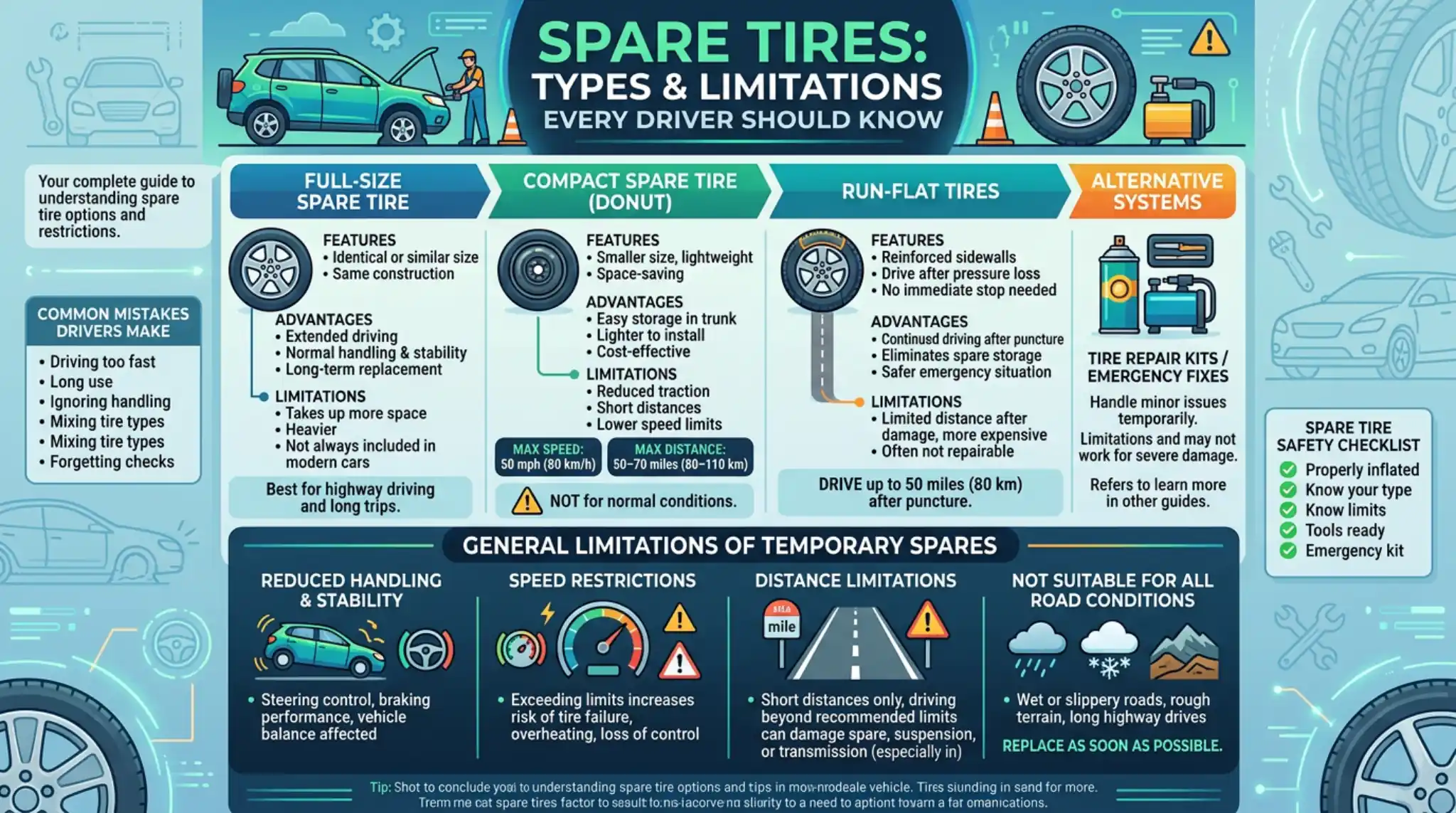
Spare Tires: Types & Limitations Every Driver Should Know
A flat tire can happen at any time, and having a spare tire is often the fastest way to get back on the road. However, many drivers do not fully understand how spare tires: types & limitations affect safety, driving distance, and overall vehicle performance.
Not all spare tires are designed the same. Some allow normal driving, while others are strictly temporary solutions. Therefore, knowing the differences between spare tires: types & limitations helps drivers avoid damage, stay safe, and make better decisions during emergencies.
This guide explains the different types of spare tires, how they work, their limitations, and when they should be used.
Why Spare Tires Are Important
Spare tires provide a quick solution when a tire becomes unusable due to:
Punctures from nails or debris
Sudden blowouts
Sidewall damage
Severe air loss
Without a spare tire, drivers may be forced to rely on roadside assistance. As a result, understanding spare tires: types & limitations ensures you are prepared to handle these situations independently when needed.
Types of Spare Tires
There are several types of spare tires, each designed for specific situations. Understanding these options is essential for safe driving.
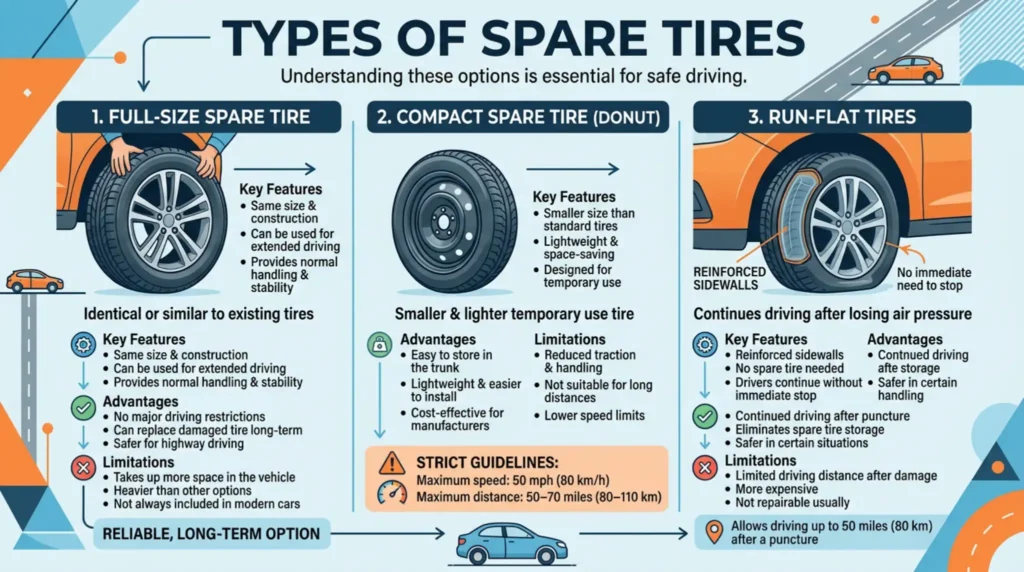
1. Full-Size Spare Tire
A full-size spare tire is identical or very similar to the tires already installed on your vehicle.
Key features:
Same size and construction as regular tires
Can be used for extended driving
Provides normal handling and stability
Advantages:
No major driving restrictions
Can replace a damaged tire long-term
Safer for highway driving
Limitations:
Takes up more space in the vehicle
Heavier than other spare options
Not always included in modern cars
Overall, full-size spares are the most reliable option when considering spare tires: types & limitations, especially for long trips.
2. Compact Spare Tire (Donut)
Compact spare tires, often called “donuts,” are smaller and lighter than regular tires. They are commonly found in modern vehicles.
Key features:
Smaller size than standard tires
Lightweight and space-saving
Designed for temporary use
Advantages:
Easy to store in the trunk
Lightweight and easier to install
Cost-effective for manufacturers
Limitations:
Reduced traction and handling
Not suitable for long distances
Lower speed limits
Most compact spares come with strict guidelines:
Maximum speed: 50 mph (80 km/h)
Maximum distance: 50–70 miles (80–110 km)
For this reason, understanding these limits is critical when using compact spares, as they are not designed for normal driving conditions.
3. Run-Flat Tires
Some vehicles do not include a spare tire at all. Instead, they use run-flat tires.
Key features:
Reinforced sidewalls
Can continue driving after losing air pressure
No immediate need to stop
Advantages:
Allows continued driving after a puncture
Eliminates the need for spare tire storage
Safer in certain emergency situations
Limitations:
Limited driving distance after damage
More expensive than standard tires
Not repairable in many cases
Typically, run-flat tires allow:
Driving up to 50 miles (80 km) after a puncture
However, they still require replacement soon after use.
4. Alternative Systems Instead of Spare Tires
Some modern vehicles no longer include a spare tire. Instead, they rely on alternative systems such as tire repair kits or run-flat tires.
These systems are designed to handle minor tire issues temporarily. However, they come with limitations and may not work in all situations, especially in cases of severe tire damage.
If your vehicle uses this setup, it’s important to understand how these systems work and when they can be used safely. You can learn more in our detailed guide on tire puncture repair kits and emergency tire fixes.
Limitations of Spare Tires
Understanding the limitations of spare tires is just as important as knowing their types.
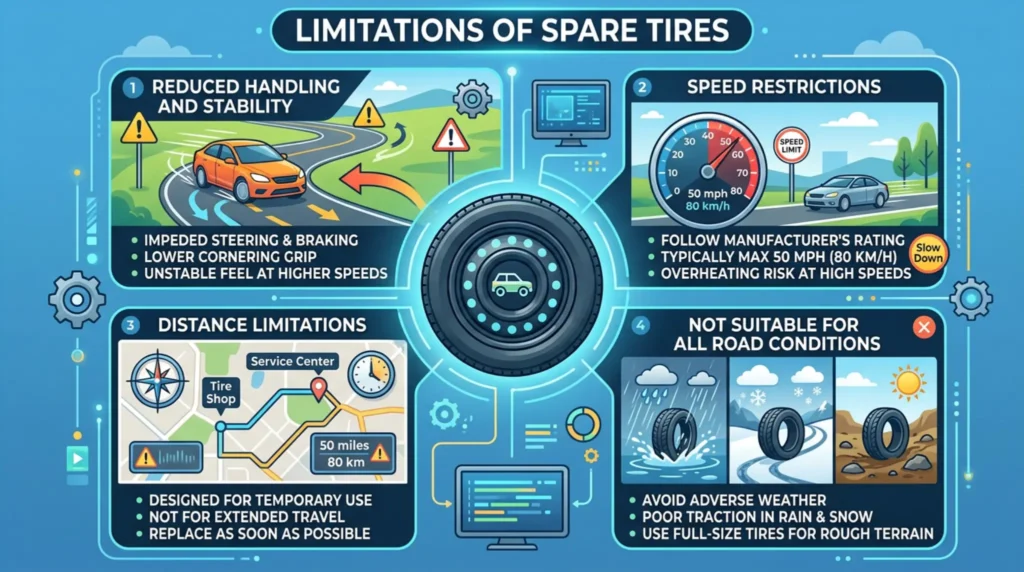
Reduced Handling and Stability
Temporary spare tires can affect:
Steering control
Braking performance
Vehicle balance
As a result, drivers may notice reduced grip, especially at higher speeds.
Speed Restrictions
Most temporary spare tires have speed limits. Exceeding these limits increases the risk of tire failure.
Driving too fast on a spare can lead to:
Loss of control
Tire overheating
Increased wear
Distance Limitations
Temporary spares are designed for short distances only. Driving beyond recommended limits can damage:
The spare tire
Suspension components
Transmission (especially in AWD vehicles)
Not Suitable for All Road Conditions
Spare tires, especially compact ones, are not ideal for:
Wet or slippery roads
Rough terrain
Long highway drives
Therefore, drivers should replace them as soon as possible.
Common Mistakes Drivers Make
Many drivers misuse spare tires because they do not fully understand spare tires: types & limitations.
Common mistakes include:
Driving too fast on a compact spare
Using a spare tire for extended periods
Ignoring uneven handling
Mixing tire types incorrectly
Forgetting to check spare tire pressure
Avoiding these mistakes can prevent further vehicle damage.
When You Should Replace or Repair Your Tire
A spare tire is not a permanent solution in most cases.
You should replace or repair your tire if:
The spare tire has been used beyond recommended limits
The damaged tire has sidewall damage
The tire has multiple punctures
The tread is severely worn
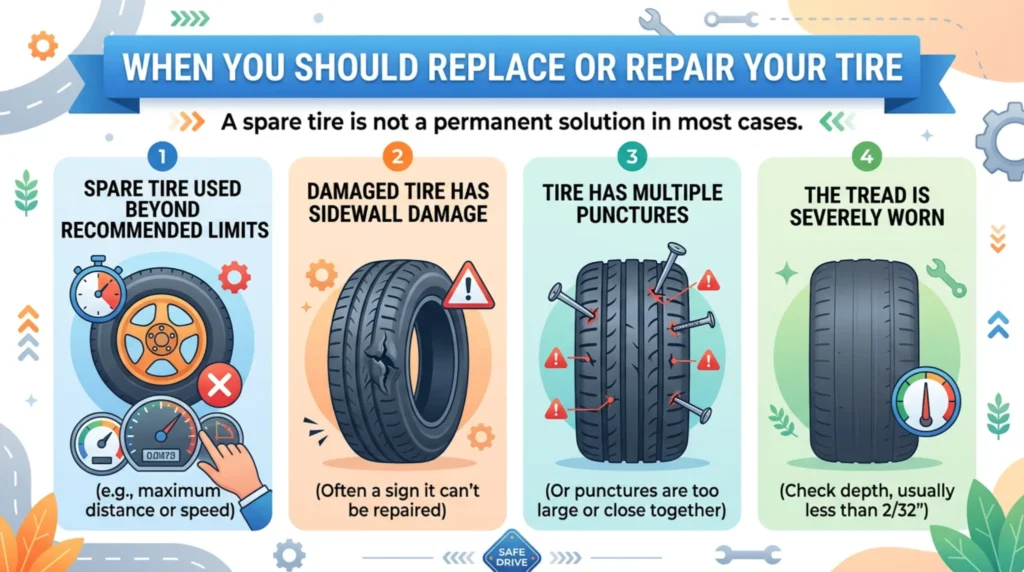
In addition, a professional inspection ensures your vehicle remains safe.
Spare Tire Safety Checklist
Before driving long distances, make sure:
✔ Your spare tire is properly inflated
✔ You know the type of spare tire in your vehicle
✔ You understand speed and distance limits
✔ You have the tools needed to install it
✔ Your emergency kit is complete
Being prepared significantly reduces stress during unexpected tire problems.
Conclusion: Understanding Spare Tires Can Prevent Bigger Problems
Spare tires are essential for handling roadside emergencies; however, they are not all designed for the same purpose. Knowing spare tires: types & limitations helps drivers make safer decisions and avoid costly mistakes.
Whether you have a full-size spare, compact donut, or run-flat system, understanding how each option works ensures you are prepared for unexpected situations. Ultimately, drivers who understand spare tires: types & limitations are more confident and better equipped to handle tire emergencies safely.
Frequently Asked Questions
What are the different types of spare tires?
The main types include full-size spare tires, compact spare (donut) tires, run-flat tires, and tire repair kits.
How long can you drive on a spare tire?
Most compact spare tires can be driven for about 50–70 miles at speeds below 50 mph. Full-size spares can be used longer, depending on condition.
Are spare tires safe for highway driving?
Full-size spare tires are generally safe for highway driving. However, compact spare tires are not recommended for long or high-speed driving.
Can you reuse a spare tire multiple times?
Yes, but temporary spare tires should only be used for short periods. They should not replace regular tires permanently.
Do all cars come with a spare tire?
No. Many modern vehicles come with run-flat tires or tire repair kits instead of a spare tire.
