

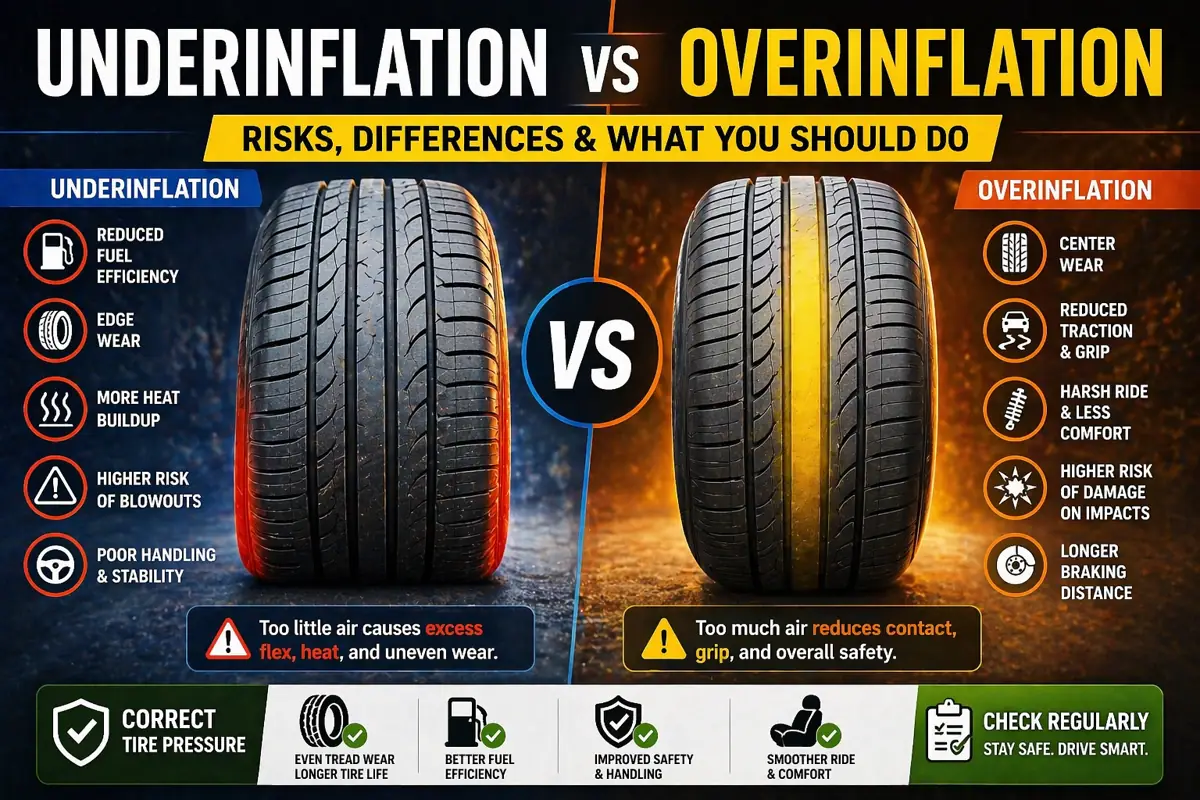
Underinflation and overinflation both damage your tires, but in different ways. Underinflated tires wear out faster on the edges, reduce fuel efficiency, and generate excess heat. Overinflated tires wear out in the center, reduce traction, and make your ride less stable.
In simple terms, incorrect tire pressure affects how your tires grip the road, how they wear, and how safe your vehicle feels while driving.

- Underinflation → more road contact, more heat, faster edge wear
- Overinflation → less road contact, reduced grip, faster center wear
- Both reduce safety and tire lifespan
- Always follow your vehicle’s recommended PSI
What Is Underinflation
Underinflation means your tires have less air than the recommended PSI.
What happens:
- The tire flattens more against the road
- The contact patch becomes wider
- Sidewalls flex excessively
Why it matters (Cause → Effect → Outcome)
When tires are underinflated, the sidewalls bend more as you drive. This creates heat buildup inside the tire. Over time, this heat weakens the internal structure and increases the risk of tire failure, especially during long highway drives.
Real world example:
If your car feels heavier, slower to respond, or your tires look slightly low in the morning, underinflation is often the cause.
Risks of Underinflation
- Reduced fuel efficiency due to increased rolling resistance
- Faster wear on tire edges
- Increased heat buildup
- Higher risk of blowouts during long drives
Tire manufacturers like Michelin emphasise that underinflation is one of the leading causes of premature tire damage.
What Is Overinflation
Overinflation means your tires have more air than the recommended PSI.
What happens:
- The tire becomes more rigid
- The contact patch becomes smaller
- Less surface touches the road
Why it matters (Cause → Effect → Outcome)
When tires are overinflated, less rubber touches the road. This reduces traction, especially during braking or cornering. It also causes the center of the tread to wear faster, shortening tire lifespan.
Real world example:
If your ride feels unusually stiff or bouncy, especially on rough roads, your tires may be overinflated.
Risks of Overinflation
- Reduced traction and grip
- Faster center tread wear
- Increased sensitivity to potholes and road damage
- Less comfortable driving experience
Companies like Goodyear warn that overinflated tires can negatively impact braking performance, particularly on wet roads.
How Tire Pressure Affects Traction, Wear & Safety
Tire pressure directly affects how your tires interact with the road.
- Underinflated tires increase the contact patch but reduce stability and increase heat
- Overinflated tires reduce the contact patch, leading to less traction
This impacts:
- Traction (grip on the road)
- Tread wear patterns
- Braking distance
- Fuel efficiency

Improper tire pressure can increase stopping distance, especially in rain or emergency braking situations.
Key Differences
| Factor | Underinflation | Overinflation |
|---|---|---|
| Contact patch | Too large | Too small |
| Tread wear | Edges wear faster | Center wears faster |
| Traction | Unstable grip | Reduced grip |
| Fuel efficiency | Decreases | Slight gain (unsafe trade-off) |
| Risk | Overheating, blowouts | Impact damage, poor handling |
How It Feels While Driving
Underinflated tires:
- Car feels heavy
- Steering response is slower
- More drag and resistance
Overinflated tires:
- Ride feels stiff or bouncy
- Less grip on turns
- More sensitive to bumps
How to Identify the Problem
You don’t always need tools immediately your car gives signals:
- Uneven tread wear → pressure imbalance
- Frequent TPMS alerts → possible underinflation
- Harsh or bouncy ride → possible overinflation
- Reduced fuel efficiency → often underinflation
What Should You Do (Simple Decision Guide)
- Tires look low → check pressure immediately
- Ride feels too stiff → check for overinflation
- Weather changed → recheck PSI
Always adjust pressure based on recommended PSI, not guesswork
If pressure is low due to cold weather, add air
If pressure seems high after driving, wait until tires are cold before adjusting
Common Mistakes Drivers Make
Ignoring seasonal changes
Tire pressure changes with temperature, but many drivers don’t adjust it
Using tire sidewall PSI
This shows maximum pressure, not recommended levels
Overcorrecting pressure
Adding too much air can quickly lead to overinflation
Real World Observation
Many drivers think their tires are losing air, but in reality:
- Temperature changes cause pressure fluctuations
- Driving habits affect tire wear
- Small pressure differences build up over time
How This Connects to Your Tire Maintenance
Proper tire care is a system:
- Learn how to check tire pressure correctly
- Understand recommended tire pressure
- Know how temperature affects tire pressure
These work together to maintain safety and performance
Conclusion:
Both underinflation and overinflation reduce tire performance and safety.

If you:
- Maintain correct PSI
- Check regularly
- Adjust for weather and driving conditions
You’ll improve traction, extend tire life, and drive more safely.
FAQs
Which is worse, underinflation or overinflation?
Underinflation is generally more dangerous because it increases heat buildup and the risk of tire failure, especially during long drives.
How do I know if my tire pressure is too low or too high?
Low pressure often causes a heavy driving feel and edge wear, while high pressure causes a stiff ride and center wear.
Can overinflated tires affect braking?
Yes. Overinflated tires reduce road contact, which can increase braking distance, especially on wet surfaces.
Why does underinflation cause tire damage?
Underinflation increases sidewall flex and heat buildup, which weakens the tire structure over time.
Does incorrect tire pressure affect fuel efficiency?
Yes. Underinflation increases rolling resistance and reduces fuel efficiency, while overinflation may slightly improve it but reduces safety.

