

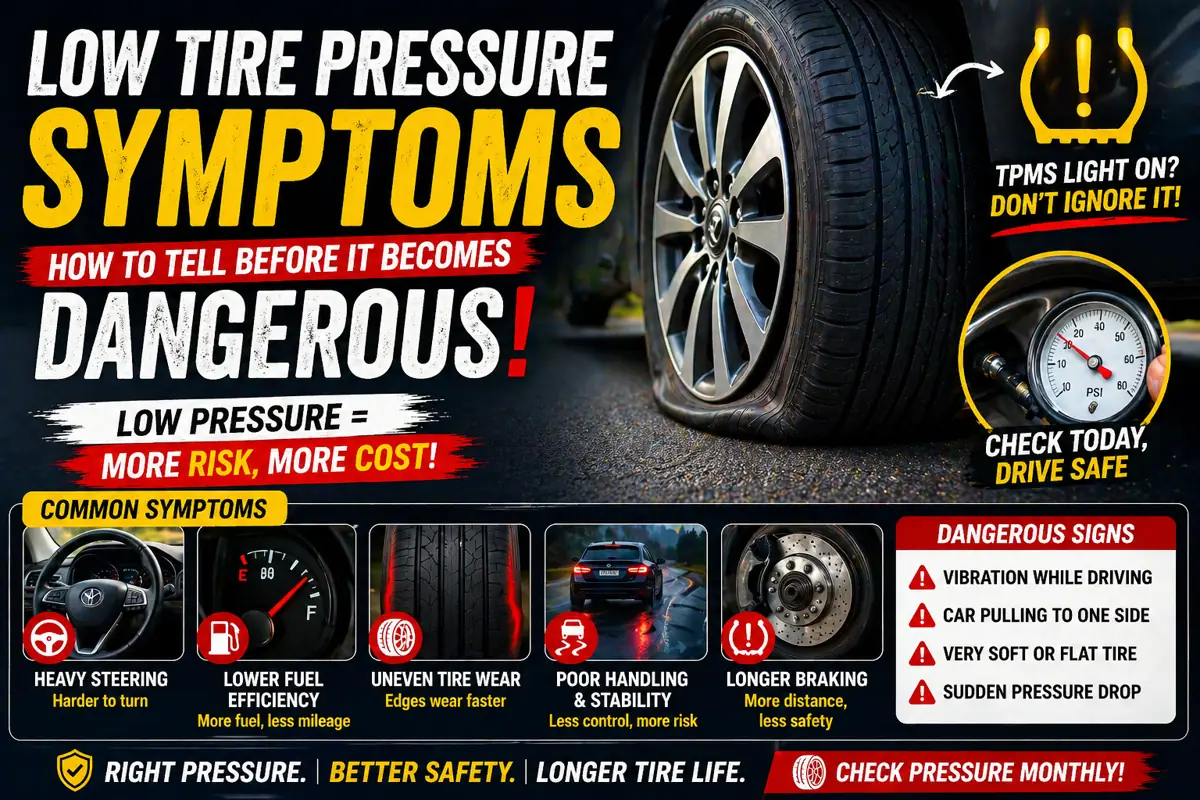
Low tire pressure symptoms can be difficult to notice at first, but your car usually gives clear warning signs. Common low tire pressure symptoms include heavy steering, reduced fuel efficiency, uneven tire wear, and a softer or unstable ride.
Recognising these low tire pressure symptoms early helps prevent tire damage, poor handling, and dangerous driving situations.

- Steering feels heavier than usual
- Car feels sluggish or less responsive
- Tire looks slightly underinflated
- TPMS warning light appears
- Fuel efficiency drops
These are early signs of low tire pressure
Why Low Tire Pressure symptoms Matters
Tire pressure controls how your tire contacts the road, known as the contact patch.
When pressure drops:
- The tire flattens more
- Sidewalls flex excessively
- Heat builds up inside the tire
Low tire pressure changes how your tires interact with the road. As pressure drops, more of the tire touches the surface, increasing rolling resistance and heat buildup. This reduces traction and accelerates tread wear, especially along the edges.
Cause → Effect → Outcome
When tire pressure is low, the tire flexes more during rotation. This constant flex generates heat, which gradually weakens the tire structure. Over time, this leads to faster wear, reduced performance, and a higher risk of tire failure.
Early Low Tire Pressure Symptoms

These are the signs drivers usually notice first.
1. Heavier Steering
The car may feel harder to steer, especially at low speeds.
Real world:
Parking or turning feels slightly more effortful than usual compared to properly inflated tires.
2. Reduced Fuel Efficiency
Underinflated tires create more rolling resistance.
You may notice:
- More frequent fuel stops
- Lower mileage on long drives
Even a small drop of 3–5 PSI can noticeably reduce fuel efficiency.
3. Slightly Softer or “Draggy” Ride
The vehicle may feel less responsive and slightly sluggish.
Many drivers describe this as:
“The car doesn’t feel as smooth as usual”
4. Tire Looks Slightly Low
Modern tires may not appear flat even when pressure is low.
Look closely:
A slight bulge or flattening at the bottom may be visible.
Advanced Symptoms
These indicate the problem is getting worse.
5. Uneven Tire Wear
- Edges of the tire wear faster than the center
- Tread depth becomes uneven
This happens because the outer edges of the tire carry more load when pressure is too low.
6. Poor Handling & Stability
- Vehicle feels less stable at higher speeds
- Steering response becomes slower
Especially noticeable during lane changes or cornering
7. Increased Braking Distance
Low tire pressure reduces traction.
This can significantly increase stopping distance, especially on wet roads or during emergency braking.
8. TPMS Warning Light
Most vehicles alert you when pressure drops significantly.
Important:
The warning appears after pressure is already low, not before.
Dangerous Signs
These should never be ignored:
- Strong vibration while driving
- Vehicle pulling to one side
- Very soft or visibly deflated tire
- Sudden pressure drop
These signs may indicate a serious issue such as a puncture or rapid air loss. Stop driving as soon as it is safe.
How Low Tire Pressure Feels While Driving

City driving:
- Steering feels heavier
- Car feels slower and less responsive
Highway driving:
- Vehicle feels unstable
- Reduced control during lane changes
Wet or slippery roads:
- Reduced grip
- Increased risk of slipping or hydroplaning
What Causes These Symptoms
Low pressure increases the tire’s contact with the road, but not in a beneficial way.
Instead, it:
- Increases friction
- Generates heat
- Reduces efficiency
Compared to properly inflated tires, underinflated tires work harder and wear faster.
Quick Self Check
You can quickly identify the issue:
- Steering feels heavy → likely underinflation
- Tire edges wearing faster → pressure too low
- Fuel economy dropping → check tire pressure
- TPMS light on → check immediately
Never rely only on visual inspection
What Should You Do
- Notice any symptoms → check pressure immediately
- Use a reliable pressure gauge
- Inflate to recommended PSI
Always check when tires are cold for accurate readings
Tire manufacturers like Michelin recommend maintaining proper tire pressure to ensure consistent traction, safety, and tire longevity.
Common Mistakes Drivers Make
Ignoring early signs
Small changes in driving feel are often overlooked
Relying only on TPMS
TPMS alerts you late, not early
Guessing tire pressure
Always follow manufacturer recommended PSI
Real World Observation
Many drivers say:
“The car feels off, but I can’t tell why”
In many cases:
- Tire pressure is slightly low
- Symptoms are subtle but noticeable
Safety Impact
Low tire pressure can:
- Increase braking distance
- Reduce control during emergency maneuvers
- Increase the risk of tire failure at high speeds
Maintaining correct tire pressure is critical for safe driving in all conditions.
Conclusion:
Low tire pressure shows clear signs if you know what to look for.
If you:
- Pay attention to how your car feels
- Check tire pressure regularly
- Act on early symptoms
You can prevent damage, improve safety, and extend tire life.
FAQs
How do I know if my tire pressure is low?
Common signs include heavy steering, reduced fuel efficiency, uneven tire wear, and a softer ride.
Can I drive with low tire pressure?
You can drive short distances carefully, but it increases safety risks and should be corrected immediately.
Does low tire pressure affect fuel economy?
Yes. It increases rolling resistance, which forces the engine to work harder and reduces fuel efficiency.
Why don’t my tires look flat?
Modern tires can lose pressure without appearing visibly flat, making manual pressure checks important.
How dangerous is low tire pressure?
It can reduce traction, increase stopping distance, and raise the risk of tire failure, especially at high speeds.

