

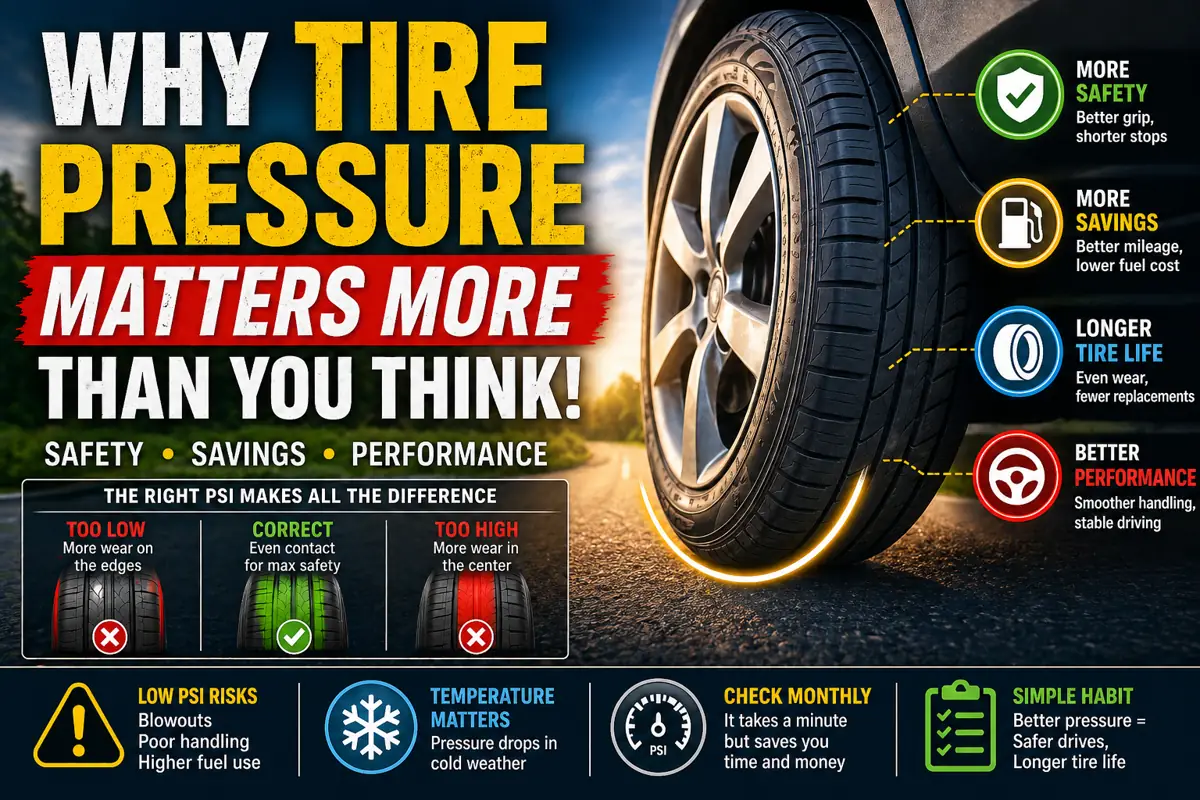
Why tire pressure matters more than you think is simple: it directly affects your safety every time you drive. Even a small drop in tire pressure can increase stopping distance, reduce traction, and cause faster tire wear without you even noticing.
Most drivers overlook tire pressure because the changes are gradual, but the impact on performance, fuel efficiency, and safety is significant.

Why tire pressure matters:
- Affects traction and braking
- Impacts fuel efficiency
- Changes tire wear patterns
- Influences handling and stability
Correct tire pressure keeps your vehicle safe, efficient, and predictable on the road
How Tire Pressure Affects Driving Performance
Tire pressure controls the contact patch, which is the part of the tire touching the road.
- Correct pressure → even contact, balanced grip
- Low pressure → increased friction and heat
- High pressure → reduced road contact
Cause → Effect → Outcome
When tire pressure is too low, the tire flexes more as it rotates. This generates heat, which weakens the tire structure and reduces stability over time. In contrast, overinflated tires reduce the contact area, leading to less grip and reduced control during braking and cornering.
Compared to properly inflated tires, both conditions reduce overall performance.
Safety: The Most Important Reason
This is where tire pressure matters the most.

1. Reduced Braking Performance
Incorrect tire pressure increases stopping distance.
Especially dangerous:
- Wet roads
- Emergency braking situations
Even a small drop of 3–5 PSI can noticeably affect braking performance.
2. Poor Handling and Control
- Underinflated tires feel unstable
- Overinflated tires reduce grip
In both cases, the vehicle becomes less predictable compared to properly inflated tires.
3. Increased Risk of Tire Failure
Low tire pressure causes excessive heat buildup, which can lead to tire damage or blowouts at high speeds.
Fuel Efficiency: The Hidden Cost
Many drivers underestimate how much tire pressure affects fuel economy.
Low tire pressure increases rolling resistance, meaning the engine has to work harder.

Result:
- Higher fuel consumption
- Increased long term cost
Even a small drop in pressure can reduce fuel efficiency over time.
Tire Wear: Where You Lose Money
Incorrect tire pressure leads to uneven tread wear.
Underinflation:
- Edge wear
- Faster tire degradation
Overinflation:
- Center wear
- Reduced tire lifespan
Proper tire pressure ensures even wear and maximum tire life.
Real World Driving Impact
This is what drivers actually notice.
City driving:
- Heavier steering feel
- Slight drop in fuel efficiency
Highway driving:
- Reduced stability
- Longer braking distance
Long trips:
- Increased risk of tire overheating
These changes are subtle but become more noticeable over time.
Temperature and Pressure Changes
Tire pressure is constantly affected by temperature.
- Drops in cold weather
- Increases in heat
Roughly 1 PSI change for every 10°F difference
Example:
A tire set at 35 PSI in warm conditions may drop to 30–32 PSI in colder weather.
Load and Driving Conditions Matter
Tire pressure should adjust based on how the vehicle is used.
- Daily driving → standard PSI
- Heavy load → slightly higher pressure
- Long trips → check before driving
Tire manufacturers like Michelin, Bridgestone, and Goodyear emphasise maintaining proper tire pressure to ensure safety, traction, and consistent performance.
Why Most Drivers Ignore Tire Pressure
Many drivers underestimate its importance because:
- Changes are gradual
- Symptoms are subtle
- TPMS alerts come late
This often leads to long term issues without immediate warning.
What You Should Do a simple Routine
- Check tire pressure once a month
- Always check when tires are cold
- Follow recommended PSI
- Adjust for temperature and load
This simple routine prevents most tire-related problems.
Common Mistakes Drivers Make
- Ignoring small pressure changes
- Overinflating for fuel savings
- Relying only on TPMS
- Checking pressure visually
These mistakes reduce safety and increase long-term costs.
Safety Impact
Incorrect tire pressure can:
- Increase braking distance
- Reduce traction
- Increase the risk of accidents
Proper tire pressure is one of the easiest and most effective ways to improve road safety.
Real World Observation
Many drivers say:
The car feels slightly off
In many cases:
- Tire pressure is not optimal
- The issue goes unnoticed until performance drops
Conclusion:
Tire pressure affects more than just your tires, it directly impacts safety, fuel efficiency, and driving performance every day.
If you:
- Maintain correct tire pressure
- Check regularly
- Adjust for conditions
You’ll drive safer, save money, and extend the life of your tires.
FAQs
Why is tire pressure so important?
It affects safety, traction, fuel efficiency, and tire wear.
What happens if tire pressure is too low?
It increases heat, reduces traction, and causes uneven wear.
Can tire pressure affect braking?
Yes. Incorrect pressure increases stopping distance and reduces control.
Does tire pressure impact fuel economy?
Yes. Low pressure increases rolling resistance and fuel consumption.
How often should I check tire pressure?
At least once a month and before long trips.

