

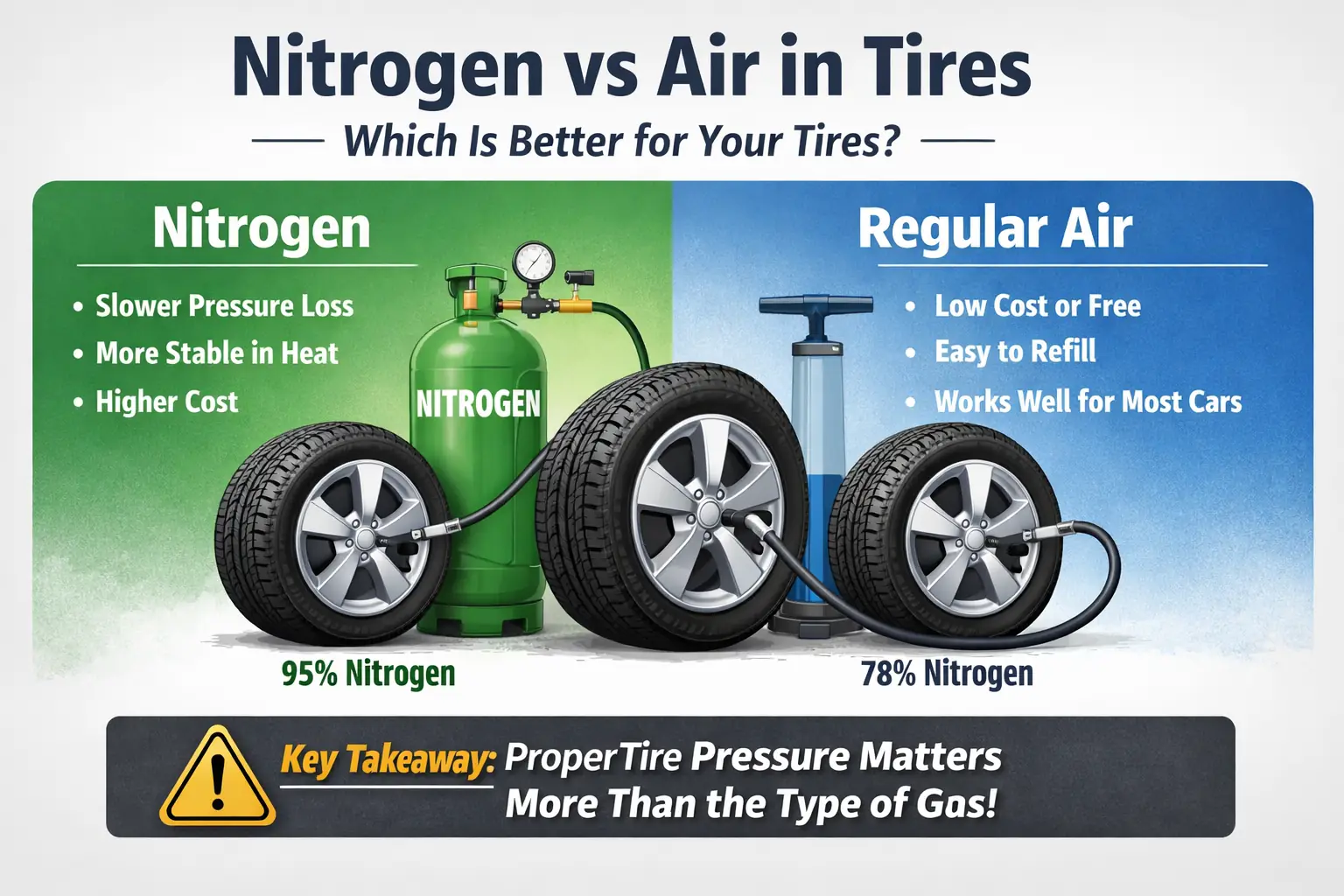
Nitrogen vs air in tires is a common question among drivers, especially when tire shops offer nitrogen as a premium option. The simple answer is this:
For most everyday driving, regular air works perfectly fine.
Nitrogen offers small advantages, but they rarely make a noticeable difference for typical drivers.
Most drivers only focus on tire pressure when something feels wrong or when a dashboard warning appears. However, what really matters is maintaining the correct tire pressure, not necessarily the type of gas used.
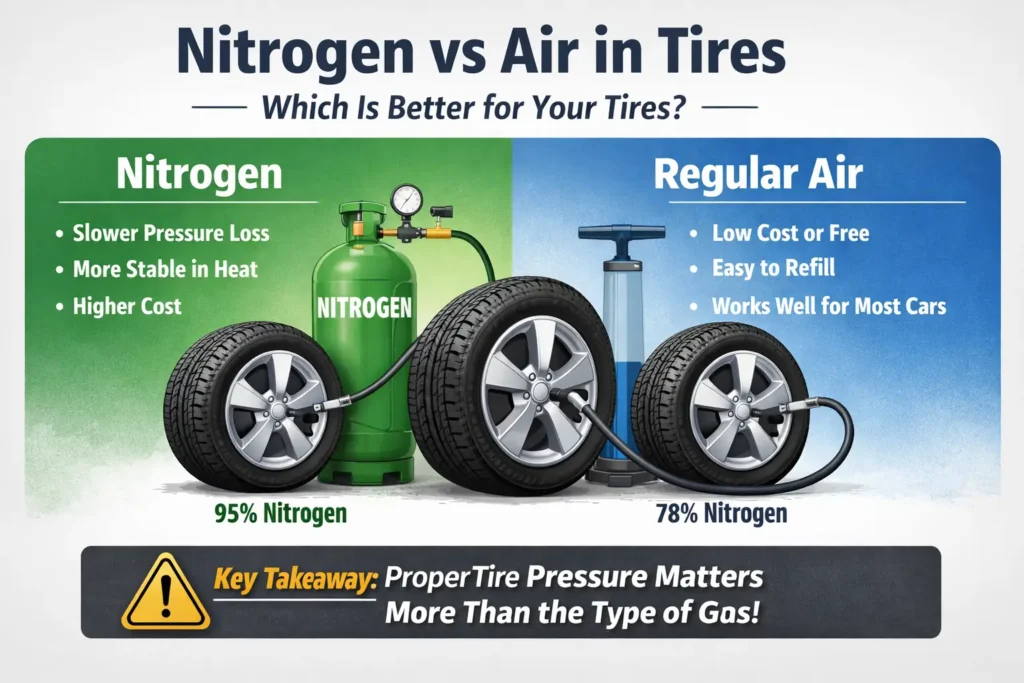
Nitrogen vs Air in Tires:
If you’re deciding between nitrogen and regular air, here’s the simple answer:
- Use regular air for everyday driving
- Nitrogen offers small benefits but no major performance advantage
- Maintaining correct tire pressure matters more than the type of gas
For most drivers, nitrogen is optional, not necessary.
What’s the Difference Between Nitrogen and Air in Tires?
Regular compressed air is not just air. It already contains about:
- 78% nitrogen
- 21% oxygen
- Small amounts of other gases
Nitrogen inflation uses nearly pure nitrogen instead.
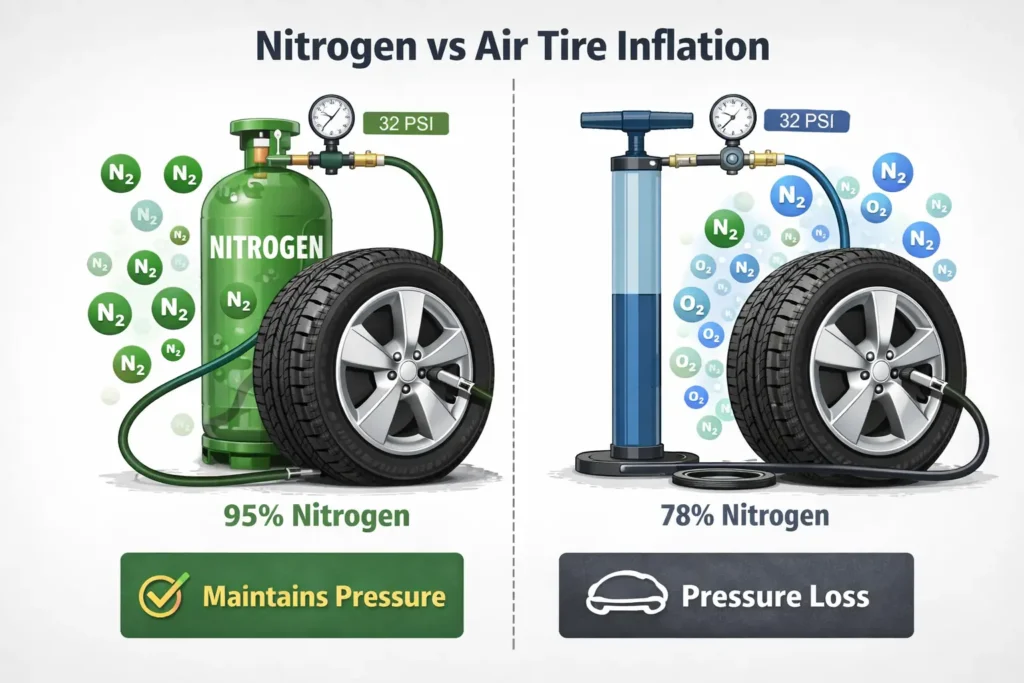
So the real difference is not nitrogen vs no nitrogen
it’s pure nitrogen vs regular air that already contains nitrogen.
Why Some Tire Shops Recommend Nitrogen
Tire shops often promote nitrogen because it has a few technical advantages.
Slower Air Loss
Nitrogen molecules are slightly larger than oxygen molecules, so they escape through rubber more slowly. This can help maintain pressure a bit longer.
Less Moisture
Compressed air can contain moisture, especially in humid areas. Nitrogen is dry, which reduces internal moisture inside the tire.
More Stable in Extreme Conditions
Nitrogen performs better under extreme heat, which is why it’s used in racing, aviation, and heavy duty vehicles.
Common Myths About Nitrogen in Tires
Many drivers are told that nitrogen dramatically improves tire performance, but this is often misunderstood.
Myth 1: Nitrogen prevents tire pressure loss completely
Reality: Tires still lose pressure over time, even with nitrogen.
2nd Myth: Nitrogen improves traction and handling
Reality: Traction depends on proper tire pressure and tread condition, not the type of gas.
Myth 3: Nitrogen eliminates the need for maintenance
Reality: You still need to check tire pressure regularly.
In real world driving, these differences are often too small to notice.
Does Nitrogen Actually Make a Difference?
Here’s what most drivers don’t realise:
In normal driving conditions, the difference is very small.
Whether you’re commuting in the city or driving long distances on highways, both nitrogen and regular air:
- Maintain tire shape
- Provide similar traction
- Deliver the same driving experience
Most vehicles on U.S. roads including those using tires from brands like Michelin, Bridgestone, and Goodyear run perfectly on regular air.
Real-World Driving Insight
Most drivers will not feel any difference between nitrogen-filled tires and air-filled tires.
What drivers do notice is:
- Low tire pressure
- Uneven tire wear
- Reduced fuel efficiency
These issues are caused by incorrect pressure, not whether the tire contains nitrogen or air.
Cost vs Benefit: Is Nitrogen Worth It?
Nitrogen inflation usually costs extra, while regular air is free or available at most gas stations.
What nitrogen offers:
- Slightly slower pressure loss
- More stable pressure over time
What it does not improve:
- Traction
- Braking
- Tire lifespan (if pressure is maintained properly)
Decision takeaway:
For most drivers, paying for nitrogen is not necessary.
Is Paying for Nitrogen Worth It?
In practical terms, the value depends on your habits.
- If you check your tire pressure regularly, regular air works just as well
- If you rarely check pressure, nitrogen may help slightly but it does not replace maintenance
Smart choice:
Save money and focus on maintaining proper tire pressure instead.
For best results, always follow your vehicle’s recommended tire pressure and check it regularly.
When Nitrogen Might Be Useful
Nitrogen can make sense in certain situations:
- High-performance or racing vehicles
- Heavy commercial vehicles
- Extreme temperature environments
In these cases, even small pressure changes can matter.
Real-World Example
Imagine two drivers:
- Driver A uses nitrogen but never checks tire pressure
- Driver B uses regular air and checks pressure once a month
Driver B will have better tire performance, longer tire life, and safer driving.
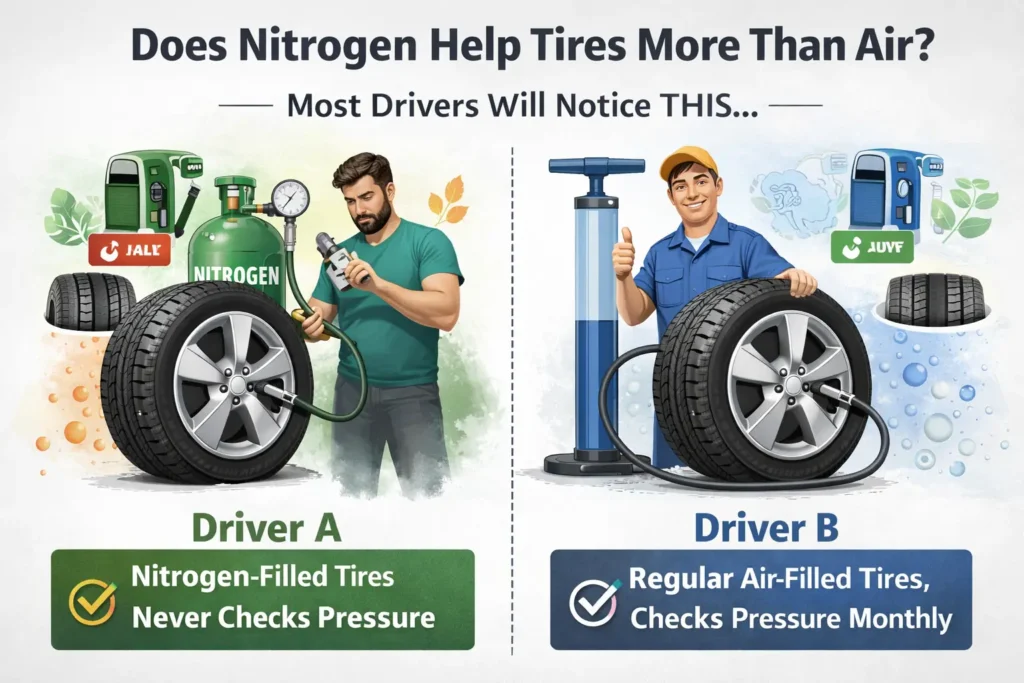
This shows that maintenance habits matter more than nitrogen vs air.
Nitrogen vs Air: Simple Comparison
| Feature | Nitrogen | Regular Air |
|---|---|---|
| Pressure stability | Slightly better | Good |
| Cost | Higher | Free or low-cost |
| Availability | Limited | Widely available |
| Maintenance required | Yes | Yes |
What Should You Do?
If you want simple, safe, and cost effective tire maintenance:
- Use regular air
- Check tire pressure at least once a month
- Follow your vehicle’s recommended PSI
If your tires already contain nitrogen, there is no problem continuing to use it, but it is not necessary for most drivers.
Conclusion:
The nitrogen vs air in tires debate is often overcomplicated.
- Nitrogen provides small technical benefits
- Regular air is already mostly nitrogen
- Proper tire pressure matters far more
In real world driving, maintaining correct tire pressure is what truly improves safety, fuel efficiency, and tire lifespan.
FAQs
Is nitrogen better than air in tires?
Nitrogen is slightly better at maintaining pressure, but for most drivers, regular air works just as well.
Can I mix nitrogen and air in tires?
Yes, mixing nitrogen and air is completely safe and does not affect tire performance.
How long does nitrogen last in tires?
Nitrogen may leak more slowly than regular air, but tires still lose pressure over time.
Do nitrogen tires improve fuel economy?
No. Fuel efficiency depends on maintaining proper tire pressure, not the type of gas used.
Is nitrogen worth the extra cost?
For most drivers, no. Regular air provides similar performance when tire pressure is properly maintained.
Does nitrogen prevent tire blowouts?
No. Blowouts are usually caused by underinflation, overheating, or tire damage not because of the type of gas used.
