


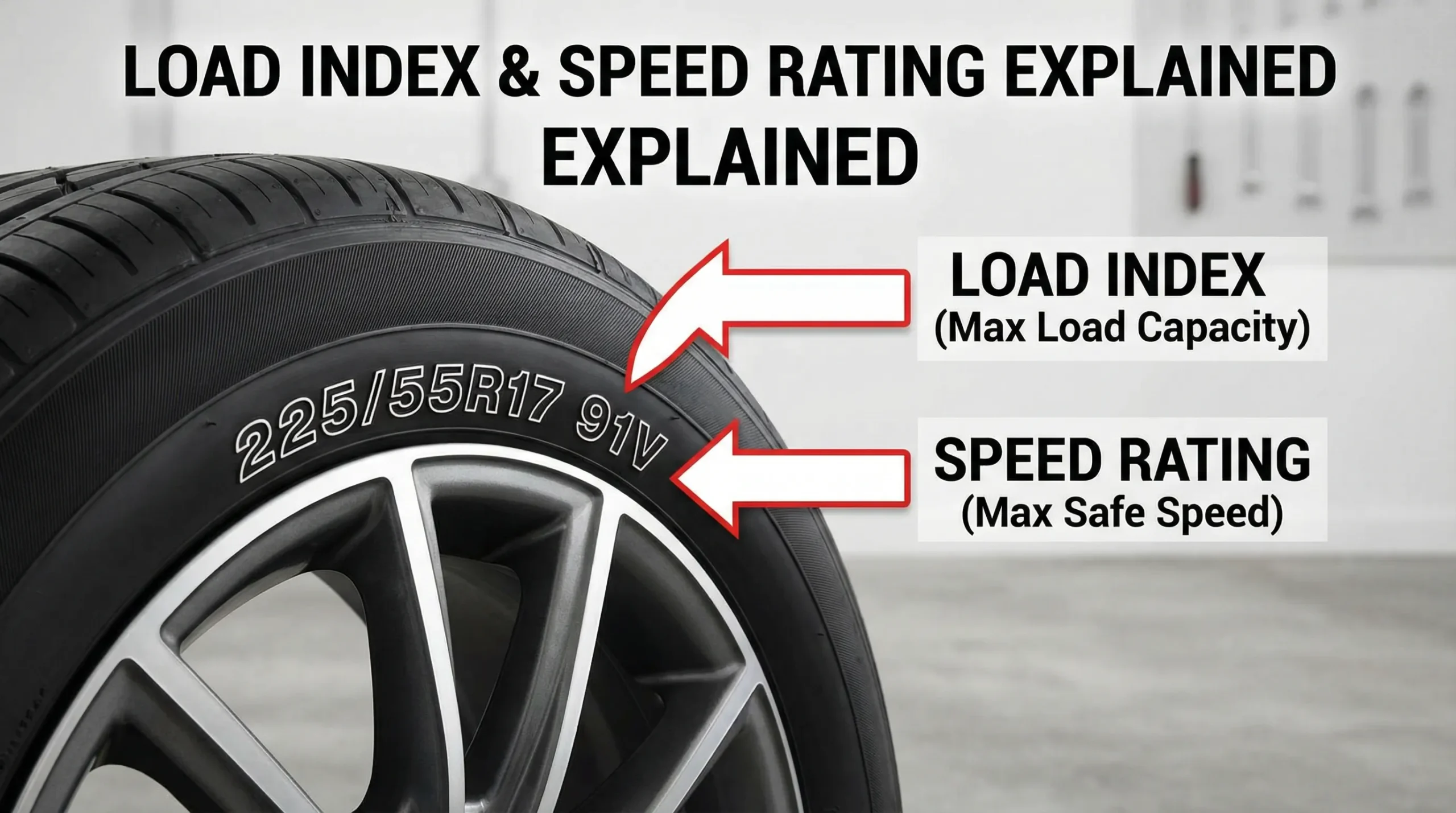
Understanding tire ratings is essential when learning how to choose the right tires for your vehicle. In addition to tire size, two important factors, load index and speed rating determine how much weight your tires can carry and how fast they can safely perform.

Many drivers overlook these ratings. However, choosing the correct load index and speed rating directly affects safety, durability, and overall driving performance.
What Is Tire Load Index?
The tire load index is a number that indicates the maximum weight a tire can safely support when properly inflated. Each number corresponds to a specific weight capacity.
For example, a load index of 91 means the tire can carry up to 615 kg (1356 lbs).
What Is Tire Speed Rating?
The speed rating is a letter that indicates the maximum speed a tire can safely maintain under recommended conditions.
For example, a V rating means the tire can handle speeds up to 149 mph (240 km/h).
Load Index Chart
Below is a simplified load index chart to help you understand common ratings.
| Load Index | Weight (kg) | Weight (lbs) |
|---|---|---|
| 85 | 515 | 1135 |
| 88 | 560 | 1235 |
| 91 | 615 | 1356 |
| 95 | 690 | 1521 |
| 100 | 800 | 1764 |
As a result, higher numbers indicate higher load capacity, which is especially important for SUVs and trucks.
Speed Rating Chart (S, T, H, V Explained)
Speed ratings are represented by letters.
| Speed Rating | Maximum Speed (mph) | Maximum Speed (km/h) |
|---|---|---|
| S | 112 mph | 180 km/h |
| T | 118 mph | 190 km/h |
| H | 130 mph | 210 km/h |
| V | 149 mph | 240 km/h |
In general, higher speed ratings offer better handling and heat resistance. However, they may wear faster depending on driving conditions.
What Do Numbers Like 91V Mean?
You will often see a combination like:
91V

This includes both load index and speed rating.
| Part | Meaning |
|---|---|
| 91 | Load index (weight capacity) |
| V | Speed rating (maximum speed) |
For example, a tire marked 91V can carry up to 615 kg and safely operate at speeds up to 149 mph.
How Load Index and Speed Rating Work Together
Both ratings must match your vehicle’s requirements.

| Factor | Importance |
|---|---|
| Load index | Ensures the tire can support vehicle weight |
| Speed rating | Ensures safe performance at higher speeds |
Therefore, using the correct combination helps maintain vehicle stability, braking performance, and safety.
How to Choose the Right Load Index & Speed Rating
Choosing the correct ratings depends on your vehicle and driving habits.
| Driving Situation | Recommended Rating |
|---|---|
| Daily commuting | Standard manufacturer rating |
| Heavy loads (SUV/truck) | Higher load index |
| Highway driving | Higher speed rating |
| Performance driving | High speed rating (H, V or above) |
If you’re unsure, refer to your vehicle manual or our guide on how to choose the right tires for a complete overview.
What Happens If You Use the Wrong Rating?
Using incorrect ratings can lead to serious issues.
| Problem | Result |
|---|---|
| Low load index | Tire overload and failure |
| Low speed rating | Reduced performance and safety |
| Incorrect combination | Poor handling and braking |
As a result, always follow manufacturer recommendations to avoid safety risks.
Can You Use Higher or Lower Ratings?
Many drivers ask whether they can change these ratings.
| Option | Safe? | Explanation |
|---|---|---|
| Higher load index | Yes | Can carry more weight safely |
| Higher speed rating | Yes | Often improves performance |
| Lower load index | No | Unsafe and not recommended |
| Lower speed rating | No | May reduce safety |
In general, upgrading ratings is acceptable, but downgrading is risky.
Where to Find Load Index and Speed Rating
You can find these ratings in several places.
| Location | Details |
|---|---|
| Tire sidewall | Printed next to tire size |
| Owner’s manual | Manufacturer specifications |
| Door sticker | Recommended tire details |
For example, your tire might display 225/55R17 91V, which includes size, load index, and speed rating.
Why These Ratings Matter for Safety
Load index and speed rating are not just technical numbers—they directly impact safety.
- Proper load index prevents tire overload
- Correct speed rating ensures stability at high speeds
- Matching ratings improves braking and control
Therefore, understanding these ratings helps you make safer tire choices.
Conclusion:
Understanding load index and speed rating is a crucial step in learning how to choose the right tires. These ratings determine how much weight your tires can handle and how they perform at different speeds.
By selecting the correct ratings, you can improve safety, extend tire lifespan, and ensure optimal driving performance.
Frequently Asked Questions
What does 91V mean on a tire?
It means the tire has a load index of 91 (615 kg capacity) and a speed rating of V (up to 149 mph).
Can I use a higher load index tire?
Yes, using a higher load index is generally safe and may improve durability.
Is it safe to use a lower speed rating?
No, using a lower speed rating than recommended can reduce safety and performance.
Do load index and speed rating affect performance?
Yes, they affect handling, durability, and safety, especially at higher speeds or heavier loads.
Where can I check my tire ratings?
You can check the tire sidewall, vehicle manual, or door sticker for the correct ratings.
About TireGuidePro
TireGuidePro provides research-based guides to help drivers make smarter tire decisions. Our content combines manufacturer recommendations, tire standards, and real-world driving insights.

