


Tubeless vs Tube Tires: What’s the Difference & Which Is Better?
Tubeless vs tube tires which is better and safer? Many drivers ask this question when choosing tires for their vehicle. While both types serve the same purpose, they differ significantly in construction, safety, and performance.

Understanding these differences helps you make a better decision when learning how to choose the right tires for your vehicle. In this guide, you’ll learn how tubeless and tube tires work, how they compare, and which option suits your needs.
Tubeless vs Tube Tires
Tubeless tires are safer, more durable, and more efficient for most vehicles. In contrast, tube tires cost less upfront but increase the risk of sudden air loss and require more maintenance.
Therefore, most modern vehicles use tubeless tires because they offer better safety and performance.
What Are Tubeless Tires?
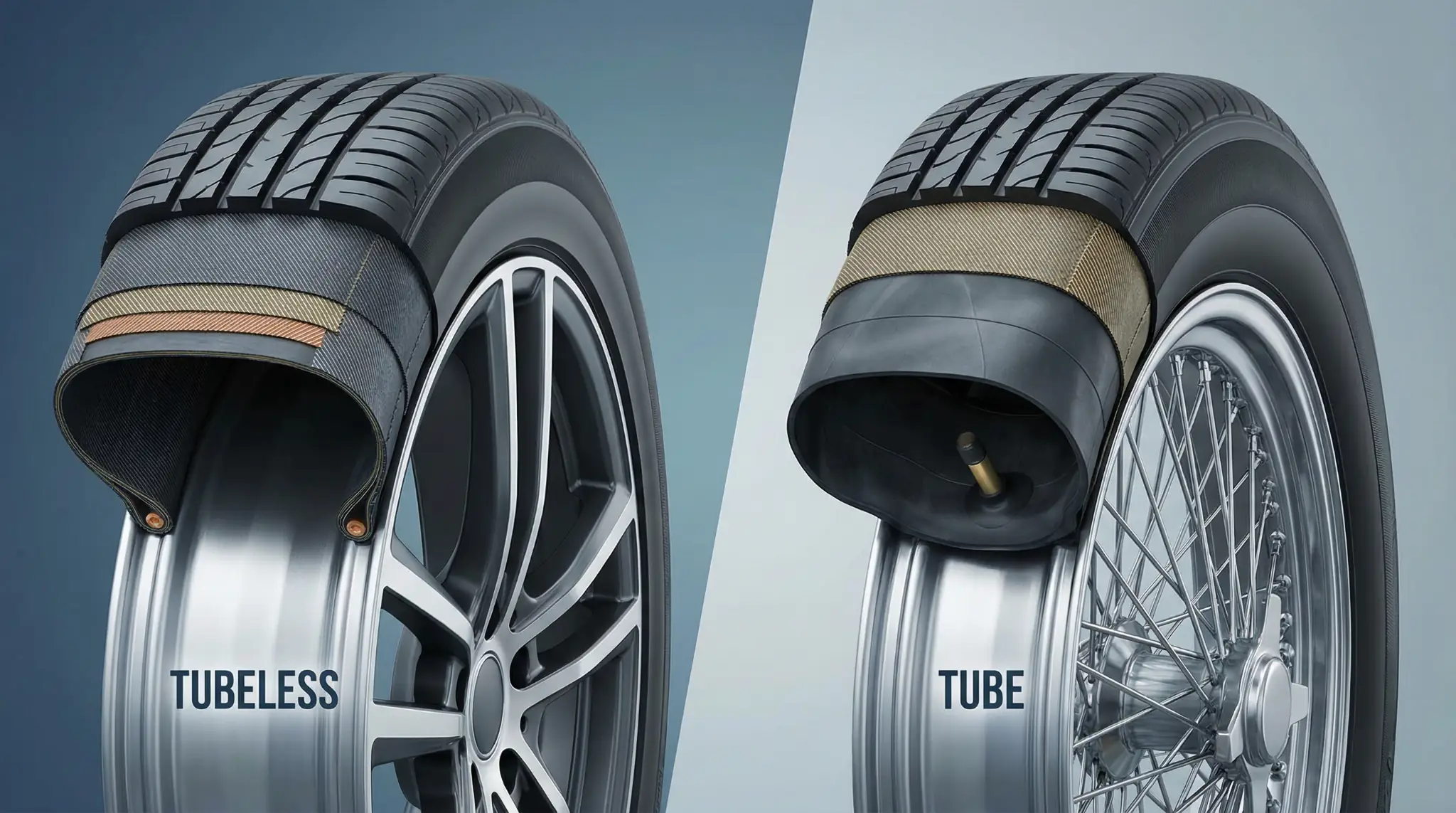
Tubeless tires do not use an inner tube. Instead, they seal directly against the wheel rim and hold air inside the tire itself.
This design prevents rapid air loss when punctures occur. As a result, drivers can often continue driving safely for a short distance after a puncture.
In addition, tubeless tires reduce heat buildup and improve fuel efficiency.
What Are Tube Tires?
Tube tires contain an inner tube that holds the air pressure. The outer tire protects the tube and provides grip on the road.
When a tube tire gets punctured, the air escapes quickly. Therefore, drivers may lose control more easily compared to tubeless tires.
Although this design is older, it still appears in certain vehicles such as motorcycles and off-road setups.
Key Differences Between Tubeless and Tube Tires
Understanding the differences helps you choose the better option.
| Feature | Tubeless Tires | Tube Tires |
|---|---|---|
| Construction | No inner tube | Uses inner tube |
| Air retention | Slower air loss | Rapid air loss |
| Safety | Higher | Lower |
| Maintenance | Easier | Requires more care |
| Heat generation | Lower | Higher |
| Fuel efficiency | Better | Lower |
| Puncture repair | Simple | More complex |
As shown above, tubeless tires outperform tube tires in most categories.
Advantages and Disadvantages of Tubeless Tires
Advantages of Tubeless Tires
| Advantage | Benefit |
|---|---|
| Slow air leakage | Better control during puncture |
| Lower heat buildup | Improved durability |
| Better fuel efficiency | Reduced rolling resistance |
| Easy repair | Quick puncture fixes |
In addition, tubeless tires work well for highway and city driving.
Disadvantages of Tubeless Tires
| Disadvantage | Impact |
|---|---|
| Higher initial cost | More expensive upfront |
| Requires proper rim seal | Installation must be precise |
However, these disadvantages are minor compared to the safety benefits.
Advantages and Disadvantages of Tube Tires
Advantages of Tube Tires
| Advantage | Benefit |
|---|---|
| Lower cost | Budget-friendly |
| Simple design | Easy to understand |
For example, some off-road riders prefer tube tires because they can repair them in remote areas.
Disadvantages of Tube Tires
| Disadvantage | Impact |
|---|---|
| Sudden air loss | Higher risk of accidents |
| More heat generation | Faster wear |
| Frequent maintenance | More effort required |
| Difficult puncture repair | Slower fixes |
Therefore, tube tires are less suitable for modern passenger vehicles.
Which Is Safer: Tubeless or Tube Tires?
Tubeless tires are clearly safer in most situations.

When a tubeless tire gets punctured, it loses air slowly. As a result, the driver maintains better control of the vehicle.
In contrast, a tube tire can lose air rapidly after a puncture. This sudden pressure drop increases the risk of accidents, especially at high speeds.
Therefore, for everyday driving, tubeless tires provide a significant safety advantage.
When Should You Use Tube Tires?
Although tubeless tires are better for most drivers, tube tires still have specific use cases.

| Situation | Why Tube Tires May Work |
|---|---|
| Off-road conditions | Easier emergency repairs |
| Older vehicles | Compatible with older rims |
| Low-speed usage | Reduced safety risk |
For example, in remote areas, drivers may prefer tube tires because they can repair them without specialised tools.
Can You Convert Tube Tires to Tubeless?
In some cases, you can convert tube tires to tubeless. However, this process depends on the wheel design.
If the rim supports airtight sealing, conversion may work. Otherwise, air leaks can occur.
Therefore, you should only attempt conversion if the manufacturer recommends it.
How This Affects Your Tire Choice
When comparing tire types, you should also consider:
- Tire construction and usage
- Load requirements (load index and speed rating explained)
- Driving conditions and habits (tire types explained)
In addition, combining these factors helps you choose the best tire setup for your vehicle.
Conclusion:
So, which is better tubeless or tube tires?
In most cases, tubeless tires are the better choice. They offer improved safety, better performance, and lower maintenance.
However, tube tires may still work in specific situations such as off-road driving or older vehicles.
Ultimately, choosing the right tire depends on your vehicle type, driving conditions, and safety priorities.
Frequently Asked Questions
Are tubeless tires safer than tube tires?
Yes, tubeless tires are safer because they lose air more slowly after a puncture, which helps maintain vehicle control.
Why do modern cars use tubeless tires?
Modern cars use tubeless tires because they improve safety, reduce maintenance, and increase fuel efficiency.
Can tube tires be used on tubeless rims?
Yes, but it is not recommended because it can reduce performance and increase heat buildup.
Do tubeless tires get punctured easily?
Tubeless tires can still get punctured, but they usually lose air slowly, making them safer.
Which tires are better for long-distance driving?
Tubeless tires are better for long-distance driving because they provide better durability and safety.
About TireGuidePro
TireGuidePro provides research-based guides to help drivers make smarter tire decisions. Our content combines manufacturer recommendations, tire standards, and real-world driving insights.

