


Understanding tire size is essential when learning how to choose the right tires for your vehicle. Tire size affects handling, comfort, fuel efficiency, and overall safety. However, many drivers find tire numbers confusing at first.

In this guide, you will learn how to read tire markings, what each number means, and how size impacts your driving performance.
What Does Tire Size Mean?
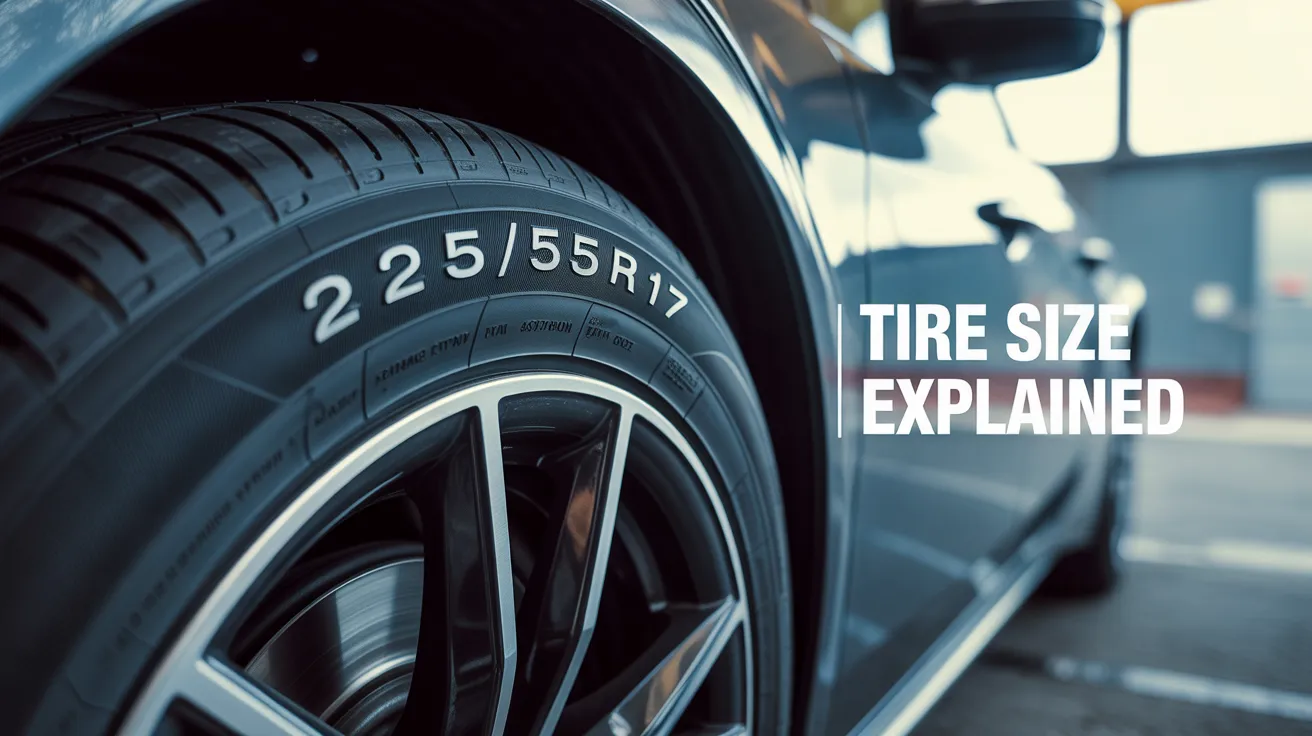
It refers to a series of numbers and letters printed on the tire sidewall that indicate the tire’s width, height, construction type, and wheel diameter. For example, in 225/55R17, each part provides specific information about the tire’s dimensions and compatibility.
Understanding these numbers helps ensure you choose tires that fit your vehicle correctly and perform safely.
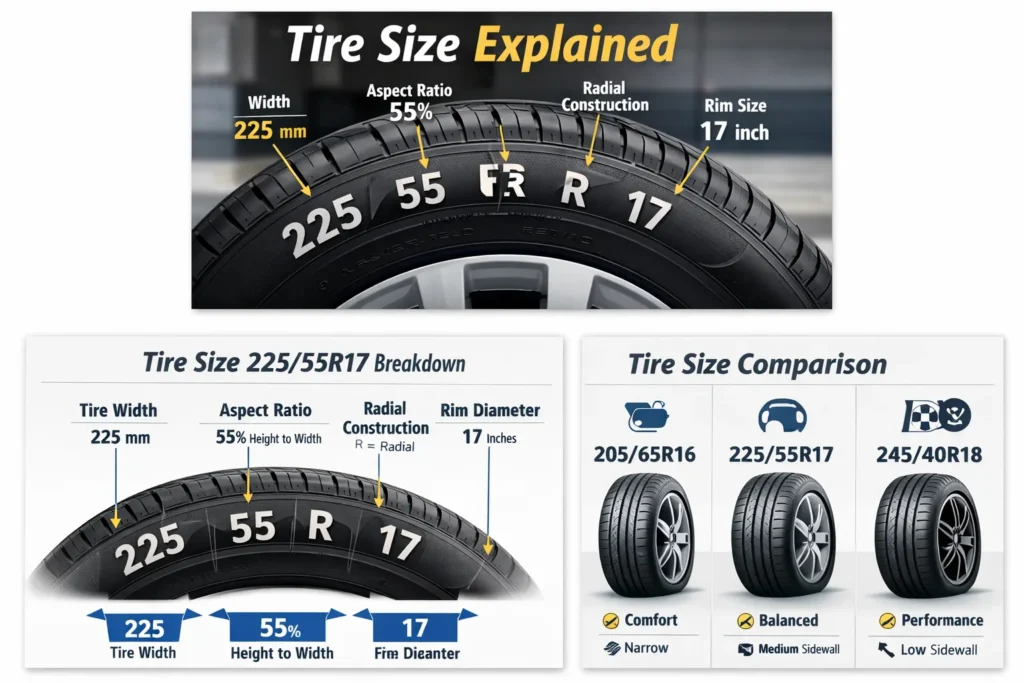
How to Read Tire Size (225/55R17 Explained)
A typical tire looks like this:

225/55R17
Each part of this code has a specific meaning.
| Part | Meaning | Example |
|---|---|---|
| 225 | Tire width (mm) | Width of the tire |
| 55 | Aspect ratio (%) | Height relative to width |
| R | Construction type | Radial construction |
| 17 | Rim diameter (inches) | Wheel size |
Tire Width Explained
The first number represents the tire’s width in millimeters.
| Width Example | Description |
|---|---|
| 195 | Narrow tire |
| 225 | Standard width |
| 255+ | Wide tire |
Wider tires generally provide better grip and stability. However, they may reduce fuel efficiency due to increased rolling resistance.
Aspect Ratio Explained
The second number is the aspect ratio, which shows the height of the tire sidewall as a percentage of its width.
| Aspect Ratio | Driving Effect |
|---|---|
| 70+ | More comfort, softer ride |
| 55–65 | Balanced performance |
| 40–50 | Sporty handling, less comfort |
Lower aspect ratios improve handling but reduce ride comfort because the sidewall is shorter.
Radial Construction (R)
The letter R indicates radial construction, which is the standard for modern tires.
Radial tires provide:
- Better durability
- Improved fuel efficiency
- Enhanced road grip
Today, almost all passenger vehicles use radial tires.
Rim Diameter Explained
The last number indicates the diameter of the wheel (rim) in inches.
| Rim Size | Typical Use |
|---|---|
| 14–16 inches | Small cars |
| 17–18 inches | Sedans and SUVs |
| 19+ inches | Performance vehicles |
Choosing the correct rim size is essential because the tire must fit the wheel precisely.
What Tire Size Means for Performance
It directly affects how your vehicle performs on the road.
| Tire Feature | Effect on Driving |
|---|---|
| Wider tires | Better grip, reduced fuel efficiency |
| Narrow tires | Better fuel economy, less traction |
| Lower profile | Improved handling, less comfort |
| Higher profile | More comfort, less responsive handling |
Therefore, choosing the correct tire size helps balance performance, comfort, and efficiency.
Can You Change Tire Size?
Many drivers wonder whether they can change their tire size. The answer is yes, but only within certain limits.
| Change Type | Result |
|---|---|
| Slight increase in width | Better grip |
| Larger rim size | Improved appearance, firmer ride |
| Smaller sidewall | Better handling, less comfort |
However, major changes can negatively affect:
- Speedometer accuracy
- Suspension performance
- Fuel efficiency
For this reason, it is best to stay close to the manufacturer’s recommended size.
What Happens If You Use the Wrong Tire Size?
Using the wrong tire size can cause several issues.
| Problem | Effect |
|---|---|
| Incorrect speed reading | Speedometer becomes inaccurate |
| Poor handling | Reduced stability |
| Increased wear | Tires wear unevenly |
| Safety risks | Reduced braking performance |
As a result, always follow your vehicle manufacturer’s specifications.
How to Find the Right Tire Size
You can find the correct tire size in several places on your vehicle.
| Location | Description |
|---|---|
| Owner’s manual | Official recommended size |
| Driver-side door sticker | Tire size and pressure info |
| Existing tire sidewall | Current tire size markings |
If you’re unsure, refer to our complete guide on how to choose the right tires for more details on tire selection.
Tire Size Comparison Example
Understanding differences between sizes can help you make better decisions.
| Tire Size | Width | Profile | Use Case |
|---|---|---|---|
| 205/65R16 | Narrow | Taller | Comfort driving |
| 225/55R17 | Medium | Balanced | Everyday use |
| 245/40R18 | Wide | Low profile | Performance driving |
This comparison shows how size affects driving characteristics.
Can Bigger Tires Improve Performance?
Bigger tires can improve grip and handling in some cases. However, they also come with trade-offs.
| Benefit | Drawback |
|---|---|
| Better traction | Reduced fuel efficiency |
| Improved appearance | Higher cost |
| Enhanced handling | Rougher ride |
Therefore, bigger tires are not always better for everyday driving.
Conclusion:
Understanding tire size is a key step in learning how to choose the right tires for your vehicle. They affects safety, comfort, and performance, so it is important to follow manufacturer recommendations.
By learning how to read the markings and understanding their impact, you can make more informed decisions when replacing or upgrading your tires.
Frequently Asked Questions
What does 225/55R17 mean?
It means the tire is 225 mm wide, has a sidewall height equal to 55% of its width, uses radial construction, and fits a 17-inch wheel.
Can I use a different tire size?
You can use a slightly different size, but large changes can affect performance, safety, and speedometer accuracy.
Does tire width affect performance?
Yes, wider tires provide better grip but may reduce fuel efficiency.
What happens if I install the wrong tire size?
Using the wrong size can affect handling, braking, and speedometer accuracy, which may reduce safety.
Where can I find my tire size?
You can find your it on the sidewall of your current tires, in the owner’s manual, or on the driver-side door sticker.
About TireGuidePro
TireGuidePro provides research-based guides to help drivers make smarter tire decisions. Our content combines manufacturer recommendations, tire standards, and real-world driving insights.

