


Are used tires worth it? Many drivers ask this question when they want to save money on tire replacement. While used tires may look like a cheaper option, they often carry hidden risks that affect safety, performance, and long-term value.

Are used tires worth it? Many drivers ask this question when they want to save money on tire replacement. While used tires may look like a cheaper option, they often carry hidden risks that affect safety, performance, and long term value.
Are Used Tires Worth It?
Used tires can be worth it for short term or low budget situations. However, new tires are generally safer, last longer, and provide more reliable performance.
In most cases, buying affordable new tires offers better long term value than purchasing used ones.
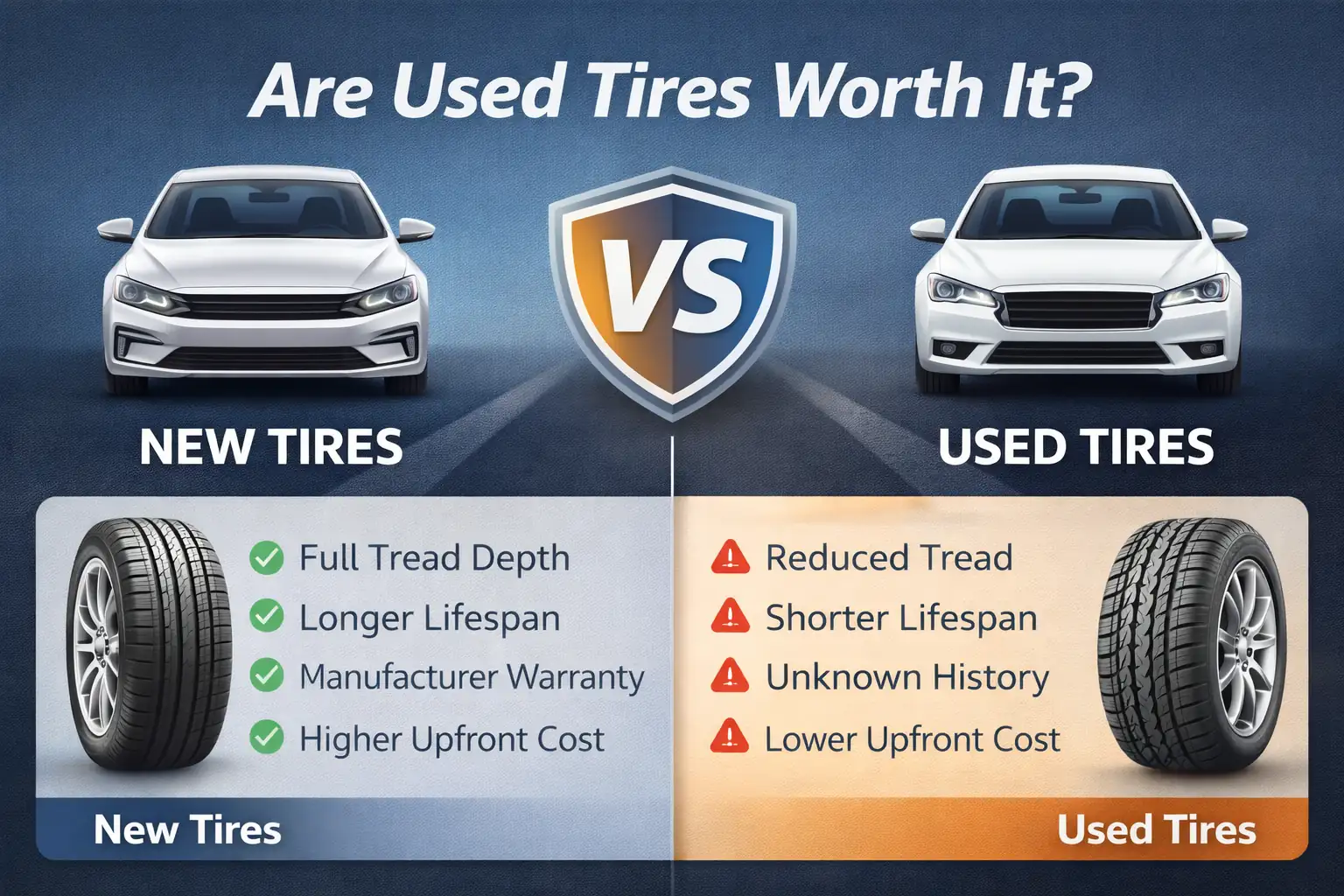
New vs Used Tires Comparison
Before deciding whether used tires are worth it, it’s important to compare them directly.

| Factor | New Tires | Used Tires |
|---|---|---|
| Tread depth | Full (8–10/32”) | Reduced |
| Lifespan | Longer | Shorter |
| Safety | High reliability | Uncertain |
| Cost | Higher upfront | Lower upfront |
| Warranty | Available | Rarely included |
| Performance | Consistent | Varies |
As a result, new tires provide better overall reliability and performance.
Why New Tires Are Usually the Better Choice
In most situations, new tires are the safer and more dependable option.
| Advantage | Benefit |
|---|---|
| Full tread depth | Better grip and braking |
| Longer lifespan | Fewer replacements |
| Manufacturer warranty | Added protection |
| Advanced technology | Improved comfort and efficiency |
In addition, new tires are manufactured using the latest safety standards. Therefore, they perform more consistently in different driving conditions.
When Used Tires Might Be Worth It
Although new tires are generally better, but used tires can make sense in certain situations.
| Situation | Why It Works |
|---|---|
| Temporary replacement | Short-term use |
| Very limited budget | Lower upfront cost |
| Low mileage driving | Reduced wear impact |
For example, if you rarely drive your vehicle, used tires may serve as a temporary solution.
However, even in these cases, careful inspection is essential.
Are Used Tires Safe?
Used tires can be safe in limited situations. However, you must evaluate their condition carefully before using them.
Several factors affect safety, including tread depth, tire age, and previous usage. In many cases, drivers cannot verify these factors easily. As a result, used tires often create more risk than new ones, especially at higher speeds or longer distances.
Hidden Risks of Used Tires
Used tires often contain problems that you cannot see immediately. For example, internal damage may weaken the tire structure without showing visible signs.
In addition, uneven wear reduces grip and shortens lifespan. Older tires may also develop dry rot, which leads to cracking and failure. Because of these risks, used tires can become unsafe even if they appear acceptable.
How to Inspect Used Tires Before Buying
If you decide to buy used tires, you must inspect them carefully. Otherwise, you risk choosing unsafe or unreliable tires.

| Inspection Step | What to Check |
|---|---|
| Tread depth | At least 4/32” recommended |
| Sidewalls | No cracks or bulges |
| Tire age | Less than 6 years old |
| Wear pattern | Even across the surface |
In addition, verify the tire specifications. You can refer to tire size explained to ensure the tire fits your vehicle correctly.
Cost Comparison: Are Used Tires Really Cheaper?
Used tires may seem cheaper at first. However, they often cost more over time.
| Cost Factor | New Tires | Used Tires |
|---|---|---|
| Initial price | Higher | Lower |
| Replacement frequency | Low | High |
| Maintenance | Lower | Higher |
| Long-term value | Better | Worse |
You may need to replace them more frequently, which increases your total spending. In contrast, new tires last longer and require less maintenance. Therefore, new tires usually provide better long-term value.
Cheap New Tires vs Used Tires
Many drivers compare used tires with budget-friendly new tires.
In most cases, buying affordable new tires is a better choice. For example, understanding tire brands quality differences can help you find reliable mid-range options without compromising safety.
As a result, budget new tires often outperform used tires in both safety and durability.
What Happens If You Choose the Wrong Option?
Choosing the wrong type of tire can lead to several issues.
| Issue | Result |
|---|---|
| Poor traction | Reduced safety |
| Faster wear | Increased costs |
| Blowout risk | Dangerous driving conditions |
| Inconsistent performance | Reduced comfort |
Therefore, making an informed decision is essential for both safety and cost efficiency.
Conclusion:
So, are used tires worth it? In most cases, they are not. While they reduce upfront costs, they increase safety risks and shorten lifespan.
However, you can use them for temporary situations or very low-mileage driving. For most drivers, new tires remain the safer and more reliable choice.
Ultimately, choosing the right tires depends on your budget, driving habits, and safety priorities.
Frequently Asked Questions
Are used tires worth it for daily driving?
Used tires are generally not recommended for daily driving because they may have reduced safety and shorter lifespan.
How long do used tires last?
Used tires typically last much less than new ones, depending on their condition and remaining tread depth.
Is it safe to buy used tires?
It can be safe if the tires are thoroughly inspected. However, there is always a higher risk compared to new tires.
What is the minimum tread depth for used tires?
A minimum of 4/32 inches is recommended for safe use, although more tread is always better.
Should I buy cheap new tires instead of used ones?
Yes, affordable new tires are usually a better option because they offer better safety, reliability, and warranty protection.

