
Close Menu
TireGuidePro
  • TIRE MAINTENANCE
  • TIRE PROBLEMS
  • SEASONAL TIRES
  • TIRE PRESSURE
  • CHOOSE TIRES
  • TIRE LIFESPAN
  • TIRE REPAIRS
What's Hot

How Long You Can Drive on a Spare

Spare Tires: Types & Limitations

Temporary Fixes vs Permanent Repairs

Facebook X (Twitter) Instagram
TireGuidePro
  • TIRE MAINTENANCE
  • TIRE PROBLEMS
  • SEASONAL TIRES
  • TIRE PRESSURE
  • CHOOSE TIRES
  • TIRE LIFESPAN
  • TIRE REPAIRS
Facebook Instagram TikTok
TireGuidePro
Home » How to Choose the Right Tires: Size, Type, Ratings & Brands Explained
CHOOSE TIRES

How to Choose the Right Tires: Size, Type, Ratings & Brands Explained

Senior Analyst TireGuidePro Editorial TeamBy Senior Analyst TireGuidePro Editorial TeamMay 19, 2026Updated:May 19, 2026No Comments14 Mins Read
Facebook Twitter Pinterest LinkedIn Tumblr Email
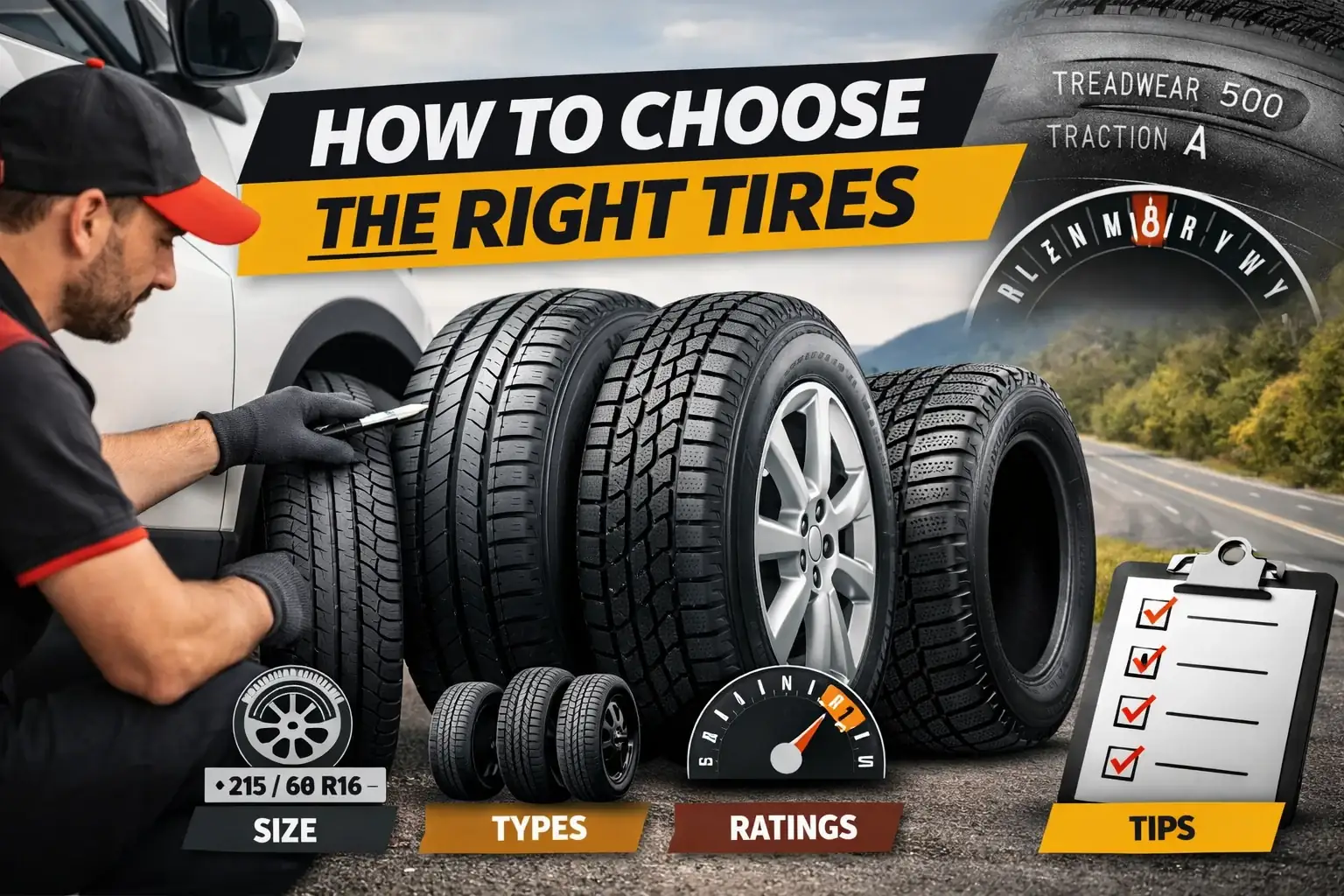
how to choose the right tires size types ratings brands explained
Guide showing how to choose the right tires based on size, types, load ratings, and driving conditions.
Share
Facebook Twitter LinkedIn Pinterest Email

How to choose the right tires is an important question for every vehicle owner. The right tires improve safety, handling, fuel efficiency, and driving comfort. Because tires are the only part of your vehicle that touches the road, selecting the correct size, type, and rating is essential for safe and efficient driving.

Many drivers simply replace their tires with the same model that came with the vehicle, but that may not always be the best option. Factors like climate, driving style, vehicle type, and tire specifications all influence which tires are ideal for your needs.

How to Choose the Right Tires

To choose the right tires for your vehicle, follow these steps:

  1. Check the recommended tire size in your owner’s manual

  2. Select the correct tire type for your climate

  3. Verify the load index and speed rating

  4. Choose a reputable tire brand

  5. Consider your driving style and road conditions

Quick Guide to Choosing the Right Tires

SituationRecommended Tire Type
Daily city drivingAll-season tires
Cold climates with snowWinter tires
High-performance sports carsPerformance or summer tires
Off-road drivingAll-terrain or mud-terrain tires
Long highway commutingTouring tires

Choosing the correct tires improves safety, traction, fuel efficiency, and driving comfort.

Why Choosing the Right Tires Matters for Safety

The right tires improve more than just your driving comfort. They directly affect your vehicle’s safety and performance.

Proper tire selection can improve:

  • Road grip and braking performance

  • Fuel efficiency

  • Handling and cornering stability

  • Ride comfort and noise levels

  • Tire lifespan

Winter tires provide significantly better traction in snow and ice compared to all-season tires. Similarly, high-performance tires can dramatically improve handling for sports cars.

If you choose the wrong tires for your driving conditions, your vehicle may experience reduced traction, longer stopping distances, and uneven tire wear.

How to Choose the Right Tires Based on Tire Types

Not all tires are built the same. Different tire types are designed for different weather conditions, driving styles, and vehicles.

Comparison of Common Tire Types

Tire TypeBest ForKey AdvantagesLimitations
All-SeasonEveryday drivingBalanced performance year-roundNot ideal for extreme weather
SummerWarm climates & performance carsExcellent grip & handlingUnsafe in snow
WinterSnow and iceSuperior cold-weather tractionFaster wear in warm weather
All-TerrainSUVs and trucksWorks on-road and off-roadSlightly noisier ride

All-Season Tires

All-season tires are the most common choice for everyday drivers. They are designed to perform reasonably well in dry, wet, and mild winter conditions.

They offer:

  • Long tread life

  • Comfortable ride

  • Balanced performance year-round

However, they may not perform as well as dedicated winter or summer tires in extreme conditions.

Summer Tires

These tires are designed for warm temperatures, hot weather and performance driving. Summer tires best work in hot climates and they are best in places like Arizona, Florida and Texas.

Benefits include:

  • Better cornering grip

  • Shorter braking distances

  • Improved handling

But they lose traction in cold temperatures and are unsafe in snow.

Winter Tires

Winter tires are specifically designed for snow, ice, and freezing temperatures.

Their softer rubber compounds and deep tread patterns provide superior traction when temperatures drop below 7°C (45°F).

Performance and Off-Road Tires

Performance tires are optimized for sports cars and aggressive driving, while off-road tires are built for trucks and SUVs that regularly drive on dirt, mud, or rocky terrain.

Understanding Tire Size
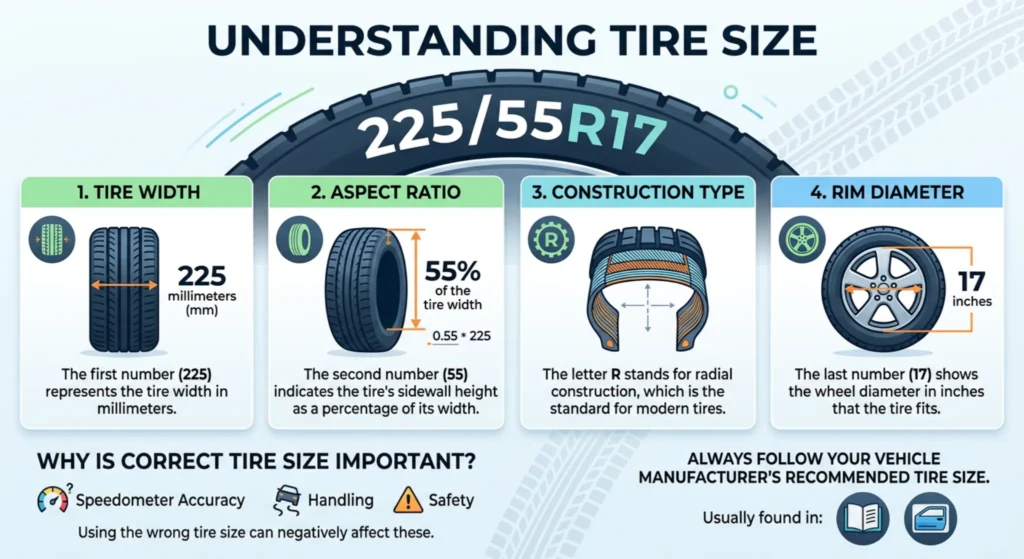
tire size explained diagram showing 225/55R17 tire width aspect ratio construction and rim diameter
Diagram explaining tire size markings such as width, aspect ratio, construction type, and rim diameter.

Every tire has a specific size that must match your vehicle’s requirements. Tire size is printed on the sidewall in a format like this:

225/55R17

This code contains important information.

Tire Width

The first number (225) represents the tire width in millimeters.

Aspect Ratio

The second number (55) indicates the tire’s sidewall height as a percentage of its width.

Construction Type

The letter R stands for radial construction, which is the standard for modern tires.

Rim Diameter

The last number (17) shows the wheel diameter in inches that the tire fits.

Using the wrong tire size can negatively affect speedometer accuracy, handling, and safety. Always follow your vehicle manufacturer’s recommended tire size, usually found in the owner’s manual or on the driver-side door sticker.

Load Index and Speed Rating
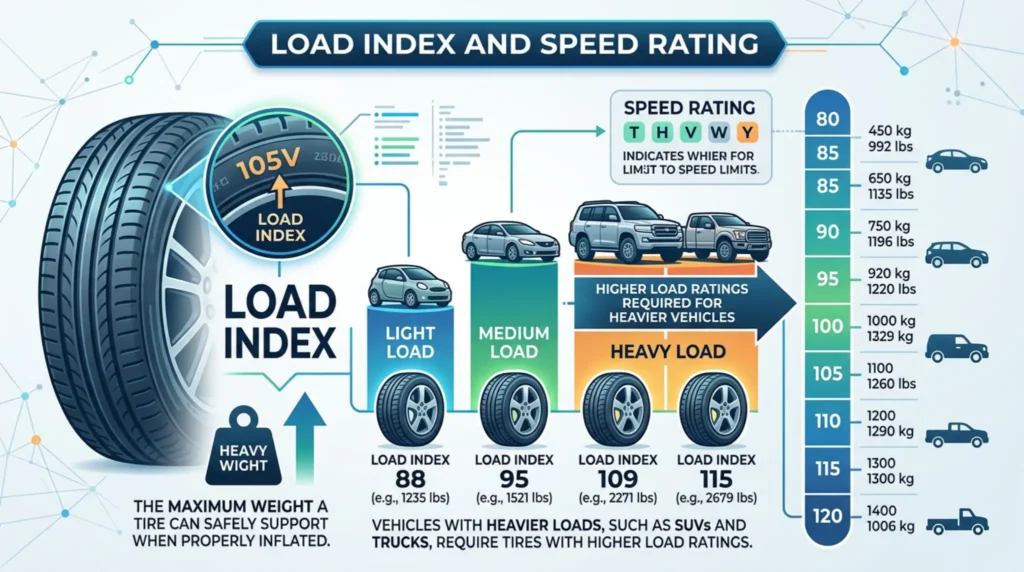
tire load index and speed rating chart explaining tire weight capacity and speed limits
Chart explaining tire load index and speed rating, showing weight capacity and maximum speed limits for different tire ratings.

In addition to size, tires also have load and speed ratings that indicate their performance limits.

Load Index

The load index tells you the maximum weight a tire can safely support when properly inflated.

Vehicles with heavier loads, such as SUVs and trucks, require tires with higher load ratings.Load ratings are another important factor when deciding how to choose the right tires safely.

Tire Speed Rating Chart

Speed RatingMaximum Speed (mph)Maximum Speed (km/h)
SUp to 112 mphUp to 180 km/h
TUp to 118 mphUp to 190 km/h
HUp to 130 mphUp to 210 km/h
VUp to 149 mphUp to 240 km/h

You should always use tires that meet or exceed the manufacturer’s recommended ratings.

Tubeless vs Tube Tires

Most modern vehicles use tubeless tires, but some motorcycles and older vehicles still use tube tires.

Tubeless Tires

Tubeless tires seal directly against the wheel rim and do not require an inner tube.

Advantages include:

  • Lower risk of sudden air loss

  • Better heat dissipation

  • Improved fuel efficiency

  • Easier puncture repair

Tube Tires

Tube tires contain an inner tube that holds the air pressure.

They are less common today but are still used in certain off-road and motorcycle applications.

Run-Flat Tires: Should You Use Them?

Run-flat tires allow you to continue driving even after a puncture or loss of air pressure.

Depending on the design, they can typically travel 50 miles (80 km) at reduced speed after a puncture.

Benefits include:

  • Improved safety during tire failure

  • No immediate need to stop on the roadside

  • Eliminates the need for a spare tire in some vehicles

However, run-flat tires are usually more expensive and may provide a slightly firmer ride.

Tire Brands and Quality Differences

Tire brands vary widely in price, durability, and performance. Generally, tires fall into three main categories.

Premium Brands

Premium manufacturers focus on advanced technology, better materials, and superior performance.

Examples include brands known for high durability and excellent traction.

Mid-Range Brands

Mid-range tires provide a good balance between performance and affordability.

Budget Brands

Budget tires are more affordable but may offer shorter tread life or reduced performance in extreme conditions.

Choosing a reputable brand can improve tire longevity and safety.

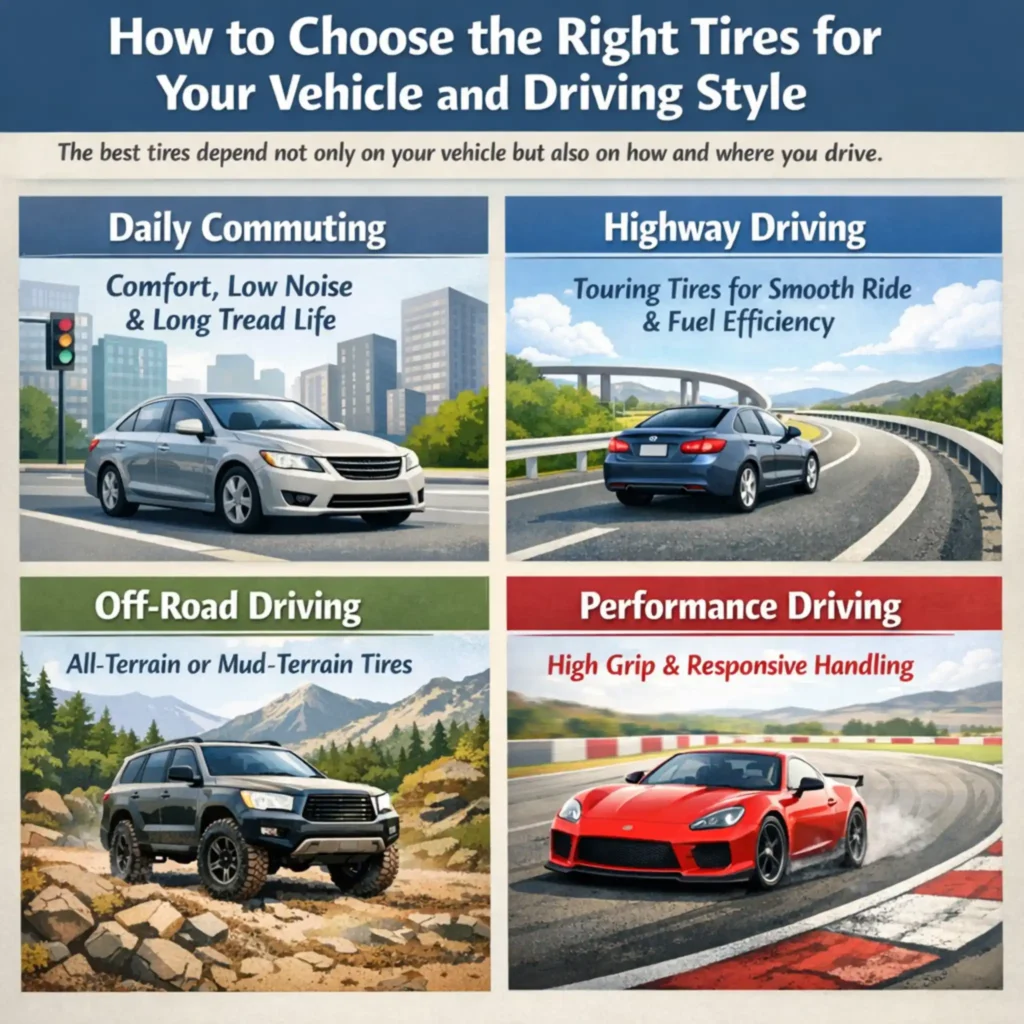
How to Choose the Right Tires for Your Vehicle and Driving Style
how to choose the right tires for your vehicle and driving style daily commuting highway off road performance
Guide showing the best tires for different driving styles including commuting, highway driving, off-road, and performance driving.

The best tires depend not only on your vehicle but also on how and where you drive.

Daily Commuting

Drivers who mainly commute in cities should prioritize comfort, low noise, and long tread life.

Highway Driving

Highway drivers benefit from touring tires that provide smooth rides and better fuel efficiency.

Off-Road Driving

Truck and SUV drivers who frequently travel on dirt roads or trails should consider all-terrain or mud-terrain tires.

Performance Driving

Sports cars and performance vehicles require tires designed for high grip and responsive handling.

New vs Used Tires

When buying tires, you may consider either new or used options.

New Tires

New tires offer:

  • Full tread depth

  • Manufacturer warranty

  • Longer lifespan

  • Better reliability

Used Tires

Used tires are cheaper but come with risks such as hidden damage, uneven wear, or reduced traction.

While used tires may work as a temporary solution, new tires are generally the safer and more reliable choice.

Buying Tires Online vs Locally

Today, drivers can purchase tires either from local shops or online retailers.

Buying Locally

Local tire shops offer advantages like:

  • Professional installation

  • Immediate service

  • Personalized advice

Buying Online

Online tire retailers often provide:

  • Lower prices

  • Larger selection

  • Convenient home delivery

However, you may still need to visit a local shop for installation.

Final Thoughts

Choosing the right tires involves more than just finding the correct size. The best tires for your vehicle depend on your driving habits, climate conditions, vehicle type, and performance needs.

By understanding tire types, size specifications, load ratings, and brand differences, you can make a more informed decision and ensure safer, more comfortable driving.

Understanding how to choose the right tires helps drivers improve safety, performance, and tire lifespan.

Frequently Asked Questions

How do I know which tires are right for my car?

The best way to choose the right tires is to check your vehicle’s recommended tire size and ratings in the owner’s manual or door-jamb sticker. To understand how to choose the right tires, you should consider tire size, driving conditions, and vehicle requirements.

Can I use a different tire size than recommended?

Using a slightly different tire size may be possible in some cases, but significant changes can affect handling, speedometer accuracy, and safety. It is generally recommended to follow the manufacturer’s specifications.

Are expensive tire brands worth it?

Premium tire brands often provide better durability, traction, and performance due to higher-quality materials and advanced engineering. However, many mid-range brands also offer excellent value for everyday driving.

How often should tires be replaced?

Most tires should be replaced every 6–10 years or when the tread depth reaches 2/32 of an inch. Regular inspections can help identify wear or damage earlier.

Is it safe to buy tires online?

Yes, buying tires online can be safe if you purchase from reputable retailers. Many online stores allow you to ship tires directly to an installation center.

About TireGuidePro

TireGuidePro provides research-based guides to help drivers make smarter tire decisions. Our articles combine manufacturer recommendations, tire industry standards, and real-world driving considerations to ensure accurate and practical advice.

Flat tires and tire damage are among the most common roadside emergencies drivers face. Whether it’s a nail puncture, a sudden blowout, or a slow leak that leaves you stranded, knowing how to handle a tire emergency can save you time, money, and stress.

Being prepared doesn’t require professional mechanical skills. With the right tools, basic knowledge, and an emergency plan, most tire issues can be handled safely until a permanent repair is available.

This guide explains the essential tire tools, emergency repair options, and safety steps every driver should know, along with the most common mistakes people make during tire emergencies.

Why Tire Emergencies Happen

Tire problems often occur when drivers least expect them. Understanding the common causes can help you respond quickly and prevent further damage.

The most frequent tire emergencies include:

  • Punctures from nails, screws, or sharp debris

  • Slow air leaks caused by valve or rim issues

  • Sudden tire blowouts on highways

  • Sidewall damage from potholes or curbs

  • Driving on underinflated tires

Many of these issues can be managed temporarily with the right equipment until you reach a repair shop.

Essential Tire Tools Every Driver Should Own

Keeping a few essential tools in your car can make the difference between a quick fix and being stranded.

The most important tire emergency tools include:

1. Tire Pressure Gauge
A digital or analog pressure gauge helps you quickly check whether a tire is losing air.

2. Portable Air Compressor
A compact 12-volt air compressor can reinflate a tire enough to reach a repair shop.

3. Car Jack and Lug Wrench
These tools allow you to remove a damaged tire and install a spare.

4. Tire Plug Repair Kit
Plug kits temporarily seal punctures in the tread area.

5. Valve Core Tool
This small tool allows you to tighten or replace leaking valve cores.

Drivers who keep these tools in their trunk are much better prepared for roadside tire problems.

Tire Puncture Repair Kits Explained

Tire puncture kits are one of the most useful tools for emergency repairs. These kits are designed to temporarily seal small punctures in tubeless tires.

Most kits contain:

  • A reamer tool to clean the puncture hole

  • A plug insertion tool

  • Rubber repair plugs

  • Tire sealant or lubricant

Plug repairs are typically safe for small punctures in the tire tread, but they should always be considered temporary fixes until a professional inspection is done.

Puncture kits should not be used for sidewall damage or large holes, which require tire replacement.

Safety Gear for Tire Emergencies

Many drivers focus only on repair tools, but safety equipment is equally important when working near traffic.

Recommended safety gear includes:

  • Puncture-resistant gloves to protect your hands

  • Reflective safety vest for nighttime visibility

  • Flashlight or headlamp

  • Warning triangles or flares

These items help prevent accidents and improve visibility while repairing or replacing a tire on the roadside.

Spare Tires: Types and Limitations

Most vehicles include a spare tire designed to help drivers reach a repair facility safely. However, not all spare tires are the same.

The most common types include:

Full-Size Spare Tire
A regular tire identical to the others on the vehicle. It can usually be driven on normally.

Compact Spare (Donut)
A smaller temporary tire designed for short distances and lower speeds.

Run-Flat Tire Systems
Some modern vehicles use reinforced tires that can continue driving temporarily after losing pressure.

Each type has limitations, so drivers should understand how their spare tire works before an emergency occurs.

How Long Can You Drive on a Spare Tire?

Temporary spare tires are designed only for short-term use.

Most manufacturers recommend:

  • Maximum speed: about 50 mph (80 km/h)

  • Maximum distance: about 50–70 miles (80–110 km)

Driving longer distances on a compact spare can affect braking performance, handling, and drivetrain components.

Drivers should replace or repair the original tire as soon as possible.

Common Tire Emergency Scenarios

Many drivers are unsure how to react during different tire emergencies. Understanding these scenarios can help you make better decisions.

Flat tire from a nail
A plug repair or portable compressor may allow you to reach a tire shop.

Slow air leak overnight
Inflating the tire temporarily may allow short-distance driving.

Highway blowout
Maintain control of the steering wheel and slow down gradually rather than braking suddenly.

Sidewall damage
Sidewall punctures cannot be repaired and require immediate tire replacement.

Temporary Fixes vs Permanent Tire Repairs

Not all tire repairs are equal. Understanding the difference between temporary and permanent solutions is essential.

Temporary repairs include:

  • Tire plug kits

  • Sealant inflators

  • Spare tire installation

Permanent repairs typically involve a patch-plug repair performed from inside the tire. A technician will inspect the tire and repair the puncture correctly or recommend replacement.

What NOT to Do During a Tire Emergency

Many drivers accidentally make tire emergencies worse. Avoid these common mistakes:

  • Driving long distances on a completely flat tire

  • Removing a nail immediately before checking air pressure

  • Using sealant on large punctures

  • Driving too fast on a spare tire

  • Attempting repairs in dangerous traffic conditions

Safety should always be the top priority during roadside tire problems.

When to Call Roadside Assistance

Sometimes the safest choice is to call professional help.

Consider roadside assistance if:

  • The tire has sidewall damage

  • You do not have a spare tire

  • Traffic conditions are unsafe

  • The vehicle has multiple flat tires

  • You cannot safely lift the car with a jack

Roadside services can replace a tire or tow your vehicle to a nearby repair shop.

Tire Emergency Checklist

Before taking a long drive, make sure your vehicle contains:

✔ Tire pressure gauge
✔ Portable air compressor
✔ Tire plug repair kit
✔ Car jack and lug wrench
✔ Puncture-resistant gloves
✔ Flashlight or warning triangle
✔ Spare tire in good condition

A well-prepared emergency kit ensures that small tire problems do not turn into major roadside situations.

Conclusion: Be Prepared Before a Tire Emergency Happens

Tire emergencies can happen to any driver, whether you’re commuting to work, taking a road trip, or driving in unfamiliar areas. A simple puncture or sudden blowout can quickly become stressful if you don’t have the right tools or knowledge.

By keeping essential tire tools, a spare tire, and basic safety gear in your vehicle, you can handle many roadside tire problems safely and efficiently. Understanding the difference between temporary fixes and permanent repairs also helps prevent further tire damage and keeps your vehicle safe to drive.

Most importantly, drivers should always prioritize roadside safety. If conditions are unsafe or the tire damage is severe, calling roadside assistance is the best decision.

Being prepared for tire emergencies means fewer surprises on the road—and more confidence every time you drive.

Frequently Asked Questions

What should every driver keep in a tire emergency kit?

A basic tire emergency kit should include a pressure gauge, portable air compressor, plug repair kit, car jack, lug wrench, gloves, and a flashlight. These tools help drivers handle common roadside tire issues safely.

Can you drive with a nail in your tire?

In some cases, a small nail in the tread may allow limited driving if the tire is not rapidly losing air. However, the tire should be inspected and repaired as soon as possible.

Are tire plug repairs permanent?

Tire plugs are usually temporary fixes. A proper repair normally requires a patch-plug installed from inside the tire by a professional technician.

How far can you drive on a donut spare tire?

Most compact spare tires are designed for about 50–70 miles at speeds below 50 mph. Drivers should repair or replace the original tire quickly.

When should a tire be replaced instead of repaired?

Tires should be replaced if the damage is in the sidewall, the puncture is too large, or the tire has severe wear or structural damage.

Share. Facebook Twitter Pinterest LinkedIn Tumblr Email
Senior Analyst TireGuidePro Editorial Team
  • Website

The Senior Tire Analyst at TireGuidePro specializes in tire specifications, vehicle fitment data, and tire performance analysis. With extensive experience researching tire sizes, load ratings, speed ratings, and recommended tire pressure standards, the TireGuidePro editorial team provides accurate and practical guidance to help drivers choose the right tires for their vehicles. At TireGuidePro, the Senior Tire Analyst reviews tire data from manufacturers, automotive databases, and industry standards to ensure every guide is reliable and up to date. Their work focuses on simplifying complex tire information so drivers can make smarter tire decisions and improve road safety. Through detailed tire size guides, fitment recommendations, and educational resources, the TireGuidePro team helps thousands of drivers understand tire specifications and select the best options for their cars, trucks, and SUVs.

Related Posts

Load Index & Speed Rating Explained: What Tire Numbers Mean

May 19, 2026

Are Used Tires Worth It? New vs Old Tires Pros & Cons Explained

May 15, 2026

Tubeless vs Tube Tires: What’s the Difference & Which Is Better?

May 14, 2026
Leave A Reply Cancel Reply

Author

Senior Tire Analyst from the TireGuidePro Editorial Team

Tire enthusiast and automotive researcher at TireGuidePro.com. Helping drivers choose the right tires for safety, performance, and long-lasting value.

Our Picks
Stay In Touch
  • Facebook
  • Twitter
  • Pinterest
  • Instagram
  • YouTube
  • Vimeo
Don't Miss
TIRE REPAIRS

How Long You Can Drive on a Spare

By Senior Analyst TireGuidePro Editorial Team

How Long You Can Drive on a Spare Tire (Complete Safety Guide) A flat tire…

Spare Tires: Types & Limitations

Temporary Fixes vs Permanent Repairs

Emergency Flat Tire Scenarios

About Us
About Us

We focus on clear, experience-based guidance that helps you decide whether a tire issue is safe to monitor, needs professional inspection, or requires immediate replacement. By turning technical tire knowledge into easy-to-follow advice, TireGuidePro helps drivers make smarter tire decisions for safer driving every day.

Facebook Instagram TikTok
  • Home
  • Privacy Policy
  • Editorial Policy
  • About Us
  • Contact Us
  • Disclaimer
© 2026 tireguidepro.com ~All Rights Reserved

Type above and press Enter to search. Press Esc to cancel.