


Matching Tires to Vehicle Type & Driving Style (Best Tire Guide)
Matching tires to your vehicle type and driving style is essential when learning how to choose the right tires. The best tires are not just about size or brand; they must suit how and where you drive.

Many drivers make the mistake of choosing tires based only on price or availability. However, selecting the right tires based on your driving habits can significantly improve safety, comfort, and performance.
Why Matching Tires to Your Vehicle Matters
Your vehicle type plays a major role in determining which tires will perform best. For example, a compact sedan has very different tire requirements compared to an SUV or a sports car.
In addition, using the wrong type of tire can reduce traction, increase wear, and negatively affect handling. Therefore, choosing tires that match your vehicle ensures better stability, fuel efficiency, and safety.
Best Tires for Different Vehicle Types
Different vehicles are designed for different purposes, and their tires should reflect that.

| Vehicle Type | Recommended Tire Type | Key Benefits |
|---|---|---|
| Sedan / Hatchback | All-season or touring tires | Comfort, fuel efficiency, low noise |
| SUV / Crossover | All-season or all-terrain tires | Durability, versatility |
| Truck | All-terrain or mud-terrain tires | Load capacity, off-road capability |
| Sports Car | Performance or summer tires | High grip, responsive handling |
| Electric Vehicle (EV) | Low rolling resistance tires | Improved efficiency, quieter ride |
As a result, selecting the correct tire type improves both performance and longevity.
Best Tires for Different Driving Styles
Your driving habits are just as important as your vehicle type.

| Driving Style | Recommended Tires | Why It Works |
|---|---|---|
| Daily commuting | All-season tires | Balanced performance and comfort |
| Highway driving | Touring tires | Smooth ride, fuel efficiency |
| Aggressive driving | Performance tires | Better grip and handling |
| Off-road driving | All-terrain or mud-terrain tires | Enhanced traction on rough terrain |
| Winter driving | Winter tires | Superior grip in snow and ice |
For example, aggressive drivers benefit from performance tires because they provide better cornering and braking.
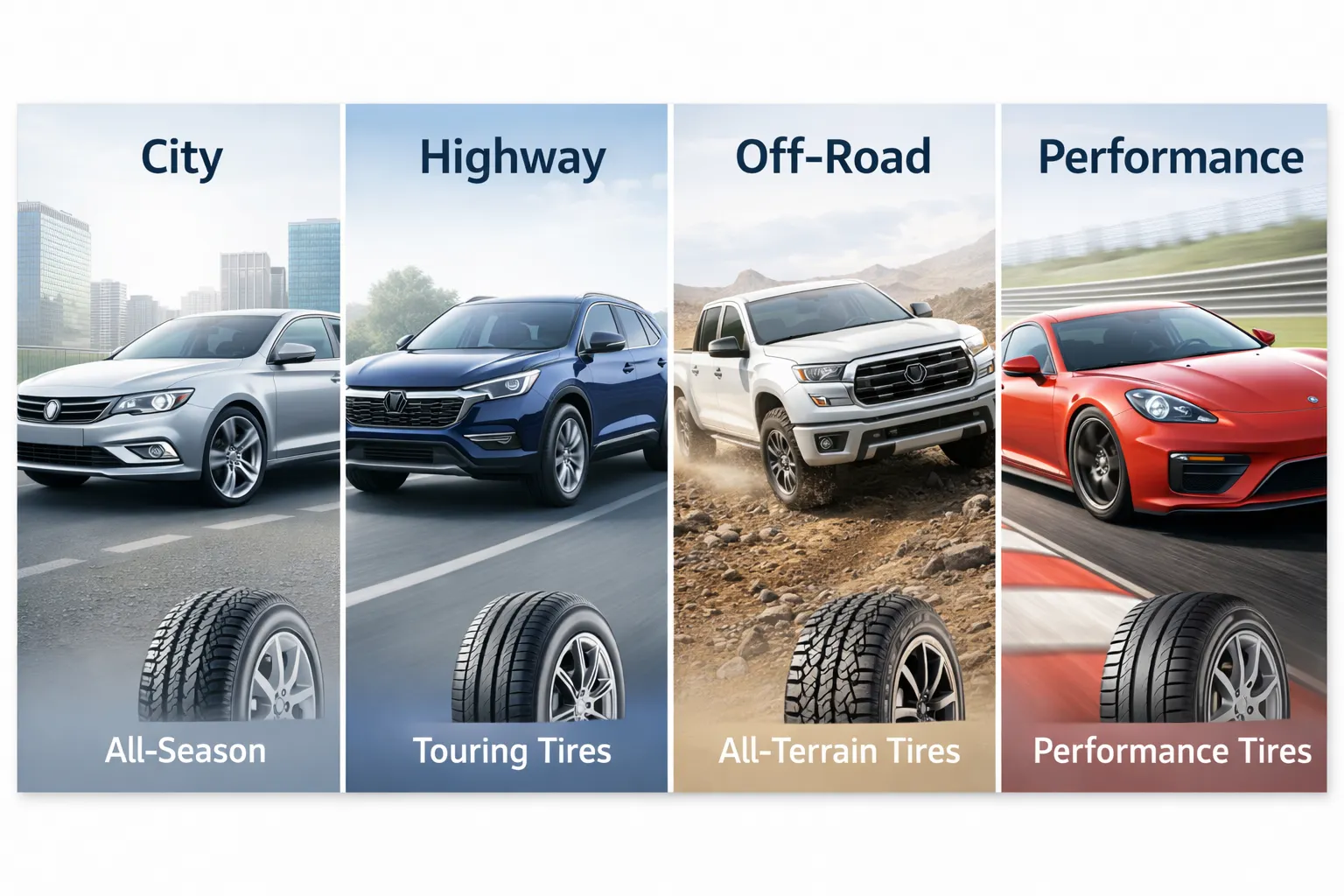
City vs Highway vs Off-Road Driving
Driving conditions also play a critical role in tire selection.
| Driving Condition | Best Tire Choice | Key Advantage |
|---|---|---|
| City driving | All-season tires | Comfort and durability |
| Highway driving | Touring tires | Stability and low noise |
| Off-road driving | All-terrain tires | Strong grip on uneven surfaces |
| Snow and ice | Winter tires | Maximum cold-weather traction |
Therefore, understanding your typical driving environment helps you choose more suitable tires.
Quick Tire Selection Guide
| Situation | Best Tire |
|---|---|
| Daily city driving | All-season tires |
| Long highway trips | Touring tires |
| Snowy climates | Winter tires |
| Off-road adventures | All-terrain tires |
| Performance driving | Summer/performance tires |
In short, match your tire type to your most frequent driving condition.
How Tire Size and Ratings Affect Your Choice
While choosing tire type is important, you should also consider specifications.
For example:
- Understanding tire size explained helps ensure proper fit
- Checking load index and speed rating explained ensures safety
- Reviewing tire brands quality differences helps balance cost and performance
In addition, combining these factors leads to a more informed decision.
Common Mistakes to Avoid
Many drivers make avoidable mistakes when choosing tires.
| Mistake | Why It’s a Problem |
|---|---|
| Choosing cheapest option | May reduce safety and lifespan |
| Ignoring driving conditions | Leads to poor performance |
| Using wrong tire size | Affects handling and safety |
| Mixing different tire types | Causes uneven wear and instability |
| Ignoring ratings | Can lead to overload or unsafe speeds |
As a result, avoiding these mistakes can significantly improve your driving experience.
How to Choose the Right Tires (Step by Step)
To simplify the process, follow these steps:
| Step | Action |
|---|---|
| 1 | Identify your vehicle type |
| 2 | Evaluate your driving style |
| 3 | Consider your climate and road conditions |
| 4 | Check tire size and ratings |
| 5 | Compare brands and budget |
If you need a complete guide, refer to how to choose the right tires for a detailed breakdown.
Real Life Tire Matching Examples
Understanding real scenarios can make tire selection easier.
| Scenario | Best Tire Choice | Reason |
|---|---|---|
| Daily city commuter | All-season tire | Comfort and durability |
| Long-distance traveler | Touring tire | Fuel efficiency and stability |
| SUV used for camping | All-terrain tire | Off-road capability |
| Sports car enthusiast | Performance tire | Maximum grip |
| Snowy region driver | Winter tire | Safety in cold conditions |
For instance, a driver who travels long distances on highways will benefit more from touring tires than performance tires.
Conclusion:
Matching tires to your vehicle type and driving style is a key part of learning how to choose the right tires. The right choice improves safety, enhances comfort, and extends tire lifespan.
By considering your vehicle, driving habits, and road conditions, you can select tires that deliver the best overall performance for your needs.
Frequently Asked Questions
How do I choose tires for my driving style?
Start by identifying your primary driving conditions. For example, city drivers should choose all-season tires, while performance drivers should consider summer or performance tires.
Are all-season tires good for every situation?
All-season tires work well in most conditions. However, they are not ideal for extreme winter or high-performance driving.
What tires are best for highway driving?
Touring tires are best for highway driving because they offer a smooth ride, low noise, and improved fuel efficiency.
Should SUV drivers use different tires than sedan drivers?
Yes, SUVs often require stronger tires with higher load capacity, such as all-terrain or reinforced all-season tires.
Do driving habits really affect tire choice?
Yes, aggressive driving, frequent highway use, or off-road driving all require different tire types for optimal performance.

