

When buying tires, many drivers wonder whether tire brands differ in quality and whether premium brands actually perform better than budget alternatives.Many drivers wonder whether tire brands differ in quality and whether premium tires truly outperform budget alternatives. Understanding the quality differences between tire brands can help you make a safer and more cost-effective purchasing decision.
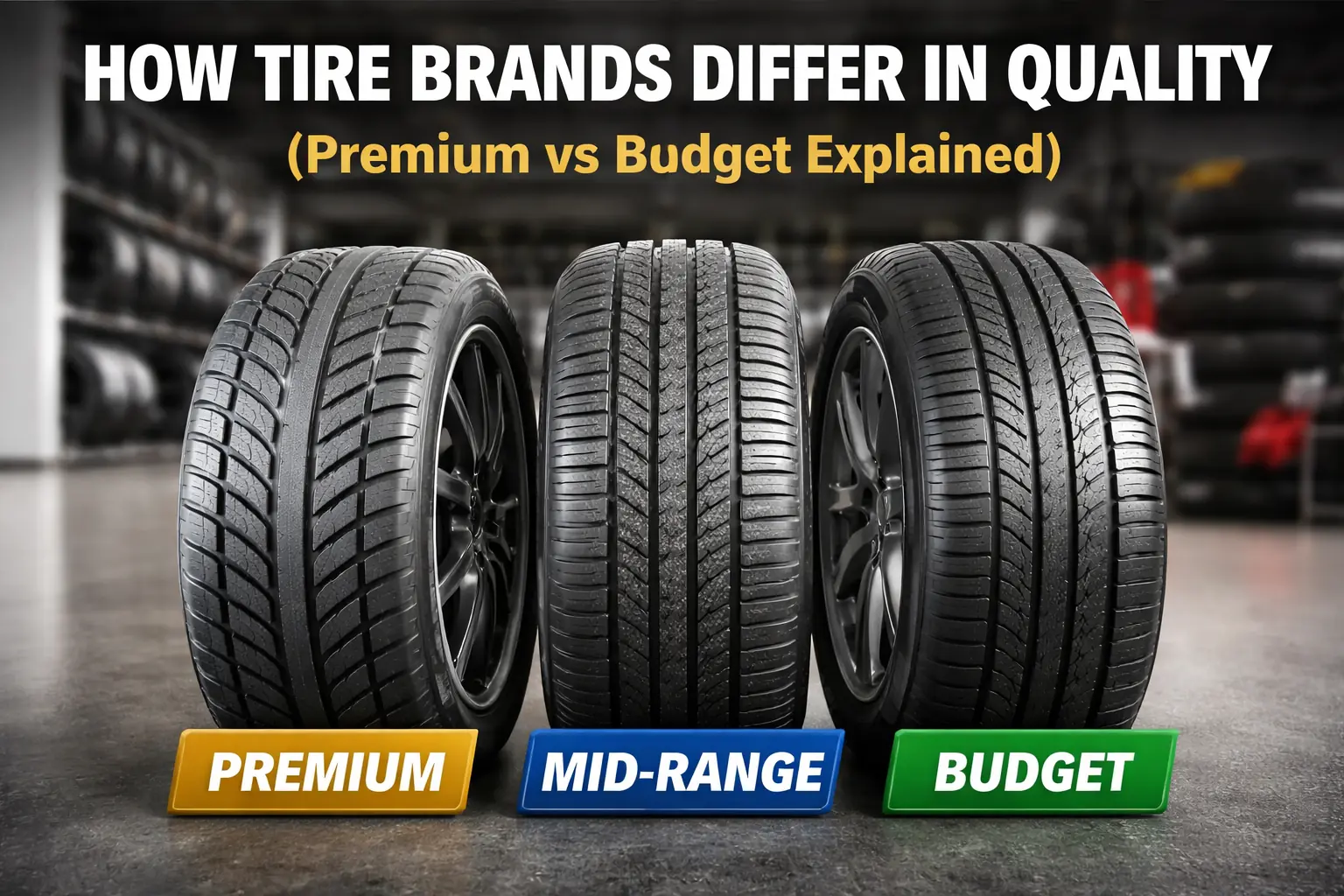
In general, tire brands fall into three categories: premium, mid-range, and budget. These tiers differ in manufacturing technology, rubber compounds, durability, testing standards, and overall performance. While premium brands often deliver superior performance and longevity, mid-range and budget brands may provide good value for everyday driving depending on your needs.
This guide explains how tire brands differ in quality, what makes premium tires more expensive, and how to evaluate tire brands before buying.
Do Tire Brands Really Matter?
Yes, tire brands can significantly influence safety, durability, and overall driving performance. Although many tires may look similar, the internal construction, materials, and testing standards vary greatly between manufacturers.
Premium brands invest heavily in research, engineering, and real-world testing, which can result in better traction, improved braking performance, and longer tread life.
Budget brands often focus on affordability and basic functionality, which can still be suitable for low-mileage drivers or mild driving conditions.
The key is understanding how brand quality influences performance, not simply choosing the most expensive option.
What Determines Tire Quality?
Tire quality depends on several engineering and manufacturing factors.
| Quality Factor | How It Affects Tires | Typical Premium Advantage |
|---|---|---|
| Rubber compound | Determines grip, flexibility, and durability | Better traction and longer tread life |
| Tread design | Controls water dispersion and road contact | Improved braking and wet-road performance |
| Construction materials | Internal belts and structure affect stability | Stronger sidewalls and better durability |
| Testing standards | Extensive laboratory and road testing | More consistent safety performance |
| Manufacturing precision | Production quality control | Reduced defects and better reliability |
Premium manufacturers usually spend years developing and testing tire designs, which helps improve road safety and long-term durability.
Premium vs Mid-Range vs Budget Tire Brands
Most tire manufacturers fall into three general tiers based on performance, technology, and price
| Brand Tier | Example Brands | Typical Price Range | Performance Level | Best For |
|---|---|---|---|---|
| Premium | Michelin, Bridgestone, Continental, Pirelli | High | Excellent grip, durability, advanced technology | Performance vehicles, long-term reliability |
| Mid-Range | Hankook, Yokohama, Kumho, Falken | Moderate | Balanced performance and value | Everyday drivers |
| Budget | Sailun, Westlake, Linglong, Ironman | Low | Basic performance | Short-term or low-mileage driving |
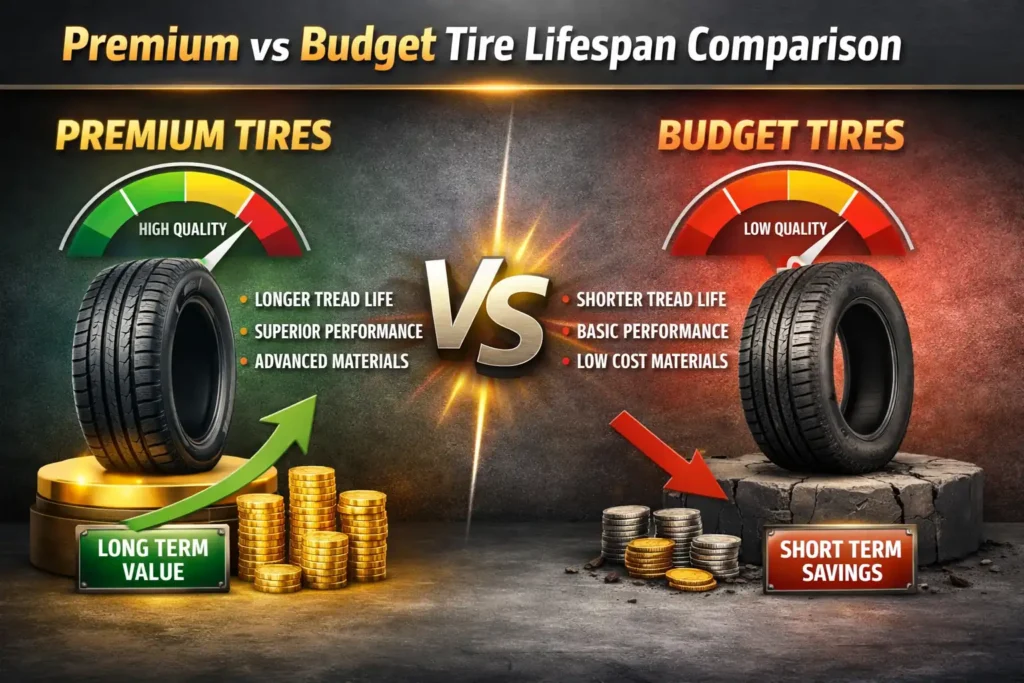
Premium tires generally perform better in areas such as wet braking, road noise reduction, and tread longevity, while mid-range tires often provide a good balance of cost and reliability.
Budget tires may still meet safety regulations but often use simpler compounds and fewer advanced technologies.
Budget Sedan Tire Models Compared (Most Popular Options)
If you’re shopping for affordable tires, the real question isn’t just budget vs premium it’s how different budget tire models actually compare in real driving.
Here’s a side by side comparison of popular budget sedan tire models commonly used on cars like the Toyota Corolla, Honda Civic, Hyundai Elantra, and Nissan Sentra.
Comparison Table: Budget Sedan Tires
| Tire Model | Brand | Dry Grip | Wet Grip | Noise | Tread Life | Best For |
|---|---|---|---|---|---|---|
| Nexen N’Fera Supreme | Nexen | ⭐⭐⭐⭐ | ⭐⭐⭐⭐ | Quiet | Long | Balanced performance |
| Sailun Inspire | Sailun | ⭐⭐⭐ | ⭐⭐⭐ | Very Quiet | Very Long | Comfort & value |
| Westlake Z-108 | Westlake | ⭐⭐⭐ | ⭐⭐ | Average | Medium | Lowest price option |
| General Altimax RT43 | General | ⭐⭐⭐⭐ | ⭐⭐⭐⭐ | Quiet | Long | All-season reliability |
| Kumho Solus TA11 | Kumho | ⭐⭐⭐⭐ | ⭐⭐⭐ | Quiet | Long | Daily commuting |
Best Budget Tires by Popular Sedan Use Case
Different drivers prioritise different things even within the same car class. Here’s how budget tires compare based on real world usage on common sedans.
Daily City Driving (Corolla, Sentra)
- Best Pick: Kumho Solus TA11
- Why: Smooth ride, long lasting, reliable for stop and go traffic
Rain & Wet Roads (Civic, Elantra)
- Best Pick: General Altimax RT43
- Why: Strong wet traction and braking confidence
Highway Comfort (Elantra, Corolla)
- Best Pick: Sailun Inspire
- Why: Quiet ride and stable cruising
Lowest Budget Option
- Best Pick: Westlake Z-108
- Why: Cheapest option, decent for light usage (but not ideal for harsh conditions)
Best Overall Budget Sedan Tire
- Nexen N’Fera Supreme
- Balanced performance across all categories
- Strong value without major compromises
These models represent the most common compact sedans in the U.S., where budget tire demand is highest
Best Tires for Rain and Heat (Real-World Performance)
Driving in regions with both heavy rain and high temperatures like Florida or Texas requires tires that balance wet grip and heat resistance.
Best Tire Type:
- High-quality all-season tires
- Designed for wet traction
- Built to handle warm road temperatures
Recommended Budget-Friendly Options:
| Tire Model | Strength | Why It Works |
|---|---|---|
| Nexen N’Fera Supreme | Balanced | Strong wet grip + heat durability |
| General Altimax RT43 | Wet performance | Excellent rain handling |
| Kumho Solus TA11 | Long life | Handles heat well over time |
What to Look For:
- Wide grooves → better water evacuation
- Silica-rich compounds → improved wet grip
- Heat-resistant rubber → prevents fast wear in hot climates
What to Avoid:
- Ultra-cheap tires → poor wet braking
- Winter tires → wear quickly in heat
Why Premium Tire Brands Cost More
| Factor | Premium Tires | Budget Tires |
|---|---|---|
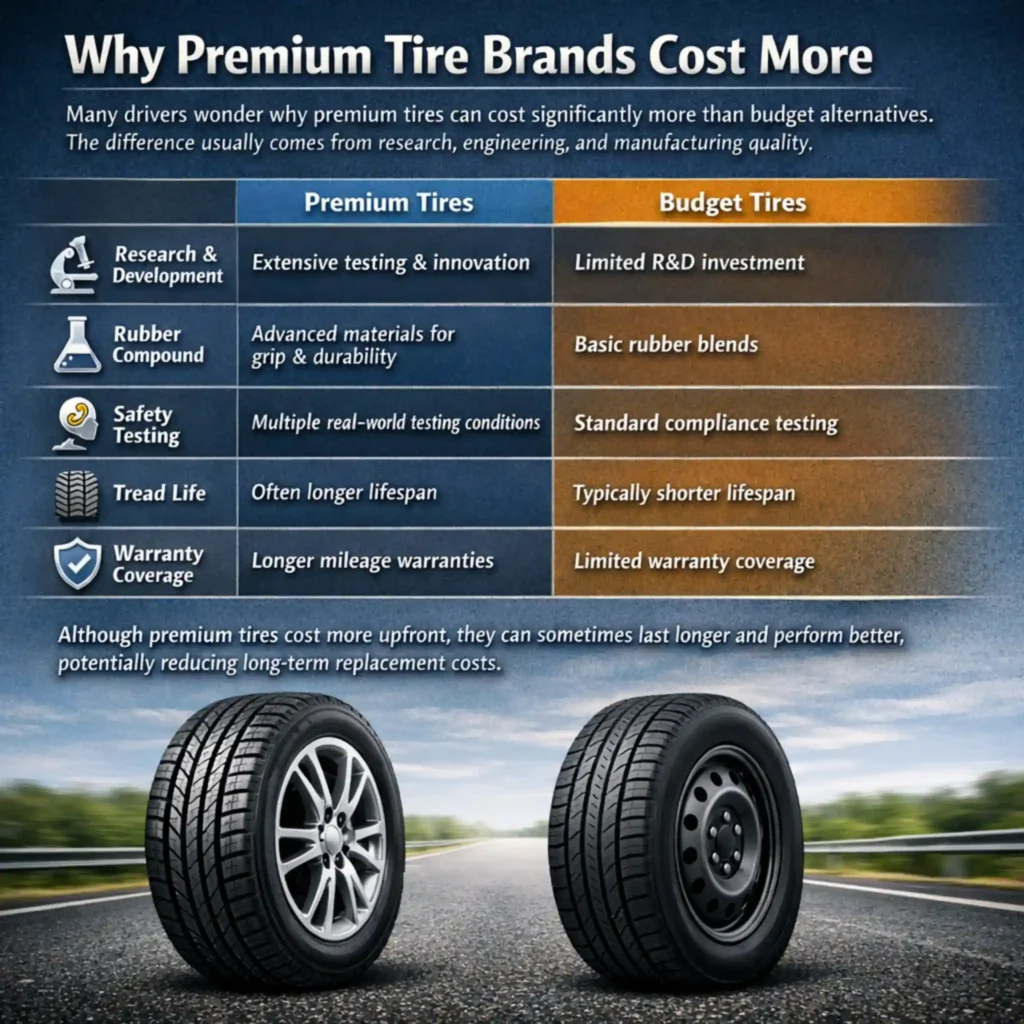
| Research & development | Extensive testing and innovation | Limited R&D investment |
| Rubber compound | Advanced materials for grip and durability | Basic rubber blends |
| Safety testing | Multiple real-world testing conditions | Standard compliance testing |
| Tread life | Often longer lifespan | Typically shorter lifespan |
| Warranty coverage | Longer mileage warranties | Limited warranty coverage |
Although premium tires cost more upfront, they can sometimes last longer and perform better, potentially reducing long-term replacement costs.
Tire Brand vs Tire Model: What Matters More?
One important factor many drivers overlook is the difference between a tire brand and a tire model.
Even within the same brand, different tire models serve completely different purposes.
| Tire Brand | Tire Model | Designed For |
|---|---|---|
| Michelin | Defender | Long-lasting touring tire |
| Michelin | Pilot Sport | High-performance sports tire |
| Bridgestone | Turanza | Comfort and highway driving |
| Bridgestone | Potenza | Performance vehicles |
This means choosing the correct tire model for your driving conditions is often more important than choosing a specific brand.
A premium brand may still offer entry-level models, while mid-range brands sometimes produce excellent high-value tires.
Who Actually Makes Tire Brands?
Many tire brands belong to larger parent companies. Understanding these relationships can help drivers better evaluate tire quality and manufacturing standards.
| Parent Company | Owned Tire Brands | Quality Tier |
|---|---|---|
| Michelin Group | Michelin, BFGoodrich, Uniroyal | Premium / Mid-range |
| Bridgestone | Bridgestone, Firestone | Premium / Mid-range |
| Goodyear | Goodyear, Dunlop, Kelly Tires | Premium / Mid-range |
| Continental | Continental, General Tire | Premium / Mid-range |
| Hankook | Hankook, Laufenn | Mid-range / Budget |
This means that some budget or mid-range brands may still benefit from the engineering expertise of major tire manufacturers.
For example, General Tire is owned by Continental, which allows it to use certain design technologies developed by its parent company.
OEM Tires vs Aftermarket Tires
Another factor that can influence tire quality is whether the tires are OEM (Original Equipment Manufacturer) tires or aftermarket replacements.
| Tire Type | Description | Advantages |
|---|---|---|
| OEM Tires | Installed by the vehicle manufacturer when the car is built | Designed specifically for the vehicle |
| Aftermarket Tires | Purchased as replacements from tire retailers | Wider range of performance options |
OEM tires are designed to match the vehicle’s original performance characteristics, while aftermarket tires often provide more choices in durability, performance, and price.
Does Manufacturing Location Affect Tire Quality?
Many drivers assume that tires manufactured in certain countries are automatically higher quality than others.However, modern tire production is global, and many major brands operate factories worldwide.
| Manufacturing Region | Known For | Example Brands |
|---|---|---|
| Europe | High engineering standards | Continental, Pirelli |
| Japan | Precision manufacturing | Yokohama, Bridgestone |
| United States | Large-scale production | Goodyear |
| China | Cost-efficient manufacturing | Linglong, Sailun |
The quality of a tire is usually determined more by brand standards and manufacturing processes than by the country where the tire is produced.
How to Evaluate Tire Brand Quality
When comparing tire brands, drivers should focus on objective performance indicators rather than brand reputation alone.
| Evaluation Factor | Why It Matters |
|---|---|
| Treadwear rating | Indicates expected tire lifespan |
| Traction rating | Shows braking performance in wet conditions |
| Temperature rating | Reflects heat resistance and durability |
| Warranty coverage | Indicates manufacturer confidence |
| Independent testing results | Provides real-world performance comparisons |
Looking at these factors can help drivers understand how tire brands differ in quality and choose the best option for their vehicle.
Conclusion:
Understanding the differences between premium, mid-range, and budget tire brands helps drivers make informed decisions when buying tires. Premium brands often offer advanced technology, longer tread life, and superior performance, while mid-range brands provide balanced value for everyday driving.
By comparing brand tiers, tire models, warranties, and performance ratings, drivers can choose tires that provide the right balance of safety, durability, and cost.
Frequently Asked Questions
Do expensive tire brands last longer?
Premium tire brands often use higher-quality rubber compounds and advanced engineering, which can result in longer tread life and improved durability compared to many budget tires.
Are budget tires safe?
Budget tires must still meet safety regulations, but they may not provide the same level of performance, grip, or durability as premium brands.
Is Michelin better than other tire brands?
Michelin is widely considered one of the top premium tire manufacturers due to its strong reputation for durability, traction, and advanced tire technology.
How do I know if a tire brand is reliable?
Drivers can evaluate tire brand reliability by reviewing treadwear ratings, traction ratings, warranty coverage, and independent tire test results.
Should I buy premium or mid-range tires?
Premium tires are often best for high-performance vehicles or drivers who prioritize safety and longevity. Mid-range tires can provide excellent value for everyday commuting and moderate driving conditions.
