



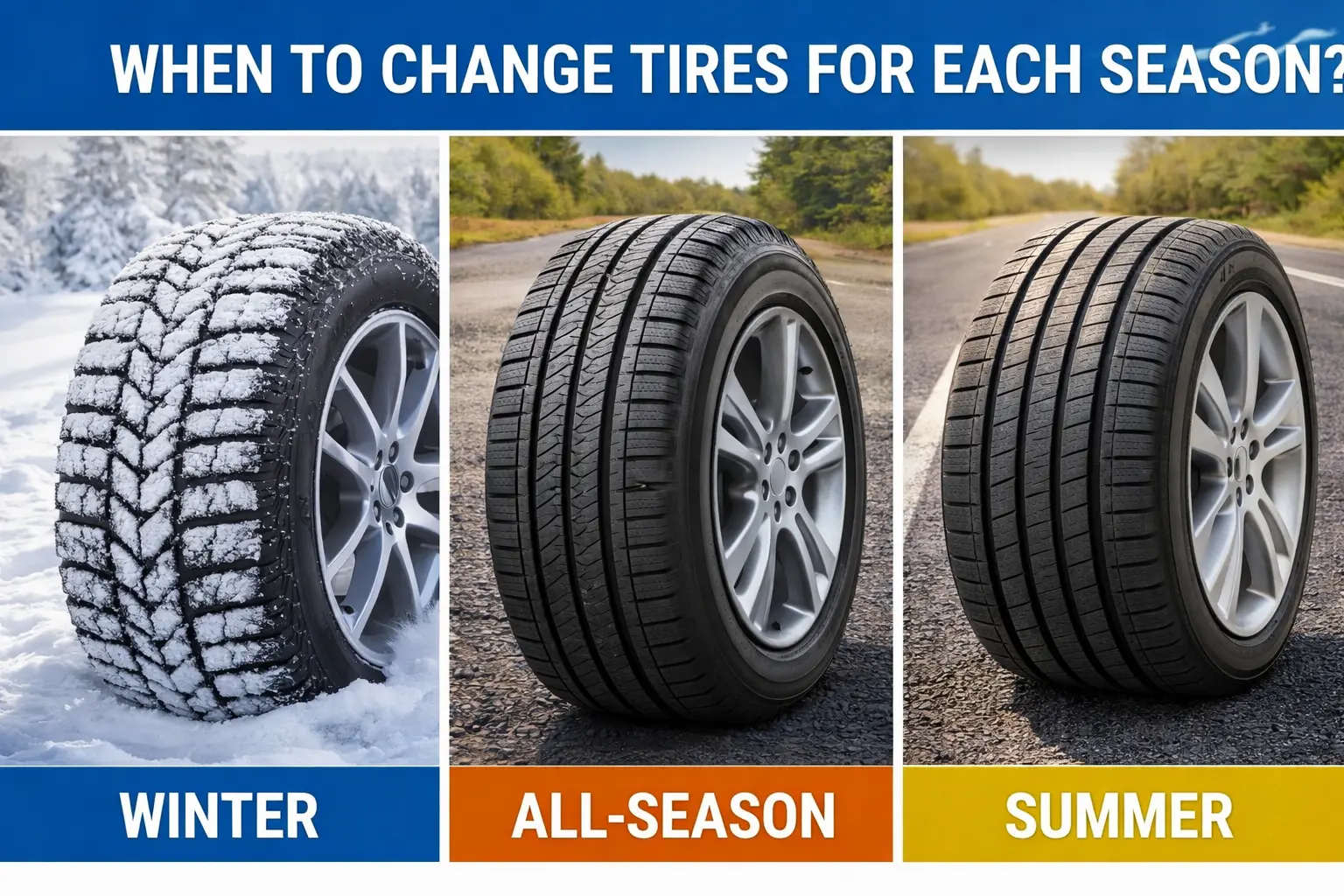
When Should You Change Tires?
You should change your tires based on temperature, not just the calendar. In general, switch to winter tires when temperatures consistently drop below 45°F, and switch back when they rise above that level.

Why Timing Matters More Than You Think
Many drivers wait until the first snowfall or heatwave but by then, it’s already too late.
Tires are engineered to perform within specific temperature ranges. When used outside those ranges, they lose grip, wear faster, and reduce safety.
If you’ve ever driven on a cold morning and felt your car take longer to stop, that’s often the tire compound stiffening in low temperatures.
Seasonal Tire Change Timing

| Season | Recommended Tire Type | When to Switch |
|---|---|---|
| Winter | Winter tires | Below 45°F |
| Spring | All-season | Above 45°F |
| Summer | Summer tires | Consistent heat |
| Fall | Prepare for winter | Before first freeze |
Winter Tire Timing (Cold Weather Driving)
When to Install Winter Tires
Install winter tires when temperatures consistently fall below 45°F even if there’s no snow yet.
Many drivers wait for the first snowfall, but winter tires are designed for cold pavement, not just snow-covered roads.
Why Winter Tires Matter
- Softer rubber stays flexible in cold
- Better grip on ice and snow
- Shorter braking distances
Tire manufacturers like Bridgestone and Michelin design winter tires specifically for cold-weather traction and safety.
Summer Tire Timing (Hot Weather Performance)
When to Switch to Summer Tires
Switch when temperatures consistently stay above 45–50°F and freezing conditions are no longer expected.
Why Summer Tires Perform Better
- Designed for high-temperature grip
- Better cornering and braking
- Improved performance on dry and wet roads
If you’ve ever driven in hot weather and noticed your tires feeling “soft” or less responsive, that’s often due to using the wrong tire type for the season.
All-Season Tires (Year-Round Option?)
All-season tires are designed to handle a range of conditions, but they are always a compromise.
They work best in moderate climates without extreme heat or cold, but performance drops in harsh winter or very hot conditions.
USA Climate-Based Timing Guide

Northern States (Midwest, Northeast)
- Winter tires: November → March
- Summer/all-season: April → October
Pacific Northwest
- Mostly all-season tires
- Winter tires for occasional snow
Southern States (Texas, Florida)
- All-season or summer tires year-round
- Winter tires rarely needed
Mountain Regions
- Winter tires essential
- Longer winter seasons
Which Tires Should You Actually Use?
- Harsh winters → Winter + summer setup
- Mild climates → All-season tires
- Mixed driving → All-weather tires
The best setup depends on your environment, not just convenience.
Real Experience (What Drivers Notice)
Most drivers delay switching tires until conditions change and that’s when problems start.
- First icy morning → reduced grip and longer braking
- First hot highway drive → faster tire wear
You usually notice the difference immediately when the season changes.
Common Mistakes Drivers Make
Many issues come down to timing and awareness.
- Waiting too long to switch
- Switching too early and causing extra wear
- Ignoring temperature changes
- Using one tire type year-round in extreme climates
How to Plan Tire Changes
A simple approach works best:
- Monitor average daily temperatures
- Plan tire change 1–2 weeks before seasonal shifts
- Follow local weather patterns instead of fixed dates
Being proactive not only improves safety but also extends tire life.
Conclusion:
Seasonal tire changes should always be based on temperature, not the calendar.
- Below 45°F → winter tires
- Above 45°F → summer or all-season
Understanding when to change tires helps improve safety, performance, and tire lifespan.
Frequently Asked Questions
What temperature is too cold for all-season tires?
Below 45°F, all-season tires lose flexibility and traction.
Can I switch tires too early?
Yes, switching too early can cause unnecessary wear.
Do I need winter tires every year?
It depends on your climate and driving conditions.
How often should I change seasonal tires?
Typically twice a year — before winter and before summer.
Are all-season tires enough for winter?
Only in mild climates; not ideal for harsh winter conditions.

