



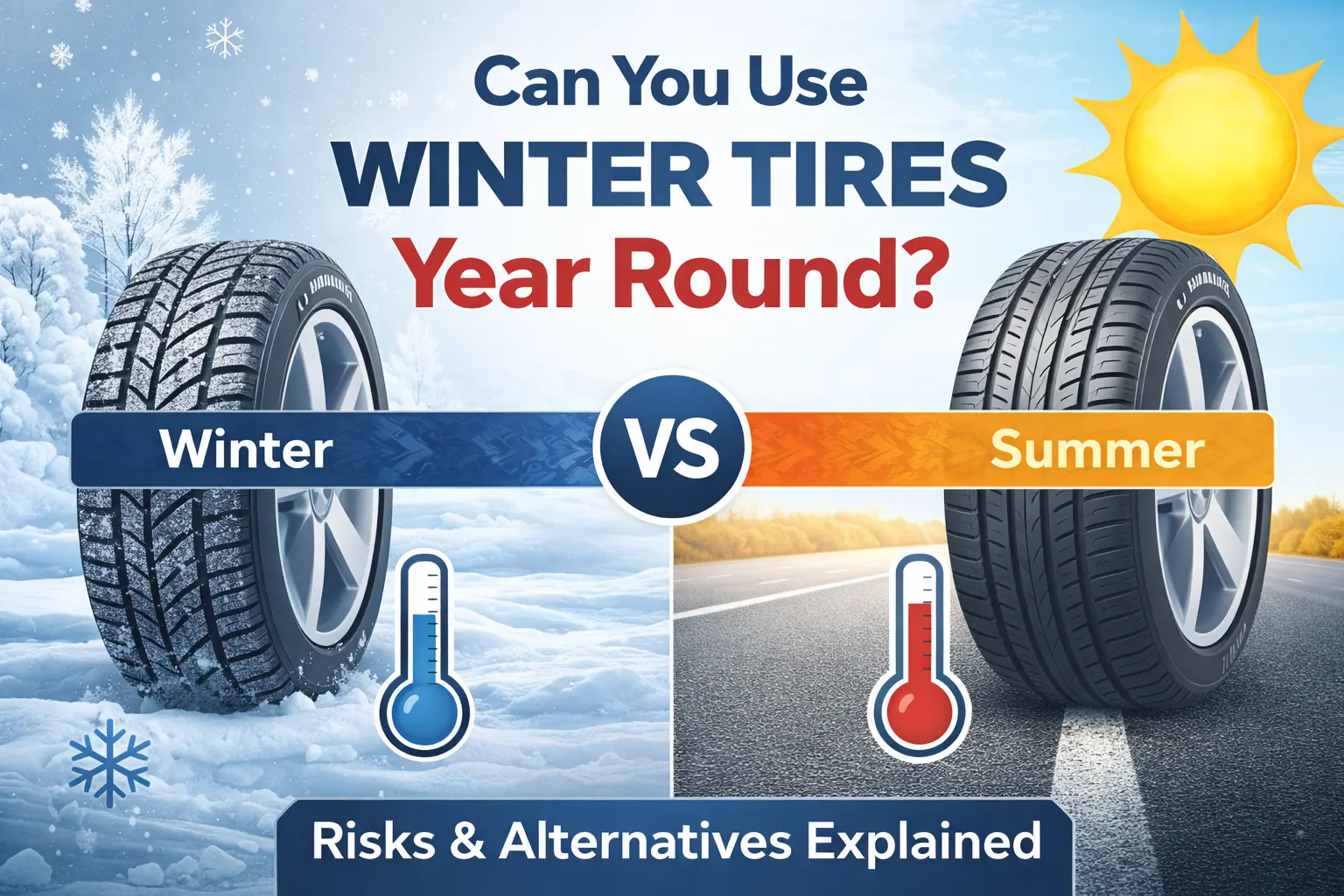
Can You Use Winter Tires Year Round?
If you’re wondering can you use winter tires year round, the short answer is yes but it is not recommended. Winter tires wears faster in warm temperatures and don’t perform as well as all-season or summer tires.

Why This Question Matters More Than You Think
Many drivers consider using winter tires year-round to avoid seasonal changes or save money.
In reality, this often leads to faster wear and reduced performance.
If you’ve ever driven on winter tires during a warm day, you may notice the steering feels slightly soft and less responsive, that’s the rubber reacting to heat.
How Winter Tires Are Designed
Winter tires are built for cold-weather performance.
They use a softer rubber compound that stays flexible in low temperatures, along with deeper tread patterns and additional seeping for better grip on snow and ice.
These same features that help in winter become a disadvantage in warmer conditions.
What Happens If You Use Winter Tires in Summer?

Using winter tires in warm weather affects performance in several ways.
Faster Wear
The soft rubber compound wears down quickly in higher temperatures, often reducing tire lifespan significantly.
Reduced Handling
Winter tires can feel less stable and responsive, especially at highway speeds.
Lower Fuel Efficiency
Higher rolling resistance leads to reduced fuel economy over time.
Real-World Driving Experience
Drivers who keep winter tires on through summer often notice changes within weeks:
- Steering feels less precise
- Tires wear unevenly
- Slight increase in road noise
These effects may seem minor at first, but become more noticeable with continued use.
Are Winter Tires Dangerous in Summer?
They are not inherently dangerous, but they are less effective compared to proper seasonal tires.
- Longer braking distances
- Reduced grip on hot pavement
- Less stability in turns
In emergency situations, this difference can matter.
Better Alternatives (What You Should Use Instead)
Instead of using winter tires year round, consider these options:
- All-season tires → best for moderate climates
- All-weather tires → better for mixed conditions
- Seasonal tire setup (winter + summer) → best performance overall
Choosing the right type depends on your climate and driving habits.
Recommended Tire Types
Manufacturers like Michelin, Bridgestone, and Goodyear design tires specifically for seasonal performance.
- Winter tires → cold weather and snow
- All-season tires → balanced daily driving
- All-weather tires → year-round flexibility
The key is matching the tire to the environment, not using one type for everything.
When Might It Be Acceptable?
There are a few limited situations where using winter tires year round may be acceptable:
- Mild climates with cooler temperatures
- Temporary use before switching
- Emergency situations
However, even in these cases, it’s not a long-term solution.
Common Mistakes Drivers Make
Most issues come down to misunderstanding how tires work.
- Trying to save money by avoiding seasonal changes
- Ignoring temperature differences
- Using winter tires year-round in warm regions
These choices often lead to higher costs over time.
Conclusion:
Yes, you can use winter tires year round but it’s not the best choice.
- Faster wear in warm temperatures
- Reduced handling and efficiency
- Lower overall performance
Using the right tire for the season improves safety, performance, and long-term cost.
Frequently Asked Questions
Can winter tires be used in summer safely?
Yes, but performance and safety are reduced compared to seasonal tires.
Do winter tires wear faster in warm weather?
Yes, significantly faster due to softer rubber compounds.
Are winter tires good in rain?
They can perform adequately, but are not optimised for warm wet conditions.
Can I use winter tires all year in mild climates?
It’s possible, but not recommended for long-term use.
What’s better than winter tires year-round?
All-season or all-weather tires are better alternatives.

