


How Do Tires Perform When Driving in Rain, Ice and Slush?
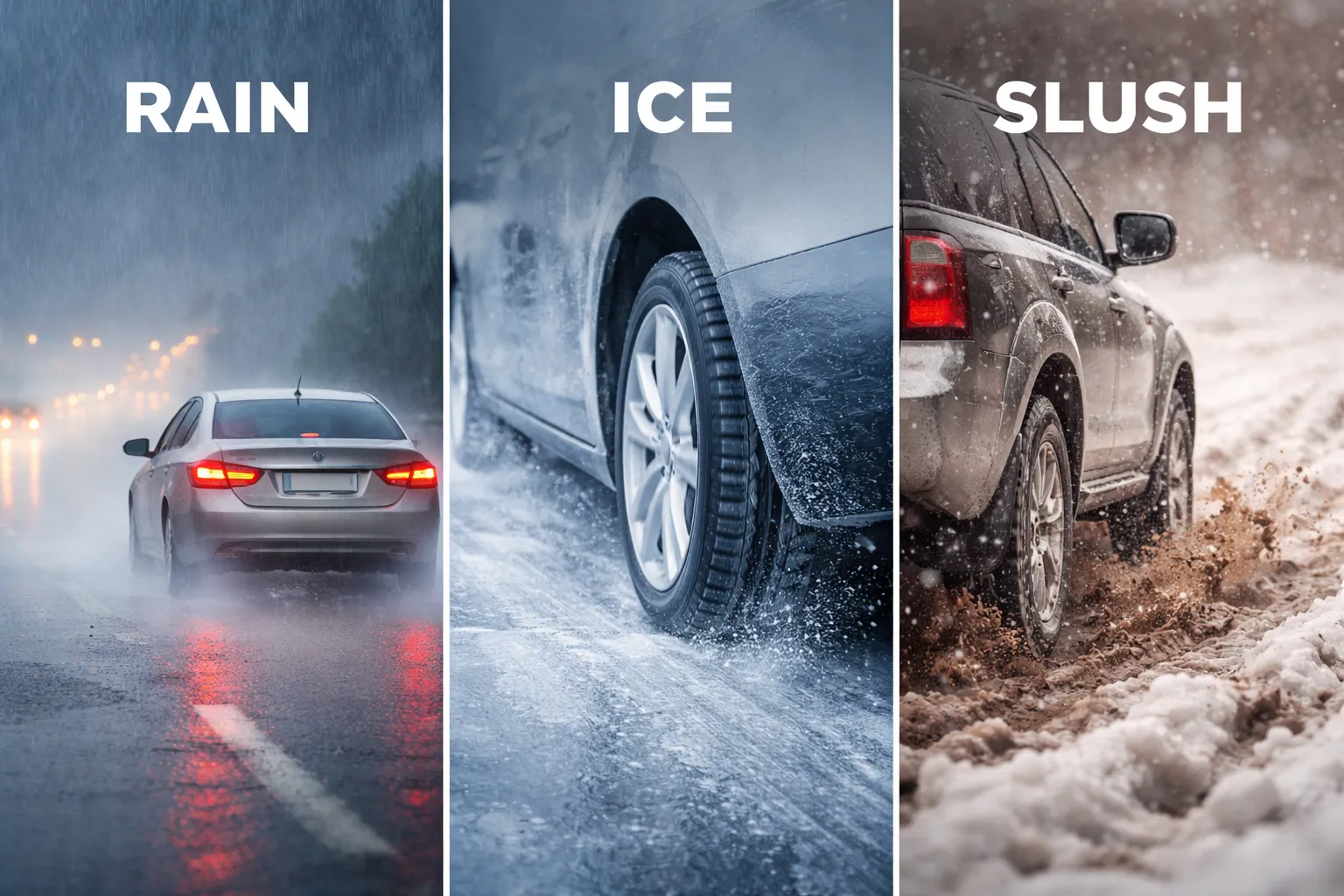
When driving in rain, ice and slush, tire performance changes significantly depending on road conditions. In rain, tires must evacuate water to prevent hydroplaning. On ice, traction depends on rubber flexibility. In slush, tires must clear heavy, wet buildup to maintain control.

Quick Safety Rules for Rain, Ice & Slush
- Slow down in wet or icy conditions
- Keep tread depth above 4/32 inch
- Avoid sudden braking on ice
- Use winter tires in freezing temperatures
These small adjustments make a bigger difference than most drivers expect.
Understanding how tires behave when driving in rain, ice and slush helps you stay in control and avoid sudden loss of traction.
How These Conditions Affect Tires Summary
- Rain → water reduces road contact
- Ice → friction nearly disappears
- Slush → unstable and unpredictable surface
Understanding this helps you react correctly when conditions change.
Driving in Rain: Understanding Hydroplaning
When driving in rain, tires must push water away fast enough to stay connected to the road.

What Causes Hydroplaning?
Hydroplaning occurs when:
- Water builds faster than the tire can disperse it
- The tire lifts off the road surface
At that moment, steering can feel light almost like the car is floating. Many drivers experience this briefly during heavy rain without realising what’s happening.
What Increases Hydroplaning Risk?
- Speed (especially above highway speeds)
- Low tread depth (below 4/32 inch)
- Standing water
- Improper tire pressure
What Improves Wet Traction?
- Deep tread grooves
- Proper inflation
- Reduced speed
Tires from manufacturers like Michelin and Goodyear often use silica-rich compounds to improve wet grip.
Driving on Ice: Why Grip Is So Limited
Ice is one of the most difficult surfaces for any tire.
Unlike wet roads, where some grip remains, ice drastically reduces friction.
Why Ice Is Dangerous
- Tires cannot “bite” into the surface
- Braking distance increases significantly
- Steering response becomes delayed
If you’ve ever tried to stop on an icy road and felt the car keep sliding, that’s the lack of friction at work.
How Tires Improve Ice Performance
- Softer rubber compounds (stay flexible in cold)
- Siping (small cuts that create gripping edges)
Winter tires are specifically designed for this, but even then, control is limited, which is why smooth driving matters.
Driving in Slush: The Most Unpredictable Condition
Slush is often underestimated.

It behaves like a mix of water and snow, creating an unstable driving surface.
Why Slush Is Difficult
- Heavy and uneven
- Can pull the vehicle slightly sideways
- Reduces consistent road contact
Many drivers notice this when the steering feels uneven or the car drifts slightly within the lane.
What Helps in Slush
- Deep tread grooves
- Controlled speed
- Tires designed for winter or mixed conditions
Rain vs Ice vs Slush Comparison
| Condition | Main Risk | Tire Requirement |
|---|---|---|
| Rain | Hydroplaning | Good tread + water evacuation |
| Ice | Low friction | Flexible rubber (winter tires) |
| Slush | Instability | Deep grooves + control |
Which Tires Work Best for These Conditions?
- Rain-heavy regions (Florida, Pacific Northwest):
→ All-season or summer tires with strong wet grip - Snow and ice regions (Midwest, Northeast):
→ Winter tires - Mixed conditions:
→ All-weather tires
The right choice depends on your climate, not just occasional weather.
How Tread Depth Affects Safety
Tread depth plays a major role in wet and winter performance.

- Above 6/32 inch → strong traction
- Around 4/32 inch → reduced wet grip
- Below 2/32 inch → unsafe
Many drivers wait too long to replace tires, especially in rain-heavy regions.
Real-World Driving Scenarios
City Driving in Rain
Frequent stops increase hydroplaning risk.
Lower speeds and good tread depth are critical
Highway Driving in Rain
Water builds quickly at high speeds.
Risk increases significantly
Mountain Driving (Ice & Slush)
Sudden temperature drops create black ice.
Winter tires are strongly recommended
Urban Winter Driving
Slush buildup creates unstable traction.
Smooth driving and proper tires help maintain control
Common Mistakes Drivers Make
Driving too fast in rain
Hydroplaning risk increases rapidly
Ignoring tread wear
Worn tires cannot evacuate water effectively
Sudden braking on ice
Leads to loss of control
Overconfidence in AWD
AWD improves acceleration not braking.
How to Improve Safety in Rain, Ice & Slush
- Reduce speed in wet or icy conditions
- Check tread depth regularly
- Maintain proper tire pressure
- Use winter tires when temperatures drop
Even small adjustments can significantly improve control.
Conclusion:
Rain, ice, and slush affect tire performance in different ways.
- Rain reduces contact through water
- Ice removes most friction
- Slush creates instability
Understanding these differences helps you stay in control when conditions change unexpectedly.
Frequently Asked Questions
What causes hydroplaning?
Hydroplaning happens when water builds between the tire and road, causing loss of contact.
Are all-season tires safe in rain?
Yes, but performance depends heavily on tread depth and tire design.
Why is ice so dangerous for driving?
Ice provides very little friction, making braking and steering difficult.
What tread depth is safe for rain?
Replacing tires before 4/32 inch improves wet traction significantly.
Do winter tires help in slush?
Yes. Their tread design helps clear slush and maintain traction.

