


Understanding different tire types is essential when deciding how to choose the right tires for your vehicle. Each tire type is designed for specific weather conditions, driving styles, and performance needs. Choosing the wrong type can affect safety, handling, and tire lifespan.

In this guide, we explain the main tire types, compare their performance, and help you determine which tire is best for your driving conditions.
What Are the Different Types of Tires?
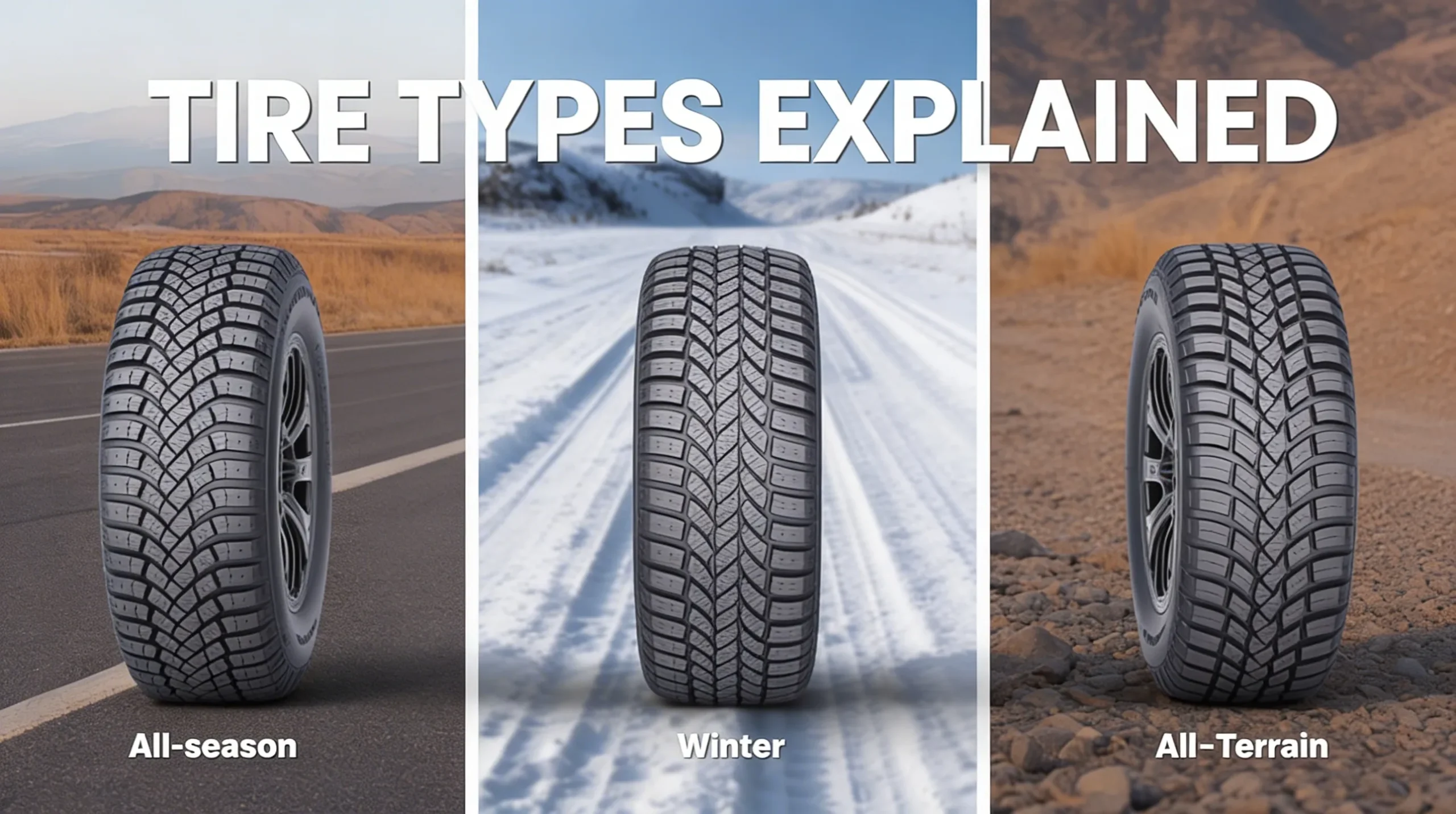
Most passenger vehicles use one of the following tire types:
| Tire Type | Best For | Key Feature |
|---|---|---|
| All-Season | Everyday driving | Balanced performance |
| Summer | Warm weather | High grip and handling |
| Winter | Snow and ice | Maximum cold-weather traction |
| All-Weather | Mixed climates | Year-round with winter capability |
| All-Terrain | SUVs and trucks | Off-road capability |

Each type is built with specific rubber compounds and tread patterns to perform best in certain environments.
All-Season Tires Explained
These tires are the most commonly used tires. In addition, they offer a balance performance in different conditions. As a result, they are suitable for daily driving.
| Feature | Details |
|---|---|
| Best Use | Daily commuting and moderate climates |
| Advantages | Long tread life, quiet ride, versatility |
| Limitations | Reduced performance in extreme heat or snow |
All-season tires work well for drivers who experience mild weather conditions year-round. However, they are not ideal for heavy snow or high-performance driving.
Summer Tires Explained
Summer tires are designed for warm weather and performance driving. For example, they provide better grip and handling on dry roads. However, they are unsafe in cold weathers because the rubber hardens.
| Feature | Details |
|---|---|
| Best Use | Hot climates and sports driving |
| Advantages | Excellent grip, shorter braking distance |
| Limitations | Poor performance in cold or snowy conditions |
These tires use specialized rubber compounds that remain firm in warm temperatures, providing better road contact and handling.
Winter Tires Explained
These tires are specifically engineered for cold weather, snow, and ice.
| Feature | Details |
|---|---|
| Best Use | Snowy and icy conditions |
| Advantages | Superior traction below 7°C (45°F) |
| Limitations | Faster wear in warm temperatures |
Additionally, they use softer rubber compounds that remain flexible in cold temperatures.
All-Weather Tires Explained
All-weather tires are a hybrid option between all-season and winter tires.
| Feature | Details |
|---|---|
| Best Use | Regions with occasional snow |
| Advantages | Year-round usability with winter certification |
| Limitations | Not as strong as dedicated winter tires |
They are a good choice for drivers who want to avoid switching between summer and winter tires.
All-Terrain and Off-Road Tires
All-terrain tires are designed for both on-road and off-road use.
| Feature | Details |
|---|---|
| Best Use | SUVs, trucks, and off-road driving |
| Advantages | Durable tread, better traction on dirt and gravel |
| Limitations | Slightly noisier and less fuel-efficient |
These tires are ideal for drivers who frequently travel on rough or unpaved roads.
Tire Types Comparison Chart
| Tire Type | Weather Performance | Comfort | Lifespan | Cost |
|---|---|---|---|---|
| All-Season | Moderate | High | Long | Moderate |
| Summer | Excellent (dry/wet) | Medium | Medium | Moderate |
| Winter | Excellent (snow/ice) | Medium | Medium | High |
| All-Weather | Good (all conditions) | High | Medium | Moderate |
| All-Terrain | Good (mixed terrain) | Low | Medium | Moderate |
How to Choose the Right Tire Type
Choosing the right tire type depends on your climate and driving habits.

| Driving Condition | Recommended Tire Type |
|---|---|
| Daily city driving | All-season tires |
| Cold climates with snow | Winter tires |
| Hot climates or performance driving | Summer tires |
| Mixed weather conditions | All-weather tires |
| Off-road driving | All-terrain tires |
If you’re unsure, read our complete guide on how to choose the right tires to understand tire size, ratings, and brand differences.
Tire Types and Lifespan Comparison
Different tire types wear at different rates depending on their design and usage.
| Tire Type | Average Lifespan |
|---|---|
| All-Season | 50,000–70,000 miles |
| Summer | 30,000–50,000 miles |
| Winter | 30,000–50,000 miles |
| All-Terrain | 40,000–60,000 miles |
Premium tire brands may offer longer lifespan due to better materials and engineering.
Can You Use One Tire Type Year-Round?
Many drivers prefer using one set of tires year-round, but this depends on your location.
| Tire Type | Year-Round Use |
|---|---|
| All-Season | Yes (mild climates) |
| Summer | No (unsafe in cold weather) |
| Winter | No (wears quickly in heat) |
| All-Weather | Yes (best year-round option) |
Using the wrong tire type in extreme conditions can reduce safety and increase tire wear.
Conclusion:
Understanding tire types is a key step in learning how to choose the right tires for your vehicle. Each type is designed for specific weather conditions and driving styles, and selecting the correct one improves safety, performance, and durability.
All-season tires work well for everyday driving, while winter and summer tires provide better performance in extreme conditions. All-weather and all-terrain tires offer flexibility for specific use cases.
By matching tire types to your driving environment, you can ensure safer and more efficient driving.
Frequently Asked Questions
What is the difference between all-season and all-weather tires?
All-season tires are designed for general use in mild conditions, while all-weather tires provide better performance in snow and cold temperatures.
Are winter tires really necessary?
Winter tires are essential in regions with snow and freezing temperatures because they provide better traction and safety compared to all-season tires.
Can I use summer tires all year?
No, summer tires are unsafe in cold weather because their rubber hardens and loses grip.
Which tire type lasts the longest?
All-season tires generally last the longest because they are designed for durability and everyday use.
What tire type is best for highway driving?
Touring or all-season tires are best for highway driving because they offer comfort, fuel efficiency, and long tread life.
About TireGuidePro
TireGuidePro provides research-based guides to help drivers make smarter tire decisions. Our content combines manufacturer recommendations, industry standards, and real-world driving insights.
