

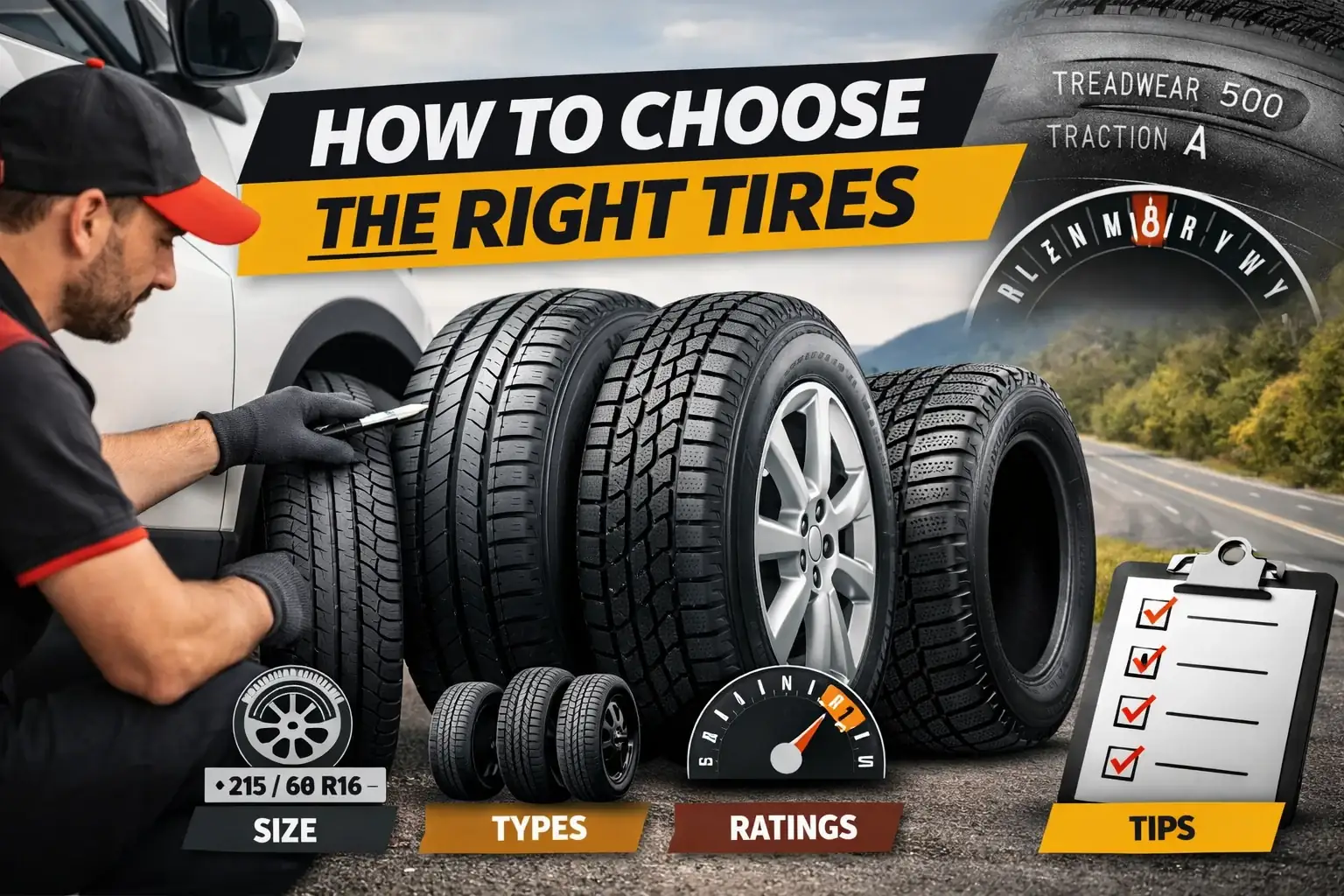
How to choose the right tires is an important question for every vehicle owner. The right tires improve safety, handling, fuel efficiency, and driving comfort. Because tires are the only part of your vehicle that touches the road, selecting the correct size, type, and rating is essential for safe and efficient driving.
Many drivers simply replace their tires with the same model that came with the vehicle, but that may not always be the best option. Factors like climate, driving style, vehicle type, and tire specifications all influence which tires are ideal for your needs.
How to Choose the Right Tires
To choose the right tires for your vehicle, follow these steps:
Check the recommended tire size in your owner’s manual
Select the correct tire type for your climate
Verify the load index and speed rating
Choose a reputable tire brand
Consider your driving style and road conditions
Quick Guide to Choosing the Right Tires
| Situation | Recommended Tire Type |
|---|---|
| Daily city driving | All-season tires |
| Cold climates with snow | Winter tires |
| High-performance sports cars | Performance or summer tires |
| Off-road driving | All-terrain or mud-terrain tires |
| Long highway commuting | Touring tires |
Choosing the correct tires improves safety, traction, fuel efficiency, and driving comfort.
Why Choosing the Right Tires Matters for Safety
The right tires improve more than just your driving comfort. They directly affect your vehicle’s safety and performance.
Proper tire selection can improve:
Road grip and braking performance
Fuel efficiency
Handling and cornering stability
Ride comfort and noise levels
For example, winter tires provide significantly better traction in snow and ice compared to all-season tires. Similarly, high-performance tires can dramatically improve handling for sports cars.
If you choose the wrong tires for your driving conditions, your vehicle may experience reduced traction, longer stopping distances, and uneven tire wear.
How to Choose the Right Tires Based on Tire Types
Not all tires are built the same. Different tire types are designed for different weather conditions, driving styles, and vehicles.
Comparison of Common Tire Types
| Tire Type | Best For | Key Advantages | Limitations |
|---|---|---|---|
| All-Season | Everyday driving | Balanced performance year-round | Not ideal for extreme weather |
| Summer | Warm climates & performance cars | Excellent grip & handling | Unsafe in snow |
| Winter | Snow and ice | Superior cold-weather traction | Faster wear in warm weather |
| All-Terrain | SUVs and trucks | Works on-road and off-road | Slightly noisier ride |
All-Season Tires
All-season tires are the most common choice for everyday drivers. They are designed to perform reasonably well in dry, wet, and mild winter conditions.
They offer:
Long tread life
Comfortable ride
Balanced performance year-round
However, they may not perform as well as dedicated winter or summer tires in extreme conditions.
Summer Tires
Summer tires are designed for warm temperatures and performance driving.
Benefits include:
Better cornering grip
Shorter braking distances
Improved handling
But they lose traction in cold temperatures and are unsafe in snow.
Winter Tires
Winter tires are specifically designed for snow, ice, and freezing temperatures.
Their softer rubber compounds and deep tread patterns provide superior traction when temperatures drop below 7°C (45°F).
Performance and Off-Road Tires
Performance tires are optimized for sports cars and aggressive driving, while off-road tires are built for trucks and SUVs that regularly drive on dirt, mud, or rocky terrain.
Understanding Tire Size
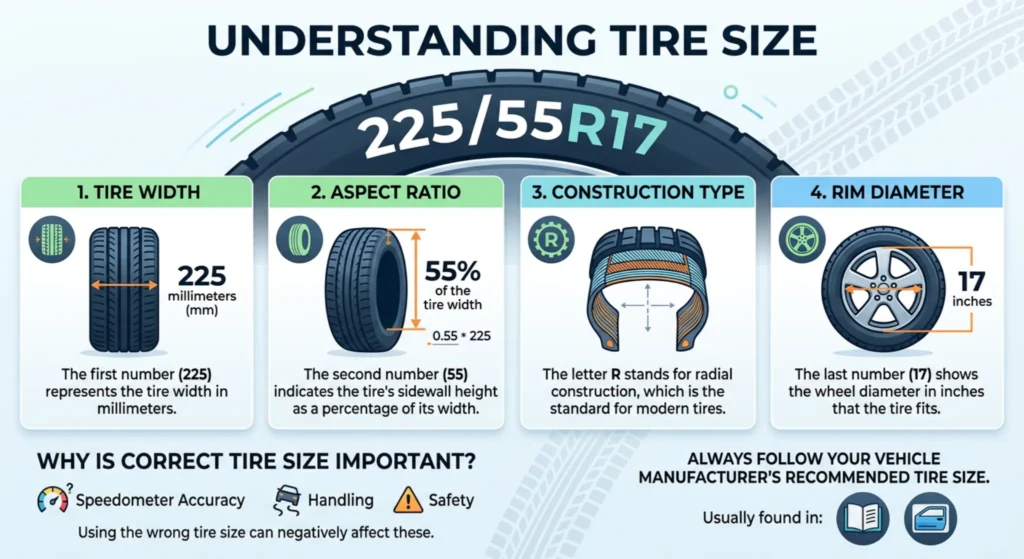
Every tire has a specific size that must match your vehicle’s requirements. Tire size is printed on the sidewall in a format like this:
225/55R17
This code contains important information.
Tire Width
The first number (225) represents the tire width in millimeters.
Aspect Ratio
The second number (55) indicates the tire’s sidewall height as a percentage of its width.
Construction Type
The letter R stands for radial construction, which is the standard for modern tires.
Rim Diameter
The last number (17) shows the wheel diameter in inches that the tire fits.
Using the wrong tire size can negatively affect speedometer accuracy, handling, and safety. Always follow your vehicle manufacturer’s recommended tire size, usually found in the owner’s manual or on the driver-side door sticker.
Load Index and Speed Rating
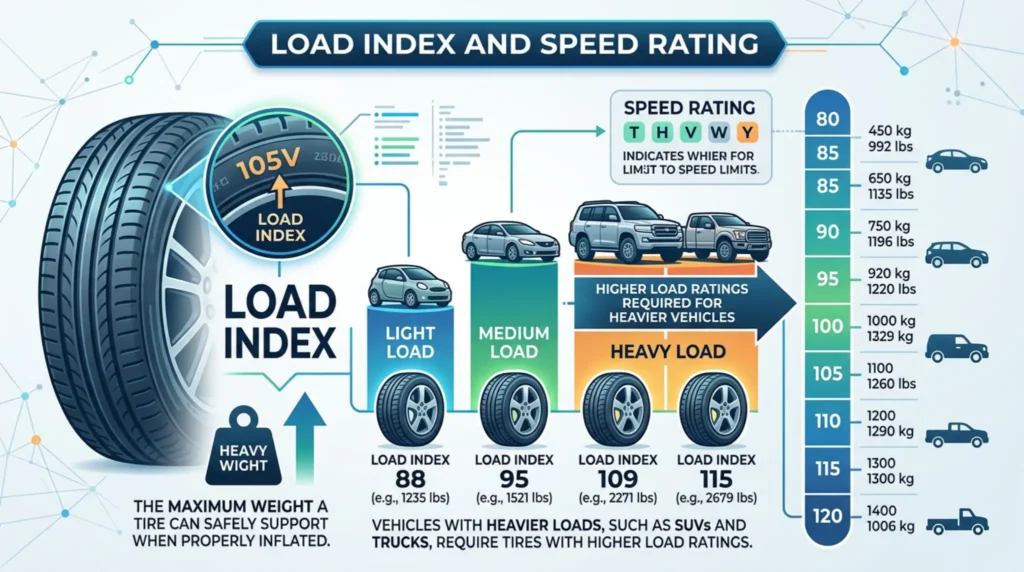
In addition to size, tires also have load and speed ratings that indicate their performance limits.
Load Index
The load index tells you the maximum weight a tire can safely support when properly inflated.
Vehicles with heavier loads, such as SUVs and trucks, require tires with higher load ratings.Load ratings are another important factor when deciding how to choose the right tires safely.
Tire Speed Rating Chart
| Speed Rating | Maximum Speed (mph) | Maximum Speed (km/h) |
|---|---|---|
| S | Up to 112 mph | Up to 180 km/h |
| T | Up to 118 mph | Up to 190 km/h |
| H | Up to 130 mph | Up to 210 km/h |
| V | Up to 149 mph | Up to 240 km/h |
You should always use tires that meet or exceed the manufacturer’s recommended ratings.
Tubeless vs Tube Tires
Most modern vehicles use tubeless tires, but some motorcycles and older vehicles still use tube tires.
Tubeless Tires
Tubeless tires seal directly against the wheel rim and do not require an inner tube.
Advantages include:
Lower risk of sudden air loss
Better heat dissipation
Improved fuel efficiency
Easier puncture repair
Tube Tires
Tube tires contain an inner tube that holds the air pressure.
They are less common today but are still used in certain off-road and motorcycle applications.
Run-Flat Tires: Should You Use Them?
Run-flat tires allow you to continue driving even after a puncture or loss of air pressure.
Depending on the design, they can typically travel 50 miles (80 km) at reduced speed after a puncture.
Benefits include:
Improved safety during tire failure
No immediate need to stop on the roadside
Eliminates the need for a spare tire in some vehicles
However, run-flat tires are usually more expensive and may provide a slightly firmer ride.
Tire Brands and Quality Differences
Tire brands vary widely in price, durability, and performance. Generally, tires fall into three main categories.
Premium Brands
Premium manufacturers focus on advanced technology, better materials, and superior performance.
Examples include brands known for high durability and excellent traction.
Mid-Range Brands
Mid-range tires provide a good balance between performance and affordability.
Budget Brands
Budget tires are more affordable but may offer shorter tread life or reduced performance in extreme conditions.
Choosing a reputable brand can improve tire longevity and safety.
How to Choose the Right Tires for Your Vehicle and Driving Style
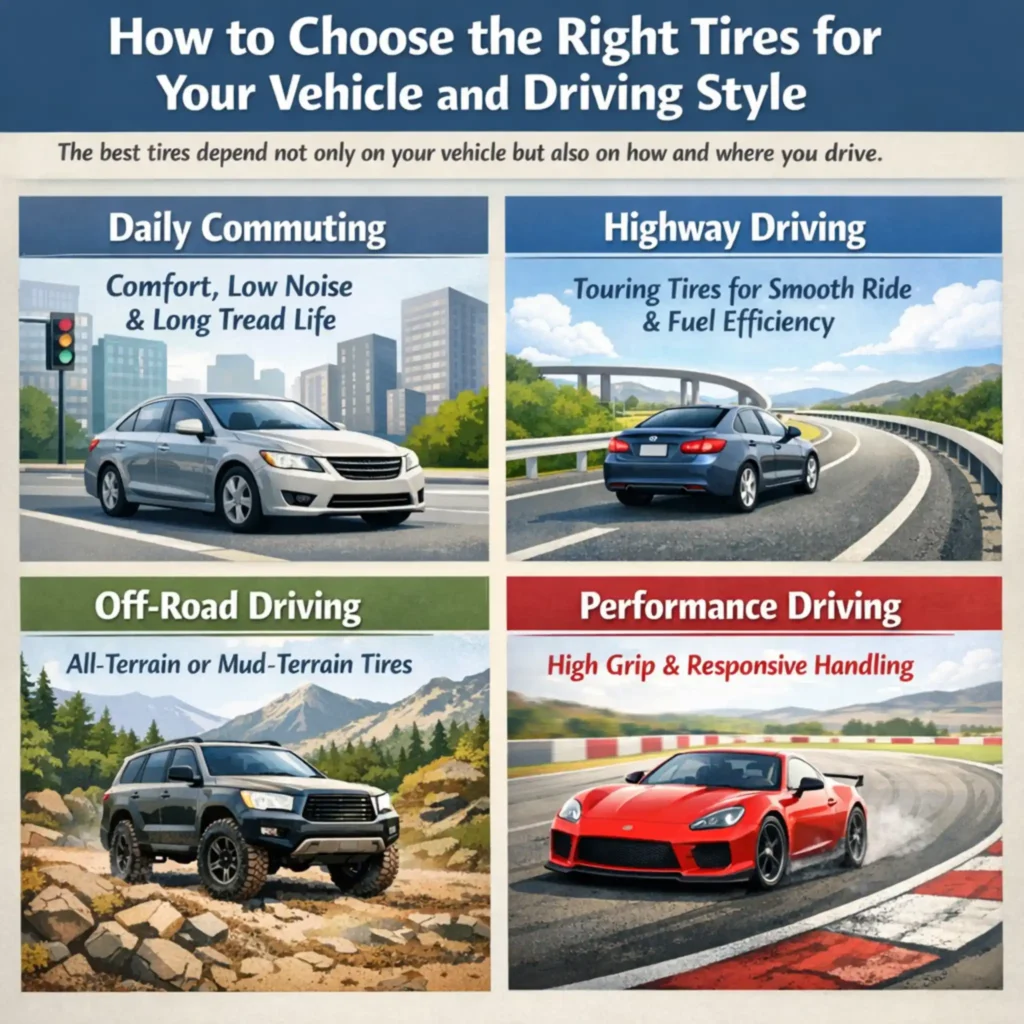
The best tires depend not only on your vehicle but also on how and where you drive.
Daily Commuting
Drivers who mainly commute in cities should prioritize comfort, low noise, and long tread life.
Highway Driving
Highway drivers benefit from touring tires that provide smooth rides and better fuel efficiency.
Off-Road Driving
Truck and SUV drivers who frequently travel on dirt roads or trails should consider all-terrain or mud-terrain tires.
Performance Driving
Sports cars and performance vehicles require tires designed for high grip and responsive handling.
New vs Used Tires
When buying tires, you may consider either new or used options.
New Tires
New tires offer:
Full tread depth
Manufacturer warranty
Longer lifespan
Better reliability
Used Tires
Used tires are cheaper but come with risks such as hidden damage, uneven wear, or reduced traction.
While used tires may work as a temporary solution, new tires are generally the safer and more reliable choice.
Buying Tires Online vs Locally
Today, drivers can purchase tires either from local shops or online retailers.
Buying Locally
Local tire shops offer advantages like:
Professional installation
Immediate service
Personalized advice
Buying Online
Online tire retailers often provide:
Lower prices
Larger selection
Convenient home delivery
However, you may still need to visit a local shop for installation.
Final Thoughts
Choosing the right tires involves more than just finding the correct size. The best tires for your vehicle depend on your driving habits, climate conditions, vehicle type, and performance needs.
By understanding tire types, size specifications, load ratings, and brand differences, you can make a more informed decision and ensure safer, more comfortable driving.
Understanding how to choose the right tires helps drivers improve safety, performance, and tire lifespan.
Frequently Asked Questions
How do I know which tires are right for my car?
The best way to choose the right tires is to check your vehicle’s recommended tire size and ratings in the owner’s manual or door-jamb sticker. To understand how to choose the right tires, you should consider tire size, driving conditions, and vehicle requirements.
Can I use a different tire size than recommended?
Using a slightly different tire size may be possible in some cases, but significant changes can affect handling, speedometer accuracy, and safety. It is generally recommended to follow the manufacturer’s specifications.
Are expensive tire brands worth it?
Premium tire brands often provide better durability, traction, and performance due to higher-quality materials and advanced engineering. However, many mid-range brands also offer excellent value for everyday driving.
How often should tires be replaced?
Most tires should be replaced every 6–10 years or when the tread depth reaches 2/32 of an inch. Regular inspections can help identify wear or damage earlier.
Is it safe to buy tires online?
Yes, buying tires online can be safe if you purchase from reputable retailers. Many online stores allow you to ship tires directly to an installation center.
About TireGuidePro
TireGuidePro provides research-based guides to help drivers make smarter tire decisions. Our articles combine manufacturer recommendations, tire industry standards, and real-world driving considerations to ensure accurate and practical advice.
