



TPMS Warning Lights Explained: What Your Tire Pressure Light Is Telling You
Modern vehicles constantly monitor tire pressure to prevent dangerous driving conditions. When the system detects a problem, a dashboard alert appears. Understanding TPMS warning lights helps drivers react correctly before a minor pressure issue turns into a serious safety risk.
TPMS stands for Tire Pressure Monitoring System. This system monitors the air pressure inside each tire and warns the driver if pressure drops below safe levels. Because tire pressure directly affects braking, traction, fuel efficiency, and tire lifespan, these warnings should never be ignored.
However, not all TPMS warnings mean the same thing. The behavior of the warning light — whether it stays solid, flashes, or appears intermittently — can indicate very different issues.
Learning how these warning patterns work allows drivers to quickly diagnose the problem and decide whether it is safe to continue driving.
What the TPMS Warning Light Symbol Means
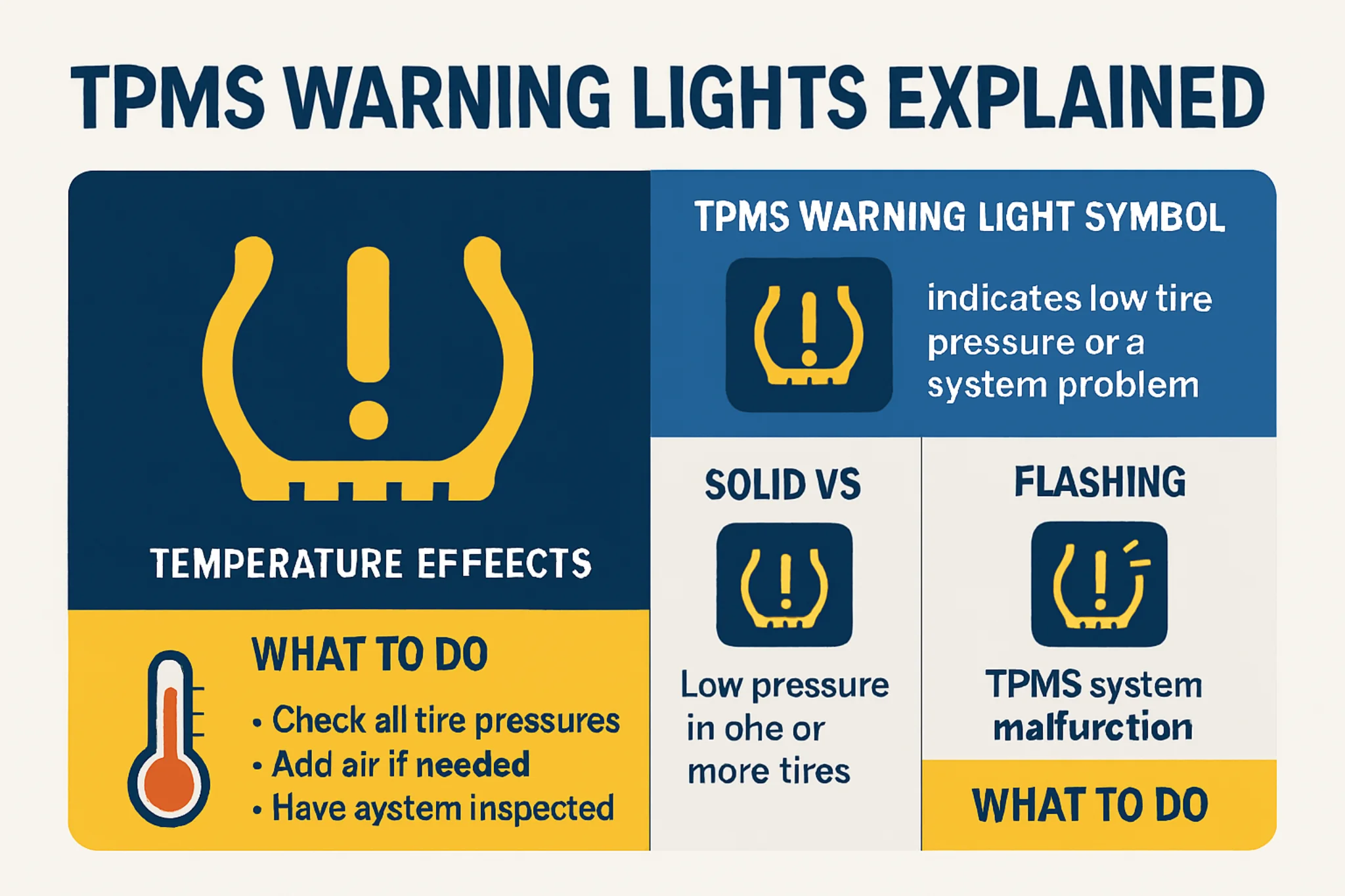
Most vehicles use a horseshoe-shaped symbol with an exclamation mark inside to represent tire pressure alerts.
This symbol resembles a cross-section of a tire with a warning indicator in the center.
When the symbol appears on your dashboard, it means the system has detected abnormal tire pressure or a malfunction within the monitoring system itself.
The warning may appear because one tire has lost air, temperature changes have affected pressure levels, or the TPMS sensors are experiencing communication issues.
Although the symbol may look simple, the cause behind it can vary widely.
Can You Keep Driving? Quick TPMS Risk Guide
| Warning Behavior | Possible Cause | Risk Level | Safe to Drive? |
|---|---|---|---|
| Solid TPMS light | Low tire pressure | Medium | Drive carefully to inflate |
| Flashing light for 60 seconds | TPMS system fault | Medium | Inspect system soon |
| Light appears after temperature drop | Seasonal pressure change | Low | Inflate tires |
| Light appears while driving suddenly | Possible puncture | High | Stop and inspect |
If the tpms warning lights appears suddenly while driving and the vehicle begins pulling or vibrating, the tire may be losing air rapidly.
In that situation, reduce speed and stop as soon as it is safe.
Solid vs Flashing TPMS Light
One of the most important diagnostic clues is how the warning light behaves.
Solid TPMS Light
A solid light usually means one or more tires are underinflated.
When tire pressure falls approximately 25% below the recommended level, the system activates the warning.
Low pressure can occur due to:
slow air leaks
seasonal temperature changes
natural pressure loss over time
small punctures
Inflating the tires to the correct pressure typically resolves the issue.
Flashing TPMS Light
If the TPMS light flashes for about 60 seconds and then remains solid, the problem usually involves the monitoring system rather than the tire pressure itself.
Common causes include:
failing TPMS sensor
dead sensor battery
sensor communication error
recent tire replacement
system calibration issues
A flashing warning indicates the system cannot reliably monitor tire pressure.
Although the vehicle can usually still be driven, the system should be inspected soon.
Why TPMS Warning Lights Turn On
Several conditions can trigger TPMS warnings.

The most common cause is simply low tire pressure. Tires naturally lose small amounts of air over time through the rubber material and valve stem.
However, other conditions can also activate the warning system.
A temperature drop can lower tire pressure enough to trigger the warning. Air contracts when temperatures decrease, causing pressure to fall even if the tire has not lost air.
A puncture or slow leak can also reduce pressure gradually. Nails, screws, or road debris can create small holes that allow air to escape slowly.
Another possibility is uneven pressure between tires. If one tire’s pressure drops significantly lower than the others, the system may activate.
These situations are common and usually easy to correct.
Why the TPMS Light Can Turn On When Tires Look Fine
Many drivers check their tires visually after seeing the warning light and assume nothing is wrong.
However, tires can appear normal even when pressure is dangerously low.
A drop of only 5–8 PSI can trigger the warning while still leaving the tire looking fully inflated.
Other reasons the warning may appear even when tires seem fine include:
Temperature-related pressure loss, especially during cold mornings.
Pressure changes after seasonal weather shifts.
Low pressure in the spare tire, which some vehicles monitor.
Recent tire rotation requiring system recalibration.
Because visual inspection is unreliable, tire pressure should always be checked with a pressure gauge.
Temperature Effects on TPMS Warnings
Temperature changes play a major role in TPMS alerts.
Air pressure inside a tire typically changes by about 1 PSI for every 10°F temperature change.
This means a sudden overnight temperature drop can reduce tire pressure enough to activate the warning light.
During winter months, many drivers notice their TPMS light appearing in the morning and disappearing later in the day once temperatures rise.
While this situation is common, it still indicates that tire pressure should be adjusted.
Maintaining proper pressure improves traction and prevents uneven wear.
The Spare Tire TPMS Issue
Some vehicles include TPMS sensors in the spare tire.
If the spare tire loses pressure while stored in the trunk or under the vehicle, the system may activate the warning light even though the four main tires are properly inflated.
Because spare tires are often forgotten, they may remain underinflated for long periods.
Checking the spare tire pressure periodically helps avoid this confusing situation.
TPMS Sensor Lifespan and Failures
TPMS sensors are small electronic devices located inside the wheel.
Each sensor contains a sealed battery designed to last between five and ten years.
When the battery weakens, the system may lose communication with the sensor.
This often causes the TPMS warning light to flash.
Sensor failure can also occur after tire replacement, wheel damage, or corrosion around the valve stem.
Because the battery is sealed inside the sensor, the entire unit must usually be replaced when it fails.
Direct vs Indirect TPMS Systems
Not all TPMS systems work the same way.
There are two main types.
Direct TPMS
Direct systems use sensors mounted inside each wheel to measure air pressure directly.
These sensors transmit pressure readings to the vehicle’s computer in real time.
Many vehicles display the exact PSI for each tire using this system.
Indirect TPMS
Indirect systems do not measure pressure directly.
Instead, they use the vehicle’s ABS wheel speed sensors to detect changes in tire rotation speed.
When a tire loses pressure, its diameter decreases slightly, causing it to rotate faster than the other tires.
The system detects this difference and triggers a warning.
Indirect systems are simpler but less precise than direct sensor systems.
How to Fix a TPMS Warning Light
Resolving a TPMS warning usually involves a few simple steps.
First, check the pressure in all tires using a reliable gauge. Compare the readings with the recommended tire pressure listed on the driver-side door jamb sticker.
If any tire is below the recommended PSI, inflate it to the correct level.
After adjusting the pressure, drive the vehicle for several minutes. Many systems automatically reset once proper pressure is detected.
If the warning continues flashing, the TPMS sensors or system may require inspection by a technician.
When You Should Stop Driving Immediately
Although many TPMS warnings are minor, some situations require immediate attention.

Stop driving if the warning appears suddenly along with:
strong steering pull
vibration
visible tire deformation
rapid pressure loss
These symptoms may indicate a serious tire failure or puncture.
Continuing to drive could lead to a blowout or loss of vehicle control.
Why TPMS Does Not Replace Manual Tire Checks
While TPMS systems improve safety, they do not eliminate the need for regular tire pressure checks.
Most TPMS systems activate only when pressure falls about 25% below the recommended level.
This means the tires may already be significantly underinflated before the warning appears.
Checking tire pressure manually once a month helps maintain proper inflation and prevent unnecessary tire wear.
Key Takeaway
TPMS warning lights are designed to alert drivers when tire pressure becomes unsafe or when the monitoring system itself encounters a problem.
Understanding the difference between a solid warning light, a flashing alert, and temperature-related pressure changes allows drivers to diagnose the issue quickly.
Maintaining correct tire pressure not only prevents dashboard warnings but also improves fuel efficiency, extends tire lifespan, and enhances overall driving safety.
Ignoring TPMS alerts can lead to premature tire damage or dangerous driving conditions.
Recognizing these signals early helps drivers avoid more serious problems on the road.
TPMS Warning Lights – Frequently Asked Questions
What does a TPMS warning light mean?
It means the tire pressure monitoring system has detected low tire pressure or a malfunction within the monitoring system.
Why is my TPMS light on but my tires look fine?
Tires can appear normal even when pressure is low. Temperature changes, spare tire pressure, or sensor issues may also trigger the warning.
Is it safe to drive with the TPMS light on?
You can drive short distances carefully, but tire pressure should be checked immediately to avoid tire damage.
Why does my TPMS light flash?
A flashing TPMS light usually indicates a system malfunction such as a failing sensor or dead sensor battery.
Does cold weather cause TPMS warnings?
Yes. Tire pressure drops approximately 1 PSI for every 10°F temperature decrease, which can activate the warning light.
