



What Are the Best Tires for Hot Weather?
The best tires for hot and extreme climates are those designed with heat-resistant rubber compounds that maintain stability at high temperatures. Summer tires and certain all-season tires perform well in hot regions, offering better grip, durability, and resistance to heat-related wear.
Which Tires Work Best in Hot Climates?
- Summer tires → best for extreme heat and highway driving
- All-season tires → balanced for moderate climates
- Winter tires → not suitable for hot weather
Tires from brands like Michelin, Bridgestone, and Goodyear often include heat-resistant compounds designed for high-temperature performance.
Why Hot Weather Affects Tire Performance
Most drivers focus on winter conditions, but heat can be just as demanding.
In extreme temperatures:
- Tire rubber softens
- Internal pressure increases
- Structural stress builds up
On very hot days, especially in states like Arizona or Texas, road temperatures can exceed 140°F. This significantly impacts how tires perform.
“If you’ve ever driven on a long highway in summer, you might notice your tires feel slightly less responsive — that’s heat affecting grip.”
“Many drivers don’t realise this until they take a long road trip in peak summer.”
How Heat Changes Tire Behaviour
1. Rubber Softening
As temperature rises, rubber becomes more flexible. While this can improve grip slightly, excessive softness leads to:
- Faster tread wear
- Reduced durability
- Increased rolling resistance
2. Increased Tire Pressure
Heat causes air inside the tire to expand.
- For every 10°F increase → pressure rises ~1 PSI
Higher pressure can:
- Reduce contact patch
- Affect handling
- Increase uneven wear
3. Blowout Risk
Extreme heat increases the likelihood of tire failure, especially if:
- Tires are underinflated
- Tread is worn
- Tires are old
Many highway blowouts in the U.S. happen during summer for this reason.
Best Tire Types for Hot & Extreme Climates
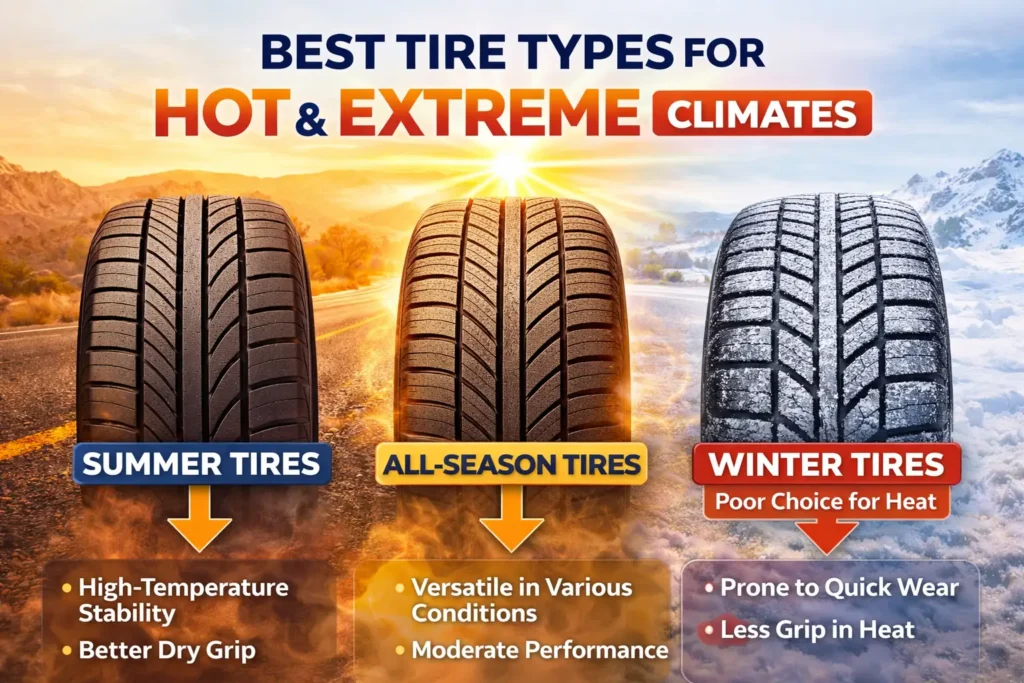
Summer Tires (Best Performance)
- Designed for high temperatures
- Excellent dry grip
- Stable at high speeds
Best for:
- Hot states (Texas, Arizona, Nevada)
- Highway driving
All-Season Tires (Balanced Option)
- Work across a wide temperature range
- Less specialized than summer tires
Best for:
- Moderate climates
- Daily commuting
Winter Tires (Not Recommended)
- Too soft in heat
- Wear out quickly
- Reduced handling precision
Not suitable for high temperature driving
Where Hot Climate Tires Matter Most in the USA
Extreme Heat States
- Arizona
- Nevada
- Texas
Long summers + high pavement temps → heat-resistant tires are important
Warm Regions
- California
- Florida
Heat + occasional rain → balanced performance needed
Moderate Regions
- Midwest / Northeast summers
All-season tires usually sufficient
Real-World Driving Scenarios
Daily City Driving
Frequent stops increase tire stress in heat.
Durable all-season tires work well
Long Highway Driving
Sustained speed + heat = increased risk
Summer tires provide better stability
Heavy Vehicles / SUVs
More weight = more heat buildup
Tire condition and pressure become critical
Road Trips in Summer
Extended driving hours amplify heat exposure
Regular pressure checks are essential
Signs Your Tires Are Struggling in Heat
Watch for:
- Rapid tread wear
- Overinflation symptoms (center wear)
- Vibrations at high speeds
- Visible cracks or aging
These are early warnings that heat is affecting tire performance.
Tire Pressure in Hot Weather
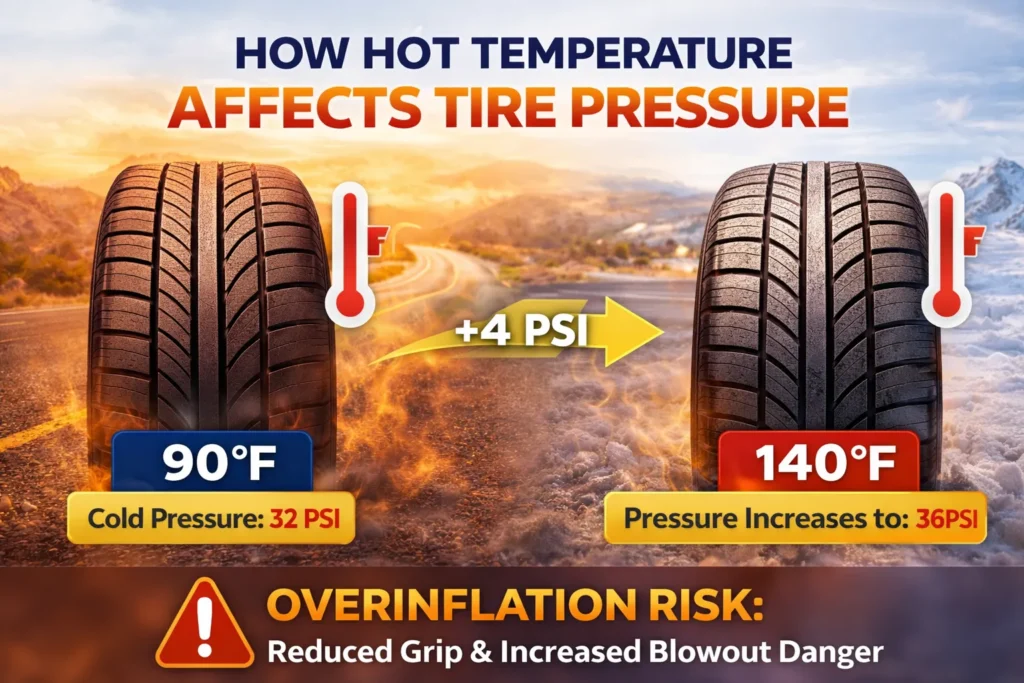
Maintaining proper pressure is essential in summer road conditions.
- Check pressure when tires are cold
- Avoid inflating based on hot readings
- Follow manufacturer PSI recommendations
Incorrect pressure in hot weather:
- Reduces grip
- Increases wear
- Raises failure risk
Common Mistakes Drivers Make in Hot Climates
Ignoring tire pressure changes
Heat naturally increases pressure
Using winter tires in summer
They degrade quickly in heat
Driving on worn tires
Low tread increases failure risk
Overloading vehicles
More weight increases heat buildup
How to Improve Tire Performance in Extreme Heat
- Check tire pressure regularly
- Avoid long high-speed drives in extreme heat when possible
- Inspect tread depth and wear patterns
- Replace aging tires before summer travel
Even small adjustments can improve safety significantly.
How Heat Affects Tires
- Heat → increases pressure
- Heat → softens rubber
- Heat → increases wear
- Heat → raises blowout risk
Conclusion:
Hot weather affects tires more than most drivers expect.
Heat softens rubber, increases pressure, and adds stress to tire structure. Over time, this leads to faster wear and higher failure risk.
The best tires for hot weather are those designed to handle heat without losing stability.
Choosing the right tire type — and maintaining it properly — ensures safer driving in extreme conditions.
Frequently Asked Questions
Are summer tires better for hot weather?
Yes. They are designed to perform well in high temperatures and provide better grip and stability.
Can heat cause tire blowouts?
Yes. High temperatures increase internal pressure and stress, especially in underinflated or worn tires.
What PSI should tires be in hot weather?
Follow manufacturer recommendations. Check pressure when tires are cold.
Do tires wear faster in hot climates?
Yes. Heat accelerates rubber degradation and tread wear.
Can I use all-season tires in hot climates?
Yes, especially in moderate conditions, but they may not perform as well as summer tires in extreme heat.
