

Tire Problems & Warning Signs: How to Diagnose Issues Before They Become Dangerous
Most tire problems don’t happen suddenly.
They start as small warnings drivers ignore — a faint vibration, a slow pressure drop, or a minor crack.
The problem is not recognizing a tire issue.The real danger is misjudging how serious it is.
This guide helps you quickly understand whether your tire problem is safe, risky, or an emergency, so you can act before it becomes dangerous.

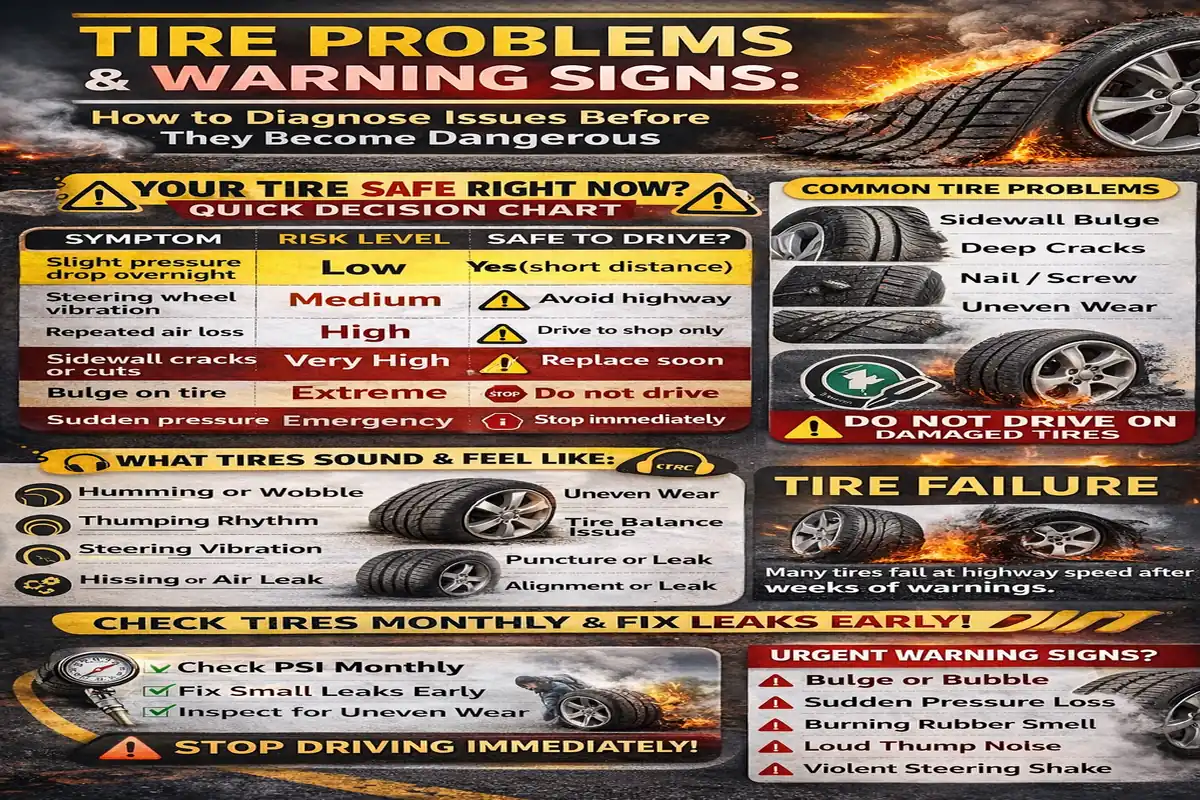
Is Your Tire Safe Right Now? (Quick Decision Chart)
Tire problems vary from harmless pressure changes to dangerous structural damage. Some symptoms allow short driving, while others require stopping immediately. The guide below helps you quickly decide whether your tire is safe to drive or needs urgent inspection.

| Symptom | Risk Level | Safe to Drive? |
|---|---|---|
| Slight pressure drop overnight | Low | Yes (short distance) |
| Steering wheel vibration | Medium | Avoid highway |
| Repeated air loss | High | Drive to shop only |
| Sidewall cracks or cuts | Very high | Replace soon |
| Bulge on tire | Extreme | Do not drive |
| Sudden pressure loss | Emergency | Stop immediately |
If your symptom falls in the last two categories, continuing to drive can cause sudden tire failure.
Visual Damage Inspection for tire problems
Start with a simple walk-around check. Many serious tire problems are visible.
Look for:
Sidewall cracks
Embedded nails or screws
Bulges or bubbles
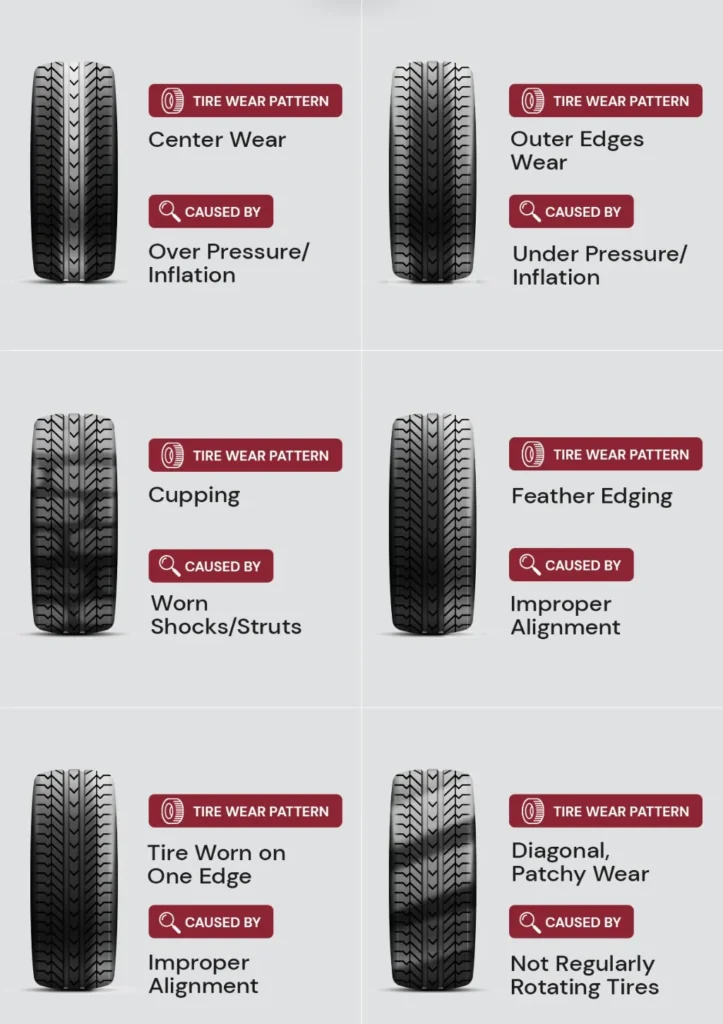
Uneven tread wear
Exposed internal cords
Cracks usually indicate aging rubber, while bulges mean the internal structure is already damaged.
A bulge is one of the few tire conditions where driving even a short distance is unsafe.
Sounds, Vibrations & Driving Feel
Your car often tells you something is wrong before the tire looks damaged.
| What You Feel or Hear | Likely Cause |
|---|---|
| Humming noise increasing with speed | Uneven wear or alignment |
| Thumping rhythm | Tire belt separation |
| Steering vibration | Balance or internal damage |
| Hissing sound | Air leak or puncture |
| Pulling to one side | Pressure or alignment issue |
A constant thumping or vibration that suddenly appears should never be ignored — it often means internal structural damage.
Air Pressure & Warning Light Problems
The tire pressure warning light is one of the most misunderstood alerts.

Steady Light
Usually indicates pressure loss from:
temperature change
slow leak
normal diffusion
You can typically drive short distances after checking pressure.
Flashing Light
Indicates a system warning or rapid air loss.
Stop and inspect immediately.
If a tire loses more than 25% pressure quickly, heat builds rapidly and failure becomes likely.
Heat & Speed Risk Factors
Many tire problems become dangerous only at higher speeds.
Why:
Speed increases internal temperature
Heat weakens rubber strength
Centrifugal force stresses damaged areas
A tire that feels fine in city driving can fail within minutes on the highway.
This is why drivers often say:
“It was fine yesterday, then suddenly blew out.”
The tire wasn’t fine — it just hadn’t been stressed yet.
Parked Vehicle Tire Damage
Surprisingly, some tires fail without being driven much.
Common parked-vehicle damage:
Dry rot from sun exposure
Flat spots from long storage
Sidewall pinch from curb contact
Rubber hardening from age
Low-mileage vehicles often have worse tire condition than daily-driven cars because protective oils inside the rubber are not redistributed.
When You Must Stop Driving Immediately
Stop driving and inspect if you notice:
A bulge or bubble
Sudden pressure drop
Strong burning rubber smell
Loud repeating thump
Tire shredding noise
These indicate structural failure, not wear.
Continuing to drive risks complete tire rupture.

Tire Problems and their Repair vs Replace Guide
| Damage Type | Repairable? |
|---|---|
| Small tread puncture | Usually repairable |
| Shoulder puncture | Sometimes |
| Sidewall damage | Replace |
| Bulge or separation | Replace |
| Deep cracks | Replace |
Repairs are only safe when the internal cords remain intact.
Sidewall damage almost always requires replacement.
What Mechanics Check During Inspection
A professional tire inspection looks beyond visible damage.
Technicians check:
internal belt separation
hidden punctures
tread depth patterns
heat damage indicators
Many dangerous tires appear normal externally but show internal failure signs.
Emergency Tire Situations causing Tire problems
Treat these as urgent:
Tire rapidly deflating while driving
Vehicle pulling suddenly
Loud bang followed by vibration
Rubber smell with smoke
Reduce speed gradually and avoid braking hard.
Stopping safely matters more than stopping quickly.
Related Tire Problem Guides
For detailed explanations, see individual guides:
Tire noise diagnosis
Driving on a spare tire
Flat tire emergency steps
Alignment and balance issues
What Happens If You Ignore Tire Problems
Tire issues rarely stay the same. Small symptoms usually become dangerous only after time and driving stress.
After 1 Day
Most problems feel minor at first.
You may only notice a slight vibration or a small pressure drop. The tire is still holding together, but internal damage has often already started.
After 1 Week
Heat cycles begin to weaken the structure.
Air leaks grow larger, uneven wear increases, and vibrations become easier to feel at normal speeds. At this stage, the tire is more likely to fail during long drives.
After 1 Month
Damage accelerates quickly.
Cracks deepen, internal belts may start separating, and the tire can develop a bulge. Even if the car still drives normally in the city, highway driving now becomes risky.
Under Highway Speed or Heavy Load
This is when failures usually happen.
Speed generates heat and centrifugal force that pulls apart weakened rubber. A tire that seemed acceptable during daily use can rupture suddenly once stressed.
Many drivers believe a tire “suddenly failed,” but in reality the warning signs existed for weeks. The failure only occurs when the tire reaches its stress limit.
Ignoring early symptoms turns a repairable issue into a dangerous one. Acting early is the safest and least expensive option.

Key Takeaway
Tire problems rarely fail without warning. Pressure loss, vibration, noise, or visible damage are early signs that the tire structure may be weakening. Minor issues can be driven short distances, but a bulge, rapid air loss, or strong shaking means the vehicle should not be driven and must be inspected immediately. Recognizing these warning signs early prevents dangerous tire failure.
Frequently Asked Questions About Tire Problems
How do I know if a tire problem is serious?
If you notice a bulge, rapid pressure loss, strong vibration, or burning rubber smell, the problem is serious and you should stop driving immediately. Minor pressure changes or slow leaks are usually safe only for short distances.
Can I drive with a tire warning light on?
You can drive slowly for a short distance after checking pressure, but if the light flashes or returns quickly, a leak or sensor issue may exist and the tire should be inspected.
What tire damage requires immediate replacement?
Sidewall cuts, exposed cords, deep cracks, and bulges require replacement. These indicate structural weakness that cannot be repaired safely.
Why does my car shake at highway speed?
High-speed shaking usually means tire imbalance, internal separation, or uneven wear. It may feel minor but can quickly become dangerous if ignored.
Is a slow air leak dangerous?
Not immediately, but it becomes dangerous if pressure drops too low because heat builds up inside the tire and increases failure risk.
Reviewed by TireGuidePro Automotive Research Team
Content based on common tire inspection practices and safety guidelines used across the automotive industry.
