



This tire maintenance checklist is a simple monthly routine that helps you keep your tires safe, efficient, and long-lasting. You don’t need mechanical knowledge — just follow the steps in order and check a few key items.
For accurate results, perform the inspection after the vehicle has been parked for at least three hours so tire pressure readings are correct.
The 5-Minute Basic Tire Maintenance Monthly Check
Complete this once per month and before long trips.
1. Check Tire Pressure
Use a digital pressure gauge.
Inflate tires to the PSI listed on the driver-side door sticker.
Do not use the number printed on the tire sidewall.

Check:
all four tires
spare tire (if equipped)
If pressure differs more than 2–3 PSI between tires, recheck the next day to confirm no leak exists.
Tip: fuel stations often have inaccurate gauges — verify using your own gauge.
2. Measure Tread Depth

Use a tread depth gauge or coin test.
Minimum safe tread depth: 1.6 mm (2/32 inch)
Measure in three places:
inner edge
center
outer edge
If one section is lower, schedule alignment service.
If all tires are near the limit, plan replacement soon instead of waiting for failure.
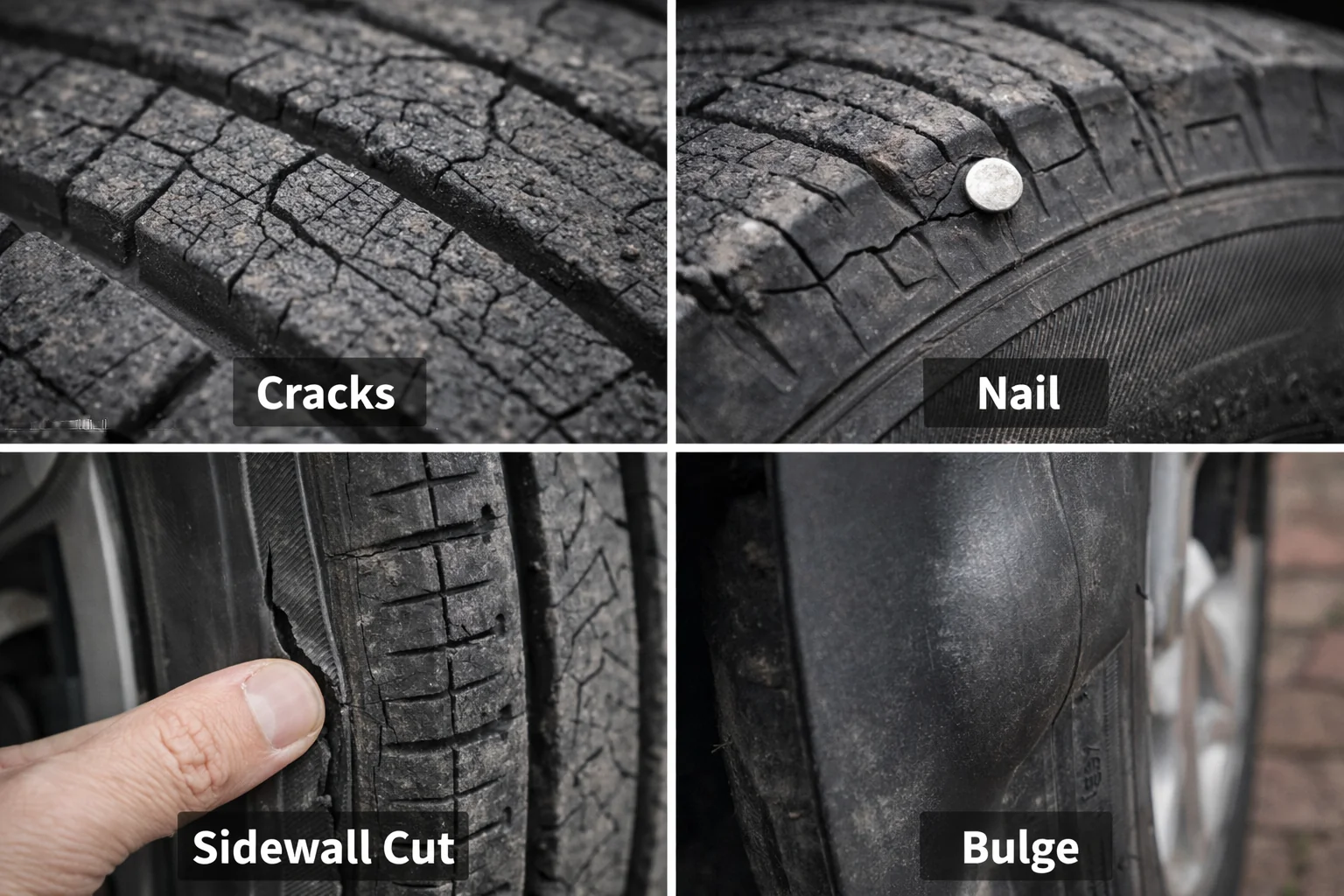
3. Inspect for Damage

Walk slowly around the vehicle and visually inspect each tire.
Look for:
nails or screws
stones wedged in grooves
sidewall cuts
cracking rubber
bulges or bubbles
Remove small stones with a key or screwdriver.
Do not remove objects that caused air loss — repair the tire first.
4. Observe Vehicle Behavior
During normal driving, note any new changes:
steering wheel vibration
pulling left or right
repeating thumping sound
humming that changes with speed
If symptoms appear suddenly, inspect tires before continuing long drives.
5. Check Tire Age
Locate the DOT date code on the tire sidewall.
The last four digits indicate week and year of manufacture.
Replace tires that are 6–10 years old even if tread looks acceptable.
If tires are older than the vehicle purchase date, verify they were not stored long before installation.

Weekly 10-Second Check
Perform this before driving away:
look for a low tire
confirm the vehicle sits level
check for objects in tread
confirm TPMS light is off
If pressure drops repeatedly in one tire, inspect valve stem and rim area for leaks.
Wear Pattern Quick Reference
| What You See | Action |
|---|---|
| Center worn | Reduce pressure slightly |
| Edges worn | Add air |
| One side worn | Wheel alignment |
| Scalloped dips | Balance or suspension check |
| Random patches | Brake inspection |

Check wear patterns every month — changes usually appear gradually.
Before Long Trips
Perform these checks before highway travel:
Set pressure when tires are cold
Inspect spare tire pressure
Remove stones from tread grooves
Confirm vehicle load within limits
Verify no vibration at speed
If traveling long distance, recheck pressure the following morning.

Seasonal Adjustments
Cold Weather
Pressure decreases overnight.
Check more frequently during temperature drops.
Hot Weather
Check pressure during heat waves and long highway trips.
Avoid adjusting pressure immediately after driving — readings will be inaccurate.

Parking Habits That Affect Tires
Try to:
avoid parking against sharp curbs
park in shade when possible
move vehicle if parked for weeks
avoid long-term parking on one tire position
Long stationary periods create flat spots and vibration during driving.

Cleaning and Care
When washing your vehicle:
rinse tires with water
avoid petroleum-based tire shine
inspect sidewalls while cleaning
Cleaning makes damage easier to notice early.
Replace Immediately If Found

Do not drive on the tire if you see:
visible cords
sidewall bulge
tread below legal depth
repeated pressure loss
large sidewall cut
Install spare tire or seek repair immediately.
Service Schedule
| Service | Interval |
|---|---|
| Pressure check | Monthly |
| Rotation | 8,000–10,000 km |
| Alignment | Yearly |
| Balancing | When vibration appears |
| Replacement | 6–10 years |
Record service dates to maintain consistency.
Common Mistakes to Avoid
inflating to sidewall PSI
waiting for TPMS warning
skipping rotation intervals
replacing only one tire
ignoring slow air leaks
Consistency matters more than complexity.
Quick Answers
How often should tires be checked?
Monthly and before long trips.
Do new tires need maintenance?
Yes — follow the same routine.
Is the TPMS light enough?
No — manual checks are still required.
Conclusion
Follow this Basic Tire Maintenance Checklist routine once per month to keep tires operating properly and detect problems early.
