



When to Repair vs Replace a Tire (Complete Safety Decision Guide)
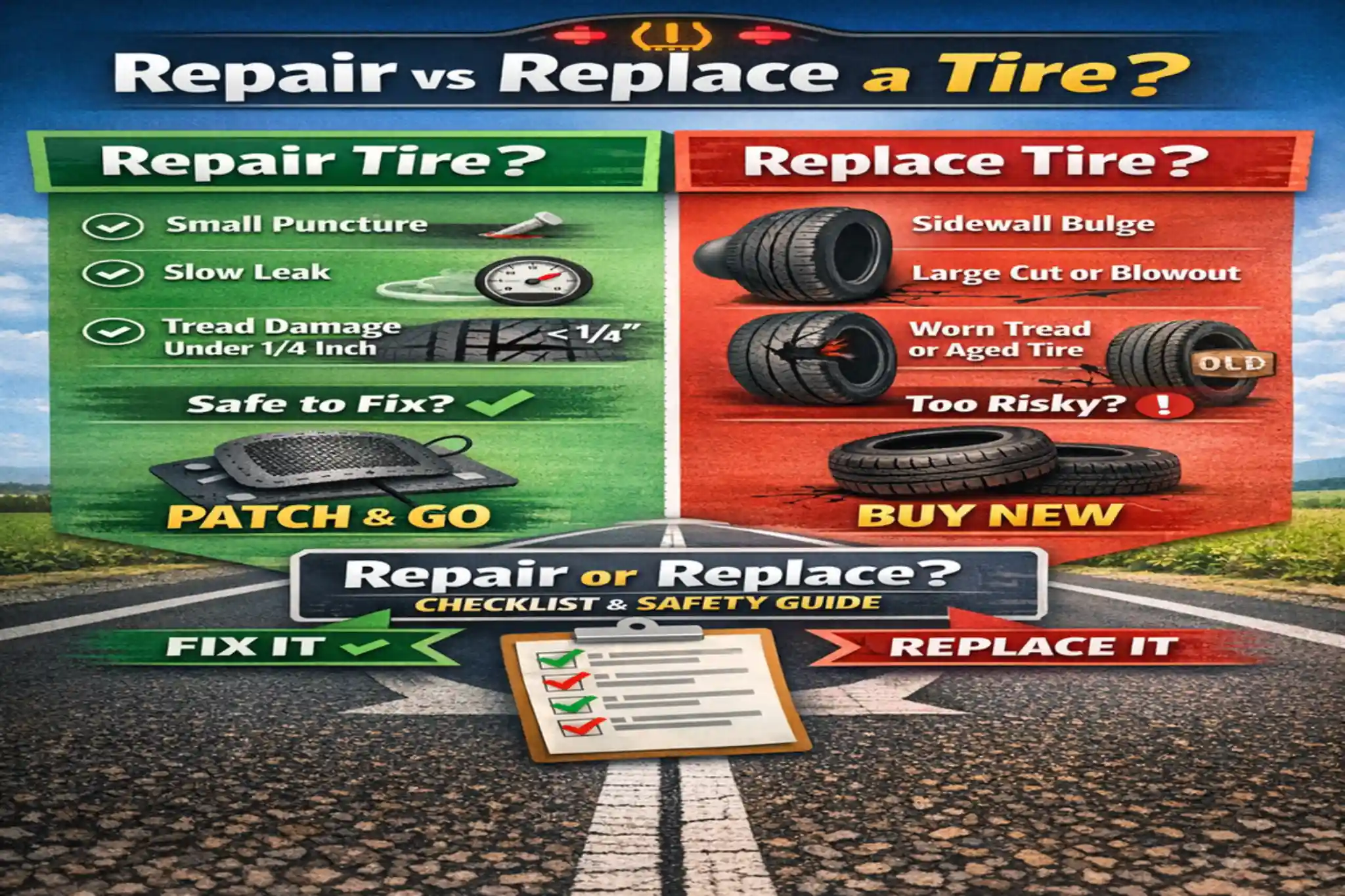
Knowing when to repair vs replace a tire is one of the most important safety decisions a driver can make.
Most drivers can spot tire damage, but the real challenge is deciding whether the tire is still safe to drive on — or dangerous to ignore.
A nail, a slow leak, or a small cut quickly leads to the same question: when should you repair a tire and when should you replace it completely?
Replacing a repairable tire wastes money, while repairing an unsafe tire risks sudden failure at speed.
This guide explains when to repair vs replace a tire using real inspection criteria used in professional service procedures so you can make the correct decision immediately.
Quick Answer: Repair or Replace a Tire?
A tire can be repaired only if the puncture is small, located in the tread area, and the tire was never driven flat.
Sidewall damage, large holes, bulges, cracks, or internal heat damage always require replacement.
The 3-Factor Safety Rule for Tire Repair vs Replacement
A tire can only be repaired when all three conditions are true at the same time:
Damage is located in the tread area
Hole is 6 mm (¼ inch) or smaller
Internal structure is intact
If any one of these fails — the tire must be replaced.
The decision depends on whether the tire can still carry vehicle weight safely, not how it looks.
Understanding this rule is the foundation of knowing when to repair vs replace a tire correctly.
Repairable Tire Damage (When a Tire Can Be Repaired Safely)
Small Puncture in the Center Tread
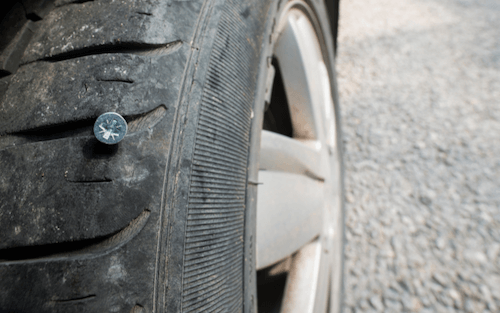

A straight puncture in the center tread is the most common repairable condition.
Why it’s safe:
The tread contains reinforced belts designed to handle vertical load. A patch-plug seals air and restores support strength.
After a proper repair:
normal driving is safe
highway speeds are safe
tire lifespan remains unchanged
A correctly repaired tire usually lasts the rest of its usable life.
Valve Stem or Bead Seal Leak
These are sealing problems rather than tire damage.
Repair typically includes:
replacing valve components
cleaning rim corrosion
reseating the tire bead
Because the structure remains intact, replacement is unnecessary.
Single Minor Penetration
If the tire was not driven without pressure and the internal cords remain intact, repair is safe and permanent.
Damage That Requires Tire Replacement Immediately
Sidewall Damage (Never Repairable)
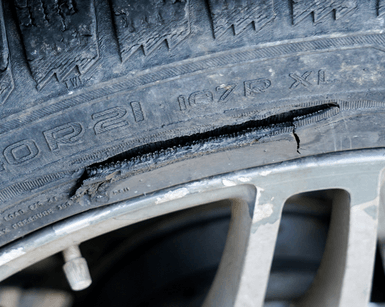
The sidewall flexes continuously while driving.
A repair patch cannot restore strength because the area constantly bends.
Risk: sudden rupture at highway speed.
Even a small hole in the sidewall requires replacement.
Large Hole or Tear

The tire may hold air but can no longer safely support the vehicle.
Driven While Flat
Even short driving distances without air overheat the inner liner.
The damage often cannot be seen externally.
If the tire carried weight while flat, replacement is required.
Bulges, Bubbles, or Separation
A bulge means internal cords have broken.
The structure has already failed and may rupture at any time.
Repair is impossible.
Cracking or Aging Rubber
Cracked rubber loses flexibility and cannot safely handle load cycles.
A patch stops air loss but does not restore strength.
Worn Tread Below Safety Depth
Even without a puncture, the tire cannot safely manage traction or heat.
Repairing a worn tire does not restore safety.
When to Repair vs Replace a Tire — Quick Decision Chart
| Condition Found | Safe Today | Short Trip Only | Replace Immediately |
|---|---|---|---|
| Nail in center tread | Yes | — | — |
| Slow bead leak | Yes | — | — |
| Small shoulder puncture | — | Yes | Soon |
| Sidewall cut | — | — | Yes |
| Bulge or bubble | — | — | Yes |
| Driven flat briefly | — | — | Yes |
| Large hole | — | — | Yes |
Use this chart after finding damage to quickly decide whether the vehicle can still be used.
How Driving Distance Changes the Decision
Damage severity depends heavily on whether the tire carried load without pressure.
| Distance Driven Flat | Internal Damage Level | Outcome |
|---|---|---|
| Few meters | Minor heat | Replace recommended |
| 0.5–1 km | Liner weakened | Replace required |
| Several km | Cord fatigue | Failure likely |
| Highway speed | Structural separation | Dangerous |
Tires often fail days later, which is why drivers misjudge safety.
How Long a Tire Repair Lasts After Patching
A proper patch-plug repair is permanent.
It does not:
weaken the tire
limit speed
shorten lifespan
Failures usually occur only when improper repairs were used or damage exceeded safe limits.
Multiple Repairs — When a Tire Should Be Replaced Instead
Standard practice limits repairs to:
maximum two repairs per tire
adequate spacing between them
Each repair changes stress distribution slightly, so exceeding this increases unpredictability.
Temporary Fixes vs Permanent Tire Repair
Sealant cans and rope plugs restore air temporarily but not strength.
They are safe only to reach a workshop.
Long-term driving risks sudden failure.
Should You Replace One Tire or Multiple Tires?
| Vehicle Type | Replacement Rule |
|---|---|
| 2-wheel drive | Replace one if tread similar |
| AWD / 4×4 | Often replace two or four |
| Performance vehicles | Replace axle pair |
Uneven tire diameter forces drivetrain compensation over time.
Industry Safety Standards
Tire repair guidelines follow safety practices used by manufacturers and automotive service organisations.
These standards limit repair size, location, and number of repairs to ensure the tire can safely support vehicle load at highway speeds.
Because of this, visual appearance alone never determines whether a tire is safe — structural capability does.
What Mechanics Check Before Approving Repair
Professionals inspect internal condition including:
liner heat marks
belt separation
bead distortion
exposed cords
A tire may look repairable externally yet fail inspection internally.
Final Decision Guide: Repair or Replace This Tire?
Repair the tire if:
puncture is in tread
hole is small
tire not driven flat
no bulge or cracking
Replace the tire if:
sidewall damage exists
bulge appears
hole is large
tread is worn
internal heat damage occurred
Knowing when to repair vs replace a tire prevents both wasted money and dangerous driving decisions.
Key Takeaway on Tire Repair vs Replacement
A tire is replaced not because it leaks air, but because it can no longer safely support the vehicle.
Small tread punctures affect air retention.
Structural damage affects vehicle control.
Understanding this difference prevents tire failure before it happens.
Repair vs Replace Tire FAQs
Is a repaired tire safe for highway driving?
Yes. A properly repaired tread puncture is permanently safe at normal speeds.
Can a sidewall puncture be repaired?
No. Sidewalls flex constantly and cannot regain strength after damage.
How many times can a tire be repaired?
Usually twice if spacing and structure remain acceptable.
Why replace a tire if it still holds air?
Air retention does not equal load strength. Internal damage may still cause failure.
Do I need to replace two tires at once?
Often recommended when tread difference is large, especially for AWD vehicles.
Are plug-only repairs permanent?
No. They are temporary and may fail later.
Reviewed by TireGuidePro Automotive Research Team
Based on standard tire inspection and service safety practices.
