

Tire Tread Depth: Legal Limit vs Real Safety (What 1.6 mm Actually Means)
The legal tire tread depth in most countries is 1.6 mm (2/32 inch), but a tire becomes unsafe much earlier.
For normal driving, replace tires at 3 mm in wet conditions and 4 mm for highway speeds to maintain braking grip and prevent hydroplaning.
The legal limit only indicates when a tire is illegal — not when it is safe.

Most drivers believe a simple rule: if the tire is still legal, it is still safe.
That is not true.
The legal minimum tread depth in most countries is 1.6 mm (2/32 inch) — but by the time your tire reaches that level, it has already lost most of its ability to grip wet roads, resist hydroplaning, and stop in emergencies.
This guide explains the real meaning behind tread depth numbers so you can make safe decisions before your tires become dangerous.
What Is Tire Tread Depth?
Tread depth is the measurement of the grooves in your tire. These grooves evacuate water, provide traction, and allow the rubber to grip the road surface.

New passenger car tires typically start with 7–9 mm of tread depth.
As the tire wears down, three things happen:
Water evacuation decreases
Braking distance increases
Hydroplaning risk rises sharply
The final 50% of tire life disappears very quickly — not gradually — which is why legal does not equal safe.
Legal Minimum Tread Depth Around the World
| Region | Legal Minimum |
|---|---|
| Most countries | 1.6 mm |
| United States | 2/32 inch |
| UK & Europe | 1.6 mm across 75% width |
| Winter tire regions | Often 3–4 mm recommended |

The law only defines when a tire becomes illegal, not when it becomes unsafe.
Authorities set a universal number because laws must be simple and enforceable. But safety depends on speed, weather, vehicle type, and road conditions — not a single number.
Why the Legal Limit Is NOT a Safety Limit
Below 4 mm, a tire rapidly loses its ability to remove water. Once the water cannot escape, the tire rides on top of it instead of gripping the road.This is hydroplaning.

At highway speeds, a worn tire can completely lose contact with the road even though it is still technically legal.
Real‑World Safety by Tread Depth
| Tread Depth | Wet Braking Performance | Hydroplaning Risk | Safety Level |
|---|---|---|---|
| 8 mm (new) | Maximum grip | Very low | Safe |
| 5 mm | Slight reduction | Low | Good |
| 4 mm | Noticeable increase in stopping distance | Medium | Acceptable |
| 3 mm | Major grip loss in rain | High | Replace soon |
| 2 mm | Dangerous in wet roads | Very high | Unsafe |
| 1.6 mm | Barely functional | Extreme | Emergency only |

The difference between 3 mm and 1.6 mm can be the difference between stopping in time and crashing.
How Tread Depth Affects Braking Distance
Most accidents with worn tires happen during sudden braking in wet conditions.
At 80 km/h (50 mph):

New tires may stop within a safe distance
3 mm tires require significantly longer distance
1.6 mm tires can slide several car lengths further
Drivers often blame brakes — but tires are usually the real cause.
The brakes stop the wheels.
The tires stop the car.
Safe Tread Depth by Weather Conditions
Different road conditions require different tread depth. The legal minimum assumes perfect dry asphalt, which rarely exists in real driving.
| Road Condition | Minimum Safe Tread Depth |
|---|---|
| Dry city driving | 2 mm |
| Highway driving | 3 mm |
| Regular rain | 3–4 mm |
| Heavy rain | 4 mm+ |
| Snow or slush | 5 mm+ |
| Flooded roads | 6 mm+ |

In rainy climates, replacing tires at 3 mm dramatically reduces accident risk.
Different Tire Types Wear Differently
Not all tires behave the same when worn. Two tires at the same tread depth can have very different safety levels.
Touring Tires
Designed for comfort and durability. They remain relatively predictable even when moderately worn.
Performance Tires
Optimized for dry grip. Once worn below 3 mm, wet traction drops sharply.
All‑Season Tires
Balanced design. Safe until about 3 mm in most conditions.
Winter Tires
Require deep grooves to hold snow. Below 4–5 mm they lose winter performance completely.
SUV and Light Truck Tires
Heavier vehicles need deeper tread to evacuate water. A worn SUV tire hydroplanes earlier than a car tire.
Important: A sports tire at 1.6 mm is far more dangerous than a touring tire at 1.6 mm — even though both are legal.
The Hidden Danger: Speed vs Tread Depth
Hydroplaning risk increases exponentially with speed.
At low speed, worn tires still grip. At highway speed, the same tire may completely lose control.
| Speed | Safe Tread Required |
|---|---|
| 40 km/h | 2 mm |
| 60 km/h | 3 mm |
| 80 km/h | 4 mm |
| 100 km/h | 5 mm |

This is why most tire failures occur on highways during rain, not in city traffic.
Uneven Tire Wear — Is It Still Legal?
Many drivers check only the center groove. But the law usually requires minimum tread depth across most of the tire width.
Common wear patterns:
Inner Edge Worn
Usually caused by alignment or camber issues. Dangerous because water cannot escape during cornering.
Outer Edge Worn
Often caused by aggressive cornering or underinflation. Reduces emergency braking grip.
Center Worn
Typically overinflation. The tire loses wet traction even if edges look fine.
If any major section of the tire is bald, the tire can be unsafe and may be illegal depending on regulations.
When You Must Replace Tires Immediately
Replace the tire right away if you notice:
Tread depth at or below 3 mm in rainy season
Visible wear bars touching the surface
Cracks or dry rot
Bulges or sidewall damage
Uneven wear exposing smooth patches
Frequent loss of traction on wet roads

Waiting until the legal limit often means waiting until after performance is already compromised.
How to Measure Tread Depth at Home
You do not need professional tools to check tire wear.
1. Tread Wear Indicators
Small raised bars inside grooves. When flush with the surface, the tire reached minimum depth.
2. Coin Test
Insert a coin into the groove. If the top is visible, the tire is worn.
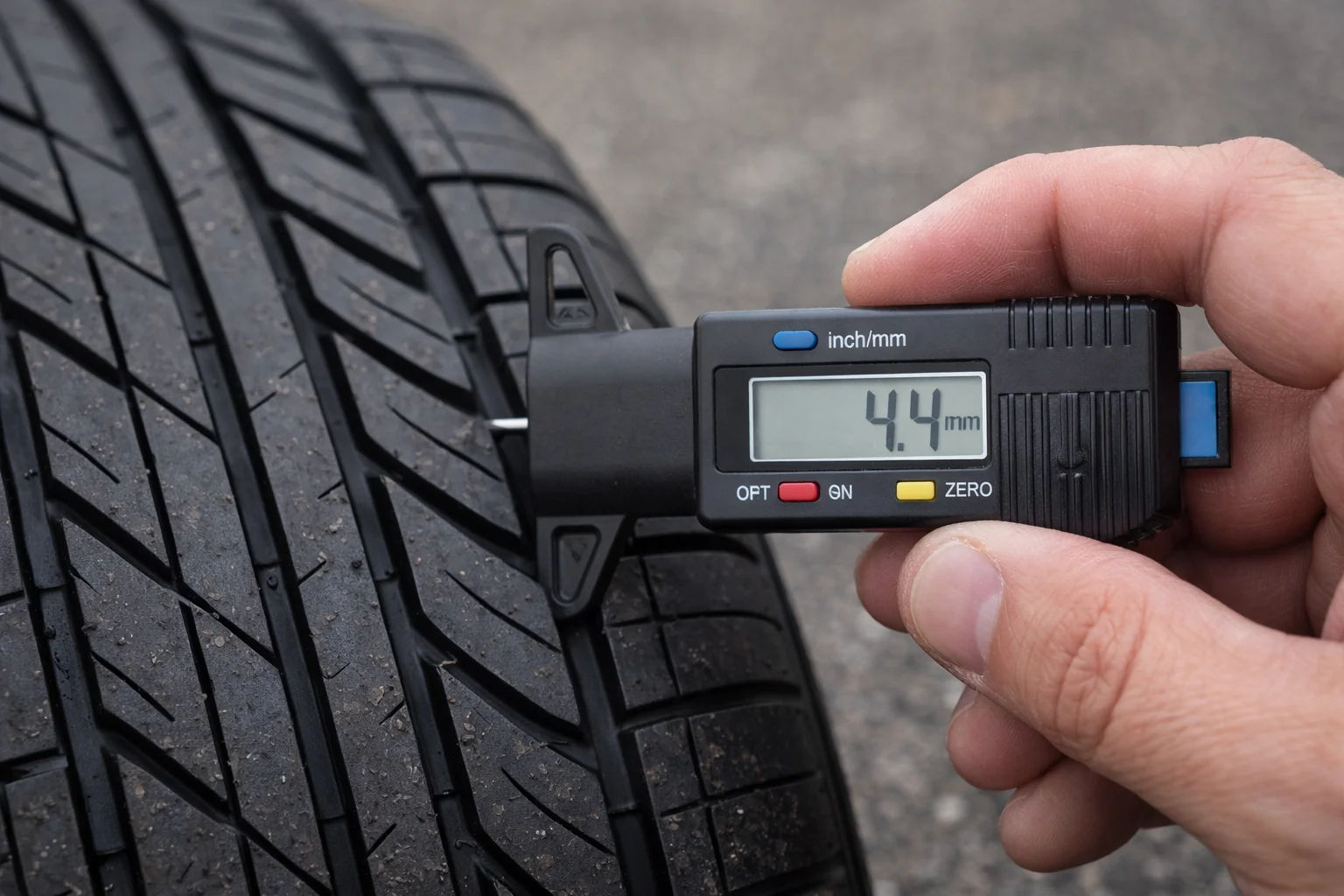
3. Depth Gauge
The most accurate and inexpensive method.
Check multiple points around the tire, not just one spot.
The Real Rule: Replace Before the Law Forces You
The legal minimum tread depth exists to define when a tire becomes illegal, not when it becomes safe.
For everyday driving:
Replace at 3 mm for rainy climates
Replace at 4 mm for frequent highway driving
Replace at 5 mm for winter or heavy vehicles
By the time a tire reaches 1.6 mm, its safety margin is already gone.
Your tires are the only part of the vehicle touching the road. Saving a little extra mileage is never worth losing control during an emergency stop.
Key Takeaway
Legal tread depth keeps you compliant.
Safe tread depth keeps you alive.
Always treat the legal limit as the absolute last point — not the target.
FAQs
Is 1.6 mm tread depth safe to drive?
It is only the legal minimum. Real‑world safety in rain drops sharply below 3 mm, especially at highway speeds.
At what tread depth should I replace tires in rainy areas?
Replace around 3–4 mm to maintain wet braking and reduce hydroplaning risk.
Can uneven tire wear make a tire illegal?
Yes. If any major portion of the tread is below the minimum depth across most of the width, the tire may be unsafe and non‑compliant.
Are winter tires safe at 1.6 mm?
No. Winter tires lose snow traction below about 4–5 mm even though they may still be legally usable.
Why does my car slide in rain even with legal tires?
Because legal tread depth does not equal safe traction. Worn grooves cannot evacuate enough water at speed.
