


Flat tires and roadside breakdowns can happen when you least expect them. Understanding tire tools repairs emergencies is essential for every driver who wants to stay safe and avoid being stranded on the road.
Whether it’s a nail puncture, a slow leak, or a sudden blowout, having the right tools and knowing how to respond can make a major difference. With basic tire repair equipment, safety gear, and a spare tire, many common tire problems can be managed until you reach a repair shop.
This guide explains the essential tire tools, emergency repairs, spare tire limits, and safety steps every driver should know to handle unexpected tire problems confidently.

Understanding Tire Tools Repairs Emergencies
Drivers often experience tire emergencies such as punctures, blowouts, or slow air leaks. Knowing which tools to carry, how temporary repairs work, and when to call roadside assistance can help prevent small tire issues from becoming dangerous situations.
Why Tire Emergencies Happen
Tire problems often occur when drivers least expect them. Understanding the common causes can help you respond quickly and prevent further damage.
The most frequent tire emergencies include:
Punctures from nails, screws, or sharp debris
Slow air leaks caused by valve or rim issues
Sudden tire blowouts on highways
Sidewall damage from potholes or curbs
Driving on underinflated tires
Many of these issues can be managed temporarily with the right equipment until you reach a repair shop.
Essential Tire Tools Every Driver Should Own
Keeping a few essential tools in your car can make the difference between a quick fix and being stranded.

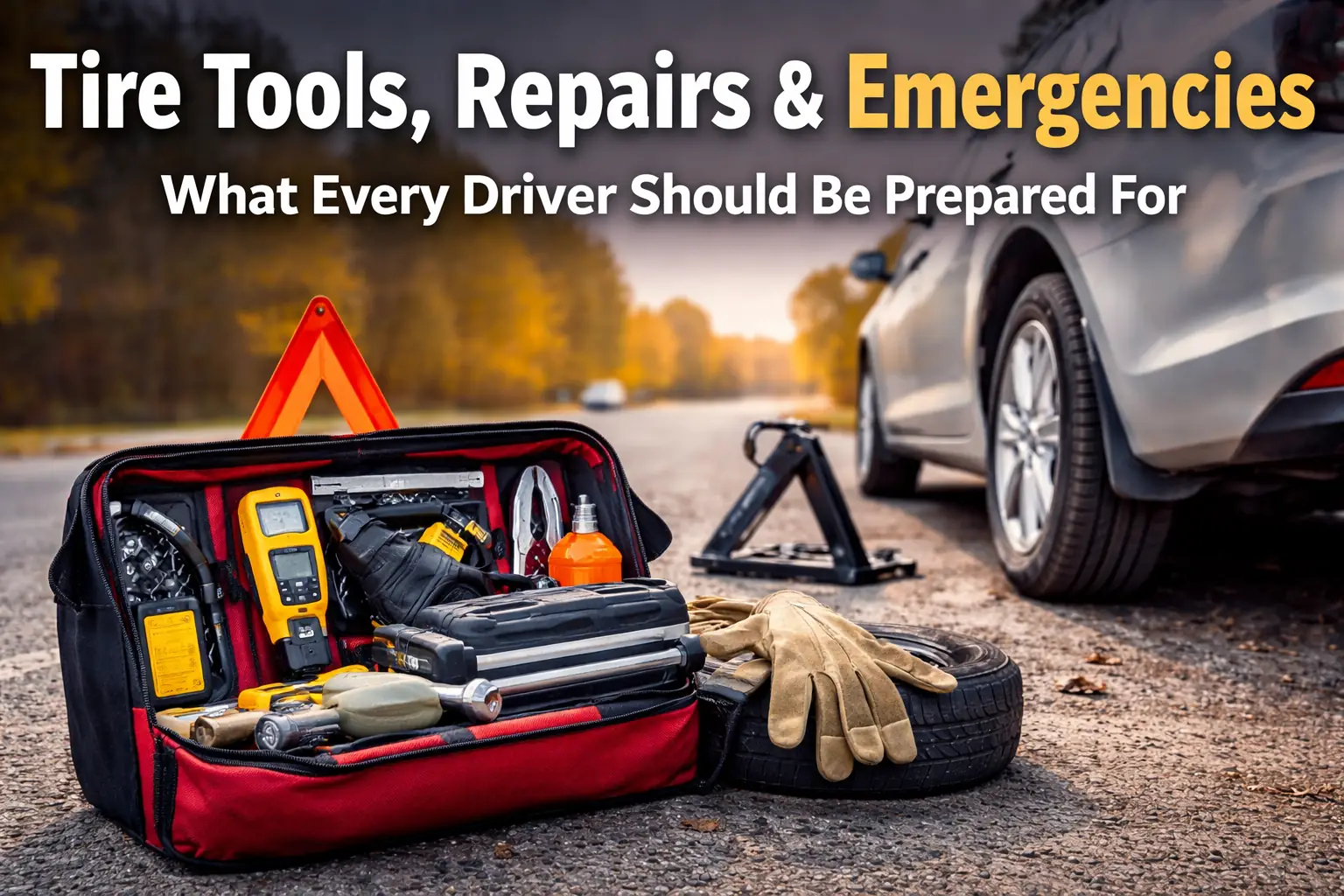
The most important tire emergency tools include:
1. Tire Pressure Gauge
A digital or analog pressure gauge helps you quickly check whether a tire is losing air.
2. Portable Air Compressor
A compact 12-volt air compressor can reinflate a tire enough to reach a repair shop.
3. Car Jack and Lug Wrench
These tools allow you to remove a damaged tire and install a spare.
4. Tire Plug Repair Kit
Plug kits temporarily seal punctures in the tread area.
5. Valve Core Tool
This small tool allows you to tighten or replace leaking valve cores.
Drivers who keep these tools in their trunk are much better prepared for roadside tire problems.
Tire Puncture Repair Kits Explained
Tire puncture kits are one of the most useful tools for emergency repairs. These kits are designed to temporarily seal small punctures in tubeless tires.
Most kits contain:
A reamer tool to clean the puncture hole
A plug insertion tool
Rubber repair plugs
Tire sealant or lubricant
Plug repairs are typically safe for small punctures in the tire tread, but they should always be considered temporary fixes until a professional inspection is done.
Puncture kits should not be used for sidewall damage or large holes, which require tire replacement.
Safety Gear for Tire Emergencies

Many drivers focus only on repair tools, but safety equipment is equally important when working near traffic.
Recommended safety gear includes:
Puncture-resistant gloves to protect your hands
Reflective safety vest for nighttime visibility
Flashlight or headlamp
Warning triangles or flares
These items help prevent accidents and improve visibility while repairing or replacing a tire on the roadside.
Spare Tires: Types and Limitations
Most vehicles include a spare tire designed to help drivers reach a repair facility safely. However, not all spare tires are the same.
The most common types include:
Full-Size Spare Tire
A regular tire identical to the others on the vehicle. It can usually be driven on normally.
Compact Spare (Donut)
A smaller temporary tire designed for short distances and lower speeds.
Run-Flat Tire Systems
Some modern vehicles use reinforced tires that can continue driving temporarily after losing pressure.
Each type has limitations, so drivers should understand how their spare tire works before an emergency occurs.
How Long Can You Drive on a Spare Tire?
Temporary spare tires are designed only for short-term use.
Most manufacturers recommend:
Maximum speed: about 50 mph (80 km/h)
Maximum distance: about 50–70 miles (80–110 km)
Driving longer distances on a compact spare can affect braking performance, handling, and drivetrain components.
Drivers should replace or repair the original tire as soon as possible.
