


Air Loss & Pressure-Related Tire Problems: Why Your Tire Keeps Losing Air
A tire losing air does not always mean you have a flat tire.
Sometimes pressure loss is harmless, but other times it is the first warning of tire failure.
Many drivers refill a tire losing air and continue driving without identifying the cause.
The real danger is not the leak itself — it is driving before knowing how serious the pressure loss is.
This guide explains how to measure air loss, find the source, and decide whether you can safely drive or must stop immediately.
If you are unsure whether your issue is pressure-related or another tire problem, see our full tire warning signs guide.

How Fast Is Your Tire Losing Air? (Safety First)
Before checking the cause, determine the speed of pressure loss.
| Pressure Change | What It Means | Safe to Drive |
|---|---|---|
| 1–2 PSI per month | Natural air diffusion | Yes |
| 1–2 PSI overnight | Temperature change | Yes |
| 3–5 PSI per day | Small leak | Short trips only |
| 5–10 PSI per hour | Active puncture | Drive to repair shop |
| Rapid deflation | Structural damage | Do not drive |
If the tire cannot hold pressure for a full day, the problem is already serious.

Why Your Tire Is Losing Air (Most Causes Are Not Punctures)
Drivers usually expect to find a nail in the tread.
However, many leaks come from sealing areas rather than road damage.
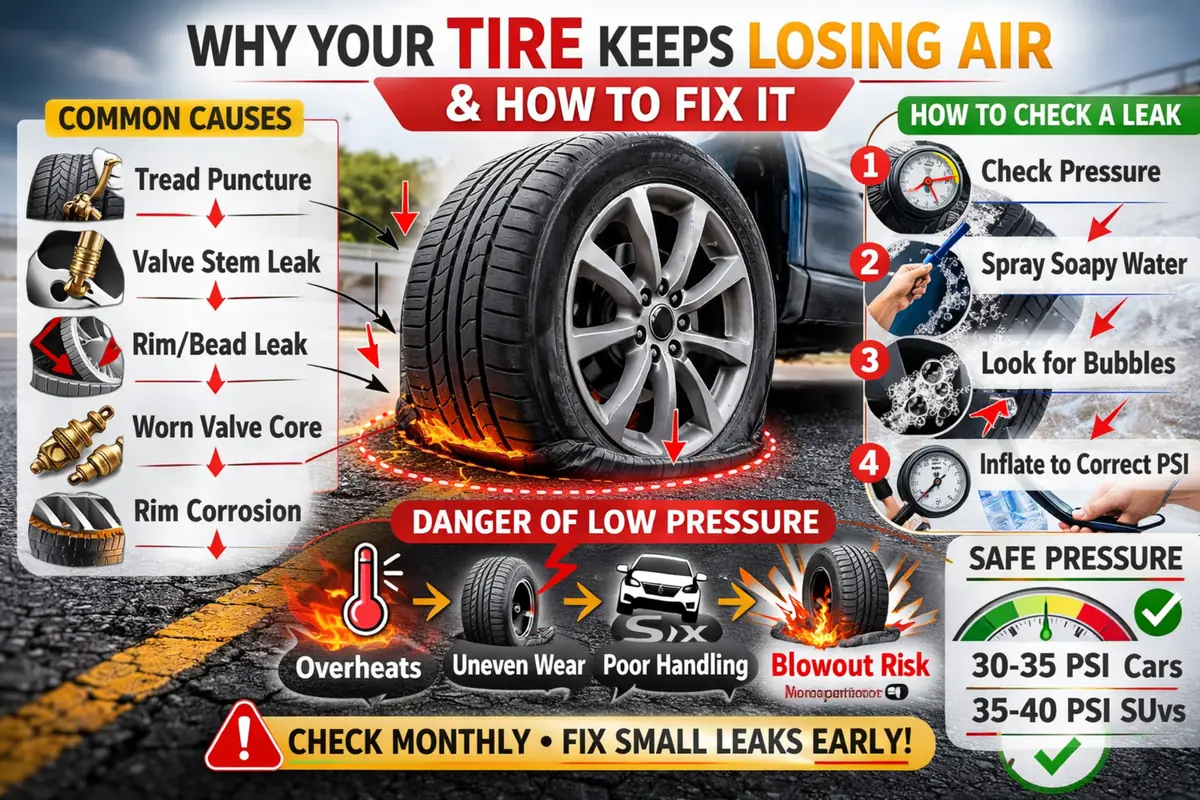
Common pressure loss sources:
Small tread puncture
Valve core leak
Worn valve stem rubber
Rim corrosion
Bead seal leakage
Temperature contraction
Natural permeability through rubber
A tire can lose air even when the tread looks perfect.

Tire Losing Air Overnight vs Active Leak
This is the most misunderstood situation.
Temperature-Related Loss
Air pressure drops when temperature falls.
Signs:
All tires drop equally
Pressure stabilizes after inflation
No steering change
This is normal and not dangerous.
Active Leak
Air continues escaping after refill.
Signs:
Only one tire affected
Pressure drops repeatedly
Driving feel changes
Active leaks worsen with driving heat and must be repaired.
How to Find a Tire Leak at Home
You can locate most leaks in minutes.
Simple inspection method
Inflate tire to correct PSI
Listen for a faint hissing sound
Spray soapy water on the tire
Watch for bubbles forming
Check around valve and rim edge
Bubbles always identify the exact air escape point.

Air Loss Without Visible Damage
If no puncture is visible, the leak is usually from the wheel seal.
Most hidden leaks come from:
bead sealing surface corrosion
damaged valve core
minor rim bending from potholes
old valve stem rubber
These leaks are slow but dangerous because drivers underestimate them.
What Low Pressure Does Inside the Tire
A tire is designed to flex slightly.
Low pressure changes how much it bends.
Normal pressure → controlled flex
Low pressure → excessive flex
Excess flex → heat buildup
Heat → internal separation
Separation → blowout
Failure is the final stage of prolonged underinflation.

Why Low Pressure Destroys Tires Faster Than Wear
Tread wear reduces grip gradually.
Underinflation damages the internal structure immediately.
A worn tire usually slides.
An underinflated tire can rupture.
This is why a tire with good tread can still fail suddenly.
How Far Can You Drive on a Tire Losing Air?
| Pressure Remaining | Driving Recommendation |
|---|---|
| 90% | Normal driving |
| 80% | Short trips only |
| 70% | Avoid highway |
| Below 70% | Unsafe to drive |
Driving distance matters less than heat buildup — highway speed dramatically increases failure risk.

Warning Signs When a Tire Is Losing Air
Air loss often appears through vehicle behavior.
Watch for:
heavier steering
car pulling sideways
delayed braking response
steering wheel vibration
humming noise
If symptoms worsen quickly, stop driving.
When a Tire Losing Air Becomes Dangerous
Do not continue driving if:
pressure drops again after refill
steering shake increases suddenly
you smell hot rubber
thumping noise begins
tire becomes visibly soft
These indicate structural weakening, not just air loss.
Repair vs Replace
| Leak Location | Repairable |
|---|---|
| Center tread | Yes |
| Shoulder | Sometimes |
| Valve stem | Yes |
| Bead seal | Yes |
| Sidewall | Replace tire |
Sidewall leaks damage structural cords and cannot be safely repaired.
Preventing Pressure Loss
Simple maintenance prevents most problems:
check pressure monthly
inspect after potholes
replace valve stems during tire change
keep valve caps installed
avoid driving underinflated
Consistent pressure is critical for tire safety and lifespan.
Key Takeaway
A tire losing air becomes dangerous when pressure loss causes heat buildup inside the tire.
Slow leaks allow limited driving, but repeated pressure loss or handling changes require immediate inspection.
Understanding how fast air escapes — not just why — determines whether the tire is safe.

Frequently Asked Questions
Can I keep refilling my tire every day?
No. Repeated air loss indicates an active leak that weakens the tire internally.
Why is my tire losing air without a puncture?
Most leaks occur at the valve stem or rim seal rather than the tread.
Is it safe to drive to a shop?
Only if pressure remains above about 80% and driving distance is short.
Can low pressure cause a blowout?
Yes. Heat buildup from underinflation is one of the most common causes of sudden failure.
Reviewed by TireGuidePro Automotive Research Team
Content based on standard tire inspection practices and safety guidelines used in automotive service.
