


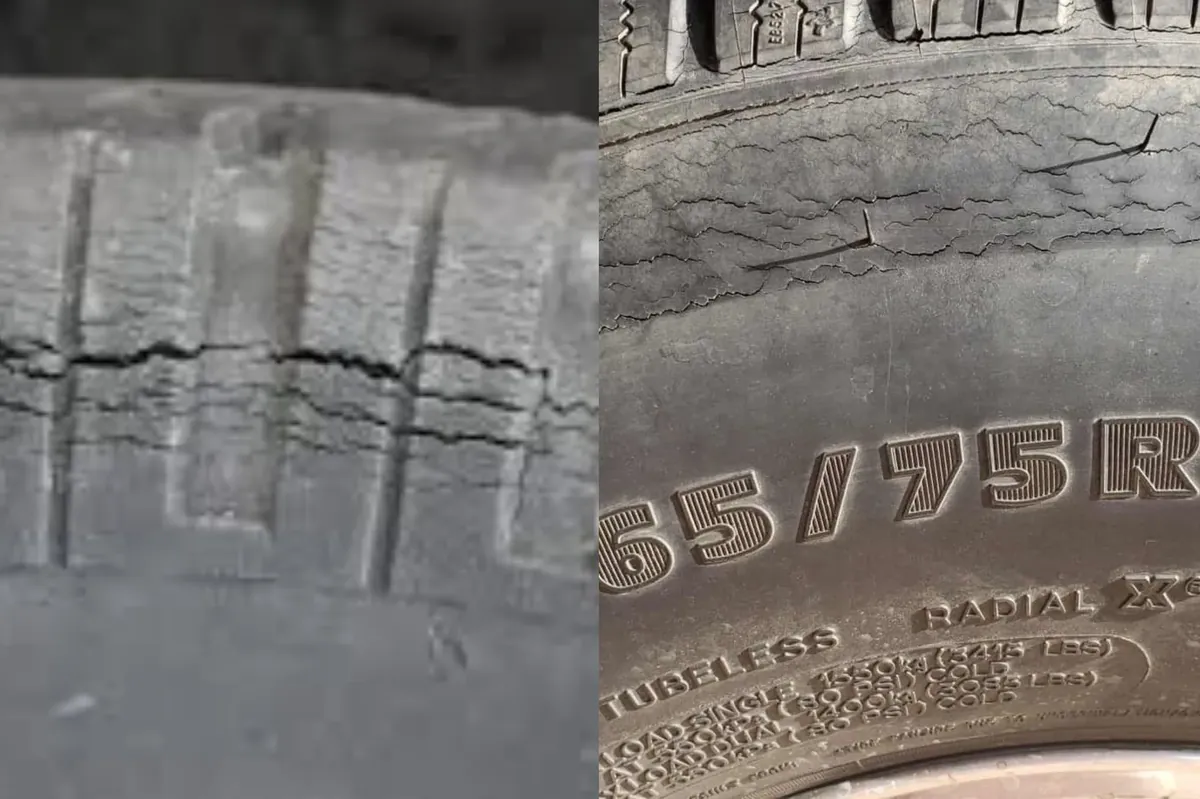
Tire dry rot is a common but dangerous tire problem many drivers overlook. Many drivers believe tires become unsafe only when the tread wears out.
In reality, a tire can look almost new and still fail on the road.
Tire dry rot is the cracking and weakening of tire rubber caused by aging, heat, oxygen, and sunlight exposure. Unlike normal wear, It weakens the tire’s internal structure and can lead to sudden blowouts even when the tread still looks good.

This guide explains how to identify tire dry rot, how dangerous it is, and when a cracked tire must be replaced for safe driving.
What Is Tire Dry Rot and Why It’s Dangerous
It occurs when the rubber compounds inside a tire lose flexibility over time. As protective oils evaporate, the rubber hardens and small cracks begin forming on the sidewall and between the tread blocks. These cracks are not cosmetic — they indicate the tire structure is weakening. Under heat, speed, and air pressure, the weakened rubber can separate from the internal cords, causing sudden tire failure.
Why Tire Dry Rot Is More Dangerous Than Worn Tread
A worn tire gradually loses traction and gives warning signs such as slipping or longer braking distances.
In contrast, a dry-rotted tire can look normal, hold air pressure, and still rupture without warning.
Most highway blowouts occur on tires with visible cracking, not bald tread.
Tire Dry Rot Severity Levels (How to Judge Safety)
Use this inspection scale to quickly determine risk.


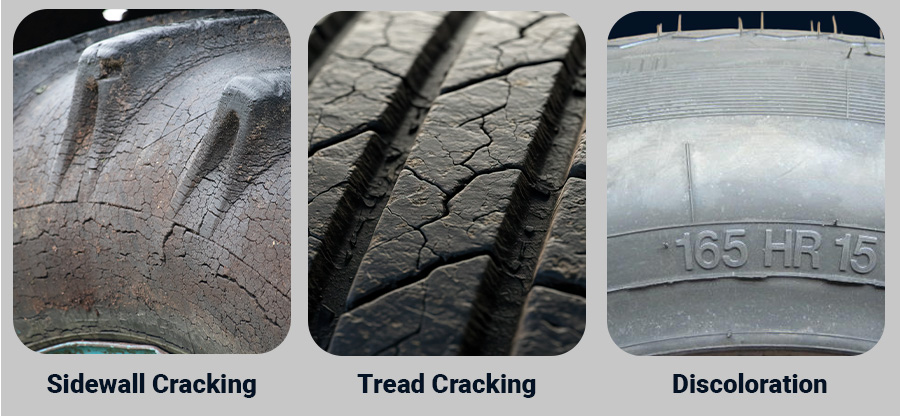
The following levels help determine whether it is cosmetic or dangerous.
| Level | Appearance | Safety | Required Action |
|---|---|---|---|
| Level 1 | Light hairline cracks | Generally safe | Monitor weekly |
| Level 2 | Cracks around full sidewall | Limited use | Replace soon |
| Level 3 | Deep visible splits | Unsafe for highway | Replace immediately |
| Level 4 | Cords visible or bulging | Dangerous | Do not drive |
If cracks form a ring around the tire, the structure is separating.
Can You Drive on Tires With Dry Rot?
Driving on cracked tires depends on severity, speed, and heat.
Emergency Driving Limits
| Dry Rot Level | Max Speed | Recommended Distance |
|---|---|---|
| Level 1 | Normal | Regular driving |
| Level 2 | Under 60 km/h | Short trip only |
| Level 3 | Under 40 km/h | Only to tire shop |
| Level 4 | Do not drive | Tow vehicle |
Risk Factors That Increase Blowout Chance
Hot weather
Highway speeds
Heavy loads
Under inflation
Long continuous driving

Heat dramatically increases failure probability.
What Causes Tire Dry Rot?
Rubber cracking is primarily caused by oxidation over time.
Main accelerators:
Sunlight (UV radiation)
High temperatures
Long parking periods
Low tire pressure
Age
Driving actually slows rubber deterioration because rubber flexing distributes protective oils.
Why Low-Mileage Cars Often Have Worse Tires
A parked vehicle ages tires faster than a daily-driven vehicle.
Movement keeps the rubber conditioned, but stationary tires dry out in one position. Therefore, tire condition depends more on time than mileage.
How Hot Climate Accelerates Tire Aging
In hot regions, however, tire aging accelerates significantly.
A 4-year-old tire in extreme heat may behave like a 7-year-old tire in mild climates.
This is why many tires fail even though they still have deep tread.
How to Check Tire Age (DOT Code)
Every tire has a manufacture date stamped on the sidewall.
Example: DOT 3521
35 = production week
21 = production year

Tire Age Safety Guide
| Age | Recommendation |
|---|---|
| Under 5 years | Normal use |
| 5–6 years | Inspect frequently |
| Over 7 years | Replace |
| Over 10 years | Unsafe regardless of appearance |
Therefore, tire age matters more than mileage.
The Spare Tire Risk
Spare tires often look new but may be the oldest tire on the vehicle.
Because they are rarely used, they commonly exceed safe age limits.
Never trust a spare tire without checking its date.

Can Tire Dry Rot Be Repaired?
No.
Rubber oxidation cannot be reversed once it occurs.
Tire dressings and conditioners only improve appearance.
They do not restore structural strength.
Once cracking appears, the material is permanently weakened.
How To Prevent Tire Cracking
You cannot stop aging completely, but you can slow it.
Best practices:
Drive the vehicle regularly
Maintain correct tire pressure
Park in shade or garage
Move stored vehicles monthly
Clean tires with mild soap only
Avoid petroleum-based tire shine products.
When To Replace Cracked Tires
Replace immediately if:
Cracks are deep enough to feel
Cracks circle the sidewall
Tire is over 7 years old
You plan highway driving
Cords or bulges appear
If unsure — replacement is safer than risk.
Key Takeaway
Tire dry rot weakens the internal structure of a tire, not just the surface rubber. Even if tread depth looks good, cracked tires can fail suddenly, especially at highway speeds. Tires older than 7 years or showing deep sidewall cracks should be replaced immediately for safety.
Author Safety Note:
This guide is based on tire inspection standards used in professional automotive service and manufacturer safety recommendations regarding rubber aging and structural degradation.
Always follow vehicle manufacturer recommendations and consult a professional technician if unsure about tire safety.
Frequently Asked Questions About Tire Dry Rot
What does tire dry rot look like?
IT appears as small cracks on the sidewall or between tread blocks. Early cracks look like thin hairlines, while severe dry rot shows deep splits or exposed cords.
Is tire dry rot dangerous?
Yes. It weakens the tire structure and can cause sudden blowouts, especially at highway speed or in hot weather.
How long can you drive on dry rotted tires?
Only short distances at low speed if cracking is minor. Deep cracks or full sidewall cracking means the tire should not be driven and must be replaced.
What causes tire dry rot?
Heat, sunlight, oxygen exposure, low usage, and aging cause rubber cracking by removing protective oils from the rubber.
Can tire dry rot be repaired?
No. Once rubber cracks from dry rot, the damage is permanent and the tire must be replaced.
“Reviewed by TireGuidePro Automotive Research Team
Content based on manufacturer safety guidelines and professional tire inspection practices”
