



Puncture-Resistant Gloves & Safety Gear for Tire Emergencies
Flat tires can happen at any time, often when drivers least expect them. When dealing with roadside tire problems, safety should always come first. Having the right puncture-resistant gloves & safety gear can help protect you from sharp objects, improve visibility near traffic, and make tire repairs safer.
Many tire emergencies involve handling damaged tires, sharp debris, or tools that can slip. Without proper protection, drivers risk cuts, punctures, or accidents while attempting repairs. Keeping puncture-resistant gloves & safety gear in your vehicle ensures you are prepared to safely handle common roadside tire problems.
This guide explains why puncture-resistant gloves are important, what materials provide protection, and what additional safety gear drivers should carry for tire emergencies.
Why Puncture-Resistant Gloves Matter During Tire Repairs
Tire repair tasks may look simple, but they can expose drivers to hidden hazards. When removing nails from a tire, handling damaged rubber, or loosening tight lug nuts, sharp edges and metal fragments can easily cause injuries.
Common risks during tire emergencies include:
Nails or screws stuck in the tire tread
Sharp steel belts inside damaged tires
Metal fragments from blowouts
Slipping tools while loosening lug nuts
Hot wheel components after driving
Using puncture-resistant gloves & safety gear helps reduce these risks. Gloves provide a protective layer between your hands and sharp objects while also improving grip on tools and tire surfaces.
Drivers who carry protective gloves are better prepared to manage tire emergencies safely.
What Are Puncture-Resistant Gloves?
Puncture-resistant gloves are protective work gloves designed to resist penetration from sharp objects. Unlike basic cloth gloves, they are built using reinforced materials that prevent nails, wires, and metal fragments from piercing through the fabric.
These gloves are commonly used in mechanical work, construction, and automotive repairs. For drivers, they are especially helpful when changing tires or handling damaged wheels.
While no glove can stop every puncture, high-quality puncture-resistant gloves significantly reduce the risk of injury during roadside tire repairs. Combined with proper puncture-resistant gloves & safety gear, they create a safer working environment when dealing with tire problems.
Materials Used in Puncture-Resistant Gloves
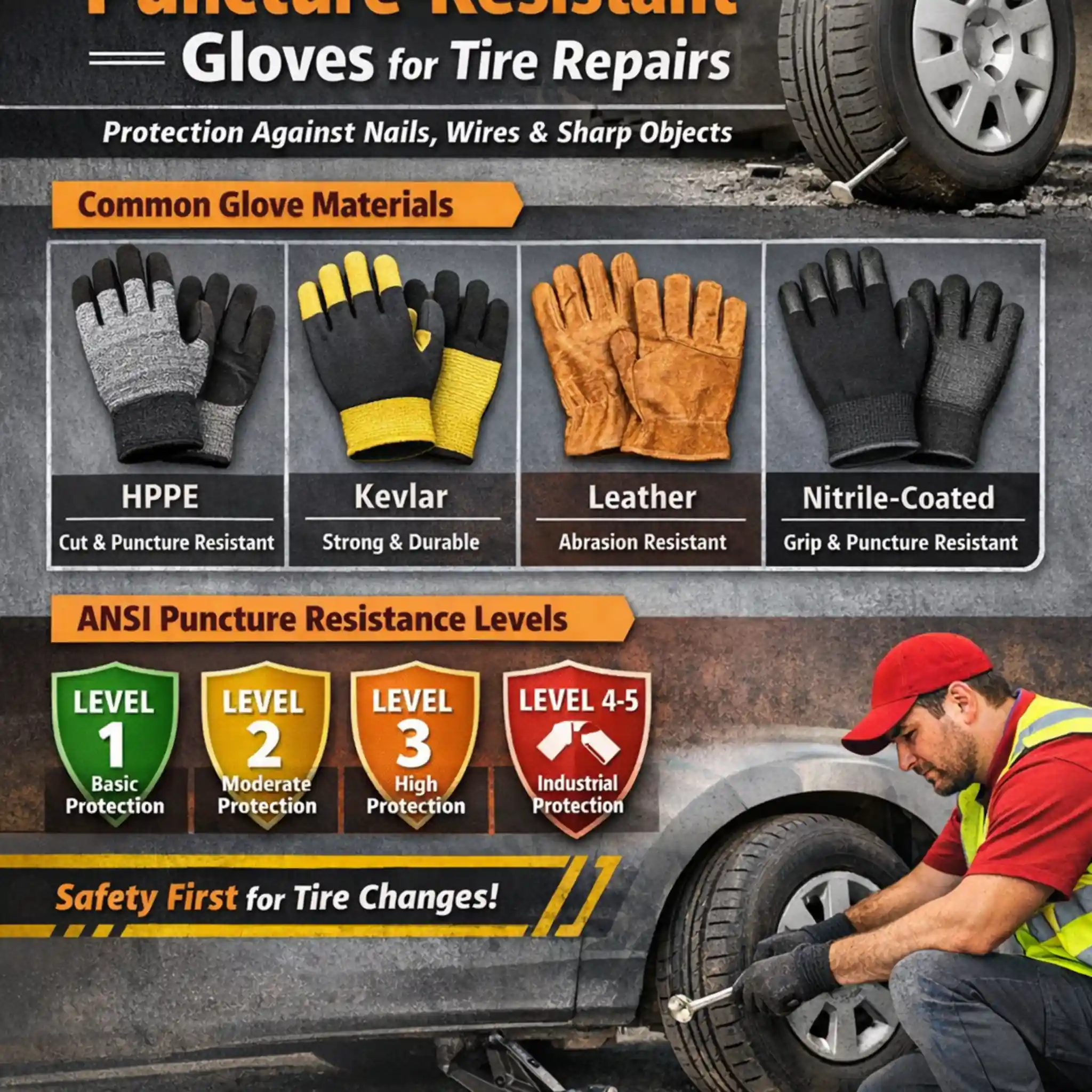
The infographic below shows the most common materials used in puncture-resistant gloves, including HPPE fibers, Kevlar, leather, and nitrile-coated gloves used for tire repair safety.

Different glove materials provide different levels of durability and protection. Understanding these materials helps drivers choose gloves suitable for tire emergencies.
High-Performance Polyethylene (HPPE)
HPPE fibers are extremely strong while remaining lightweight and flexible. Gloves made with HPPE are commonly used for mechanical and automotive tasks because they offer both puncture and cut resistance.
Kevlar or Para-Aramid Fibers
Kevlar fibers are widely used in protective equipment because of their durability and resistance to cuts and heat. Gloves made with Kevlar provide strong protection when handling sharp metal objects or damaged tires.
Leather Work Gloves
Leather gloves are often used in automotive repair. They provide good abrasion resistance and a strong grip when lifting heavy wheels or handling tools.
Nitrile-Coated Gloves
Some gloves combine durable fabrics with nitrile coatings. These coatings improve grip and offer better resistance to punctures and oils.
Choosing gloves made from durable materials ensures your puncture-resistant gloves & safety gear provide effective protection during roadside repairs.
Puncture Resistance Safety Ratings Explained
Protective gloves are often tested using safety standards that measure their resistance to puncture hazards.
One widely used system is the ANSI puncture resistance rating, which measures how much force is required to penetrate the glove material.

Typical levels include:
Level 1: Basic protection
Level 2–3: Moderate protection for mechanical work
Level 4–5: High protection for industrial environments
For roadside tire repairs, gloves with Level 2 or Level 3 protection usually provide the best balance between protection and flexibility.
Drivers should choose gloves that allow them to grip tools easily while still providing strong puncture protection.
Essential Safety Gear for Tire Emergencies
Protective gloves are only one part of roadside safety. Drivers should also carry additional puncture-resistant gloves & safety gear to reduce risks when working near traffic.
Reflective Safety Vest
A reflective safety vest makes you visible to other drivers, especially during nighttime tire repairs or in low-visibility conditions.
Flashlight or Headlamp
Tire problems often occur in dark environments. A flashlight or headlamp helps illuminate the wheel area so you can safely inspect damage and use repair tools.
Warning Triangles or Road Flares
Warning triangles or flares alert approaching drivers that your vehicle is stopped due to an emergency. Placing them behind your car helps prevent accidents while you work on the tire.
Mechanic Gloves
Mechanic gloves provide additional grip and protection when loosening lug nuts or installing a spare tire.
Together, these items form a complete set of puncture-resistant gloves & safety gear for roadside tire emergencies.
Choosing the Right Gloves for Tire Emergencies
Not all gloves are suitable for roadside repairs. When selecting puncture-resistant gloves, drivers should consider several factors.
Proper Fit
Gloves should fit snugly without being too tight. A good fit improves grip and control when handling tools.
Strong Grip
Textured palms or coated materials help prevent tools from slipping while working on the tire.
Flexibility
Flexible gloves allow easier movement when removing lug nuts or lifting heavy wheels.
Durability
Gloves designed for mechanical work are more durable than lightweight household gloves.
Choosing the right gloves ensures your puncture-resistant gloves & safety gear will provide reliable protection during tire emergencies.
Roadside Safety Tips for Tire Repairs
Even with proper equipment, drivers should follow basic safety practices when handling tire emergencies.
Important safety tips include:
Pull over to a safe and flat location away from traffic
Turn on hazard lights immediately
Place warning triangles behind the vehicle
Wear a reflective vest before exiting the car
Use protective gloves while handling tools or damaged tires
Following these steps helps reduce risks when performing roadside tire repairs.
Tire Emergency Safety Checklist
Before taking long drives, make sure your vehicle includes these items:
✔ Puncture-resistant gloves
✔ Reflective safety vest
✔ Flashlight or headlamp
✔ Warning triangles or road flares
✔ Tire pressure gauge
✔ Portable air compressor
✔ Tire repair kit
✔ Car jack and lug wrench
Keeping these items together ensures your puncture-resistant gloves & safety gear are ready whenever a tire emergency occurs.
Conclusion
Tire emergencies can expose drivers to sharp objects, dangerous traffic conditions, and difficult repair situations. Having the right puncture-resistant gloves & safety gear helps reduce these risks and makes roadside tire repairs much safer.
By carrying protective gloves, reflective safety equipment, and basic repair tools, drivers can handle common tire problems with greater confidence. Preparing your vehicle with essential puncture-resistant gloves & safety gear ensures you are ready for unexpected situations on the road.
Frequently Asked Questions
Are puncture-resistant gloves necessary for tire emergencies?
Puncture-resistant gloves are not mandatory, but they provide important protection when handling nails, metal fragments, or damaged tires during roadside repairs.
What type of gloves are best for changing a tire?
Gloves made with durable materials such as HPPE fibers, Kevlar, or leather are commonly recommended for automotive work and tire repairs.
Do puncture-resistant gloves prevent all injuries?
No glove can completely eliminate puncture risks, but high-quality gloves significantly reduce the chance of injury while handling sharp objects.
What other safety gear should drivers carry for tire emergencies?
Drivers should keep reflective vests, warning triangles, flashlights, and basic tire repair tools in their vehicle.
Can puncture-resistant gloves be reused?
Yes. Most puncture-resistant gloves are designed for repeated use. However, they should be replaced if they become worn or damaged.
