


How Weather Impacts Tire Performance (Cold, Heat & Rain Explained)
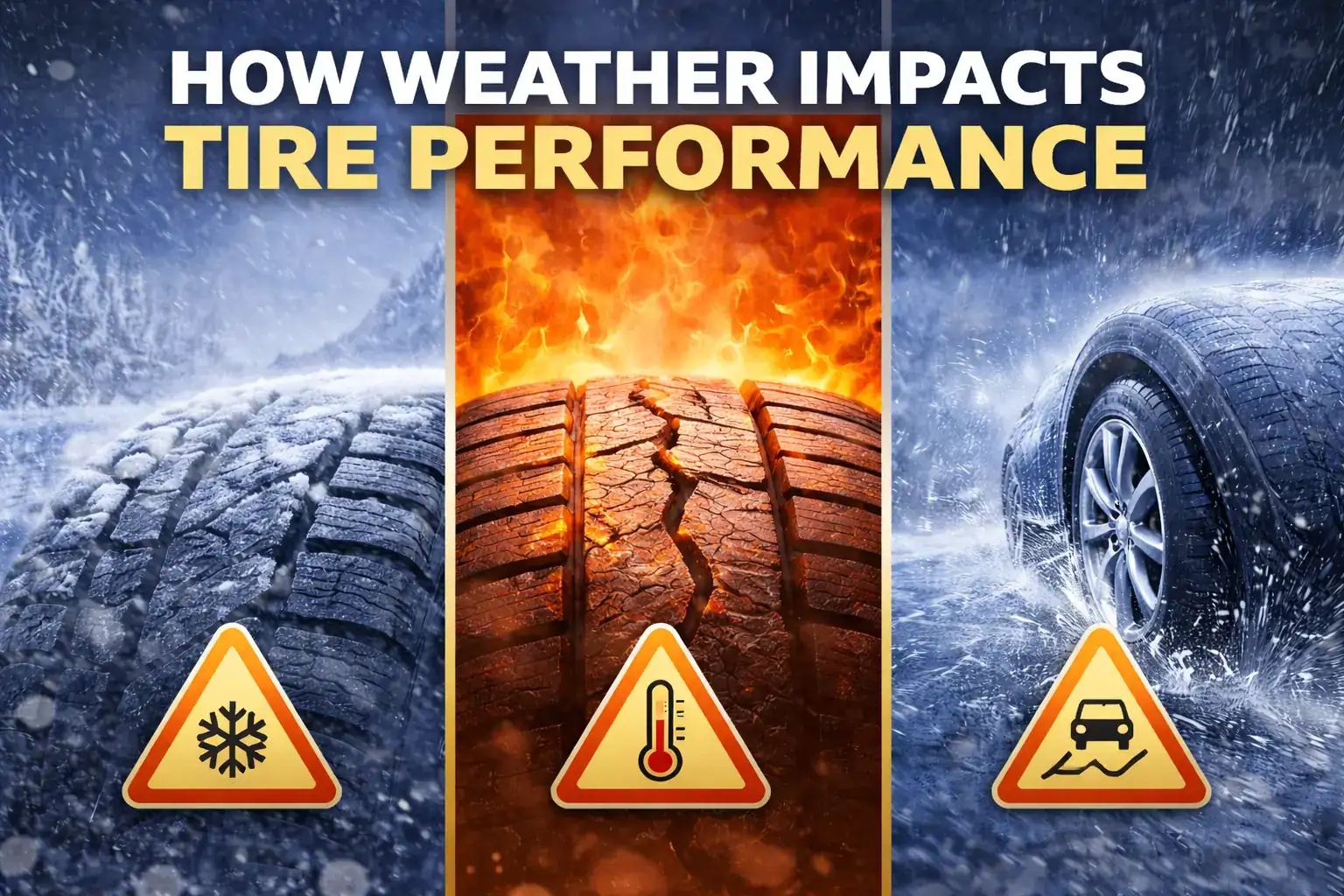
Weather affects more than visibility and road conditions — it directly changes how your tires behave. How weather impacts tire performance depends on temperature, moisture, and air pressure interacting with rubber compounds and tread design. Cold stiffens rubber and reduces grip, heat increases internal stress and wear, and rain raises hydroplaning risk. These changes influence braking distance, steering stability, and overall driving safety.
How Weather Impacts Tire Performance: The Science Behind It
Tires are engineered to operate within specific temperature ranges. The rubber compound inside every tire is a blend of polymers, silica, oils, and reinforcing materials. These ingredients determine flexibility, durability, traction, and heat resistance.
When environmental conditions change, the physical properties of that compound change as well.
Cold temperatures reduce elasticity.
Heat increases internal stress.
Moisture reduces contact with pavement.
Air pressure fluctuates with temperature.

Tire performance is not static. It reacts continuously to the environment.
Cold Weather Tire Performance: Why Rubber Stiffens Below 45°F
When temperatures fall below approximately 45°F (7°C), many summer and standard all-season tires begin to stiffen.
At lower temperatures, the polymer chains within the rubber compound lose flexibility. The tire becomes firmer and less capable of conforming to microscopic imperfections in the road surface. Because traction relies on that conformity, grip decreases.
The result is:
Longer braking distances
Reduced cornering stability
Lower overall traction — even on dry pavement
This is why cold weather tire performance depends heavily on compound flexibility.

Winter tires are engineered with higher silica content and cold-resistant polymers that remain pliable in freezing conditions. This flexibility allows the tread to maintain road contact on cold asphalt, snow, and ice.
The widely referenced 45°F rule exists for this reason. When daily temperatures consistently remain below that threshold, winter tires provide measurable braking and handling advantages over all-season alternatives.
Cold pavement alone — even without visible snow — can reduce traction significantly.
Tire Pressure and Temperature: The Overlooked Variable
Understanding how weather impacts tire performance also requires understanding tire pressure.
Air inside a tire expands and contracts based on temperature. As a general guideline:
For every 10°F drop in temperature, tire pressure decreases by about 1 PSI.
For every 10°F increase, pressure rises approximately 1 PSI.
In winter, pressure loss can lead to underinflation. Underinflated tires flex more, increasing rolling resistance and internal heat generation. Excess flexing can accelerate wear and reduce traction.
In hot weather, pressure increases can reduce the tire’s contact patch if inflation levels were already near maximum. Reduced contact area may affect grip during emergency maneuvers.
Seasonal pressure checks are not optional. They are essential to maintaining optimal tire performance in changing weather.
Tires in Hot Weather: Heat Stress and Blowout Risk
Cold stiffens rubber. Heat softens it.
When pavement temperatures exceed 120°F — common in summer sun — internal tire stress increases. Heat accelerates chemical degradation within the rubber compound. Oxidation and oil migration occur faster, reducing long-term durability.
In extreme heat:
Tread wear accelerates
Internal structural stress increases
Blowout risk rises, especially with underinflation
Heat-related failures often result from prolonged stress combined with improper tire pressure.
Summer tires are engineered with heat-resistant compounds that maintain stability at higher temperatures. However, these compounds perform poorly in cold weather.
Matching tire type to climate conditions directly influences safety margins.
Rain and Hydroplaning Risk: When Water Reduces Contact
Rain affects tire performance differently than temperature.
When driving on wet roads, a thin layer of water forms between the tire and pavement. Tread grooves must evacuate water efficiently to maintain surface contact.
Hydroplaning occurs when water builds faster than it can be dispersed. At that moment, the tire loses direct contact with the road.
Hydroplaning risk depends on:
Speed
Tread depth
Water depth
Tire design
Inflation pressure
Once tread depth drops below approximately 4/32 inch, wet braking performance declines sharply.
Silica-rich compounds improve wet grip by maintaining flexibility and enhancing microscopic adhesion to damp surfaces.
Weather impacts tire performance not only through temperature — but also through moisture dynamics.
The Interaction Effect: Weather + Compound + Pressure
Many articles treat cold, heat, and rain as separate topics. In reality, these elements interact.
Cold weather reduces pressure and stiffens rubber simultaneously.
Hot weather increases pressure while accelerating compound degradation.
Rain combined with worn tread and incorrect pressure dramatically increases hydroplaning risk.
Tire performance operates as a system. Compound behavior, inflation level, and road surface conditions work together.
Ignoring one variable while focusing on another can create dangerous blind spots.
Real-World Driving Outcomes
Weather-related tire changes directly affect:
Emergency braking distance
Steering response
Stability during lane changes
Fuel efficiency
Cold-weather traction loss increases stopping distances.
Heat stress increases failure probability.
Wet conditions reduce steering control if tread depth is insufficient.
Understanding how weather impacts tire performance allows drivers to make informed decisions about seasonal switching, pressure monitoring, and tire selection.
Why “All-Season” Is Not “All-Conditions”
All-season tires are compromise products. They aim to perform adequately across a wide range of environments but are not optimized for extremes.
In sustained freezing climates, winter tires outperform them in braking performance. In extremely hot climates, summer-specific compounds resist wear more effectively.

Choosing the right tire depends on climate patterns — not labels.
Seasonal Tire Strategy Based on Temperature
Rather than waiting for snowfall, monitor average temperature trends.
When daily temperatures consistently remain below 45°F, cold-weather compounds become advantageous.
When spring temperatures stabilize above that level, switching back reduces premature wear.
Drivers in moderate climates may benefit from all-weather tires carrying the Three-Peak Mountain Snowflake symbol, which indicates certified winter traction capability.
Seasonal decisions should follow temperature consistency — not calendar dates.
Final Takeaway
How weather impacts tire performance is rooted in physics and chemistry.
Cold reduces compound flexibility.
Heat increases internal stress.
Rain reduces road contact.
Temperature changes alter air pressure.
Each factor influences braking distance, handling precision, and overall safety.
By understanding these interactions — and adjusting tire choice and pressure accordingly — drivers can maintain optimal traction regardless of season.
Your tires respond to weather instantly.
The question is whether your strategy does.
Frequently Asked Questions
How does weather impact tire performance overall?
Weather affects tire compound flexibility, internal air pressure, tread contact, and water evacuation. Cold stiffens rubber, heat accelerates wear, and rain increases hydroplaning risk.
Why do tires lose pressure in cold weather?
Cold air contracts. For every 10°F drop, tire pressure decreases by roughly 1 PSI, leading to underinflation if not adjusted.
Is hot weather dangerous for tires?
Yes. High pavement temperatures increase internal stress, accelerate rubber degradation, and raise blowout risk — especially if tires are underinflated.
How does rain affect tire grip?
Rain creates a water layer between the tire and pavement. If tread cannot evacuate water quickly enough, hydroplaning may occur, reducing steering and braking control.
At what temperature do winter tires become necessary?
When average daily temperatures consistently remain below 45°F (7°C), winter tires provide improved traction and shorter braking distances.
Does tire pressure affect traction?
Absolutely. Incorrect pressure changes the tire’s contact patch, increases wear, and reduces grip in both cold and hot conditions.
