



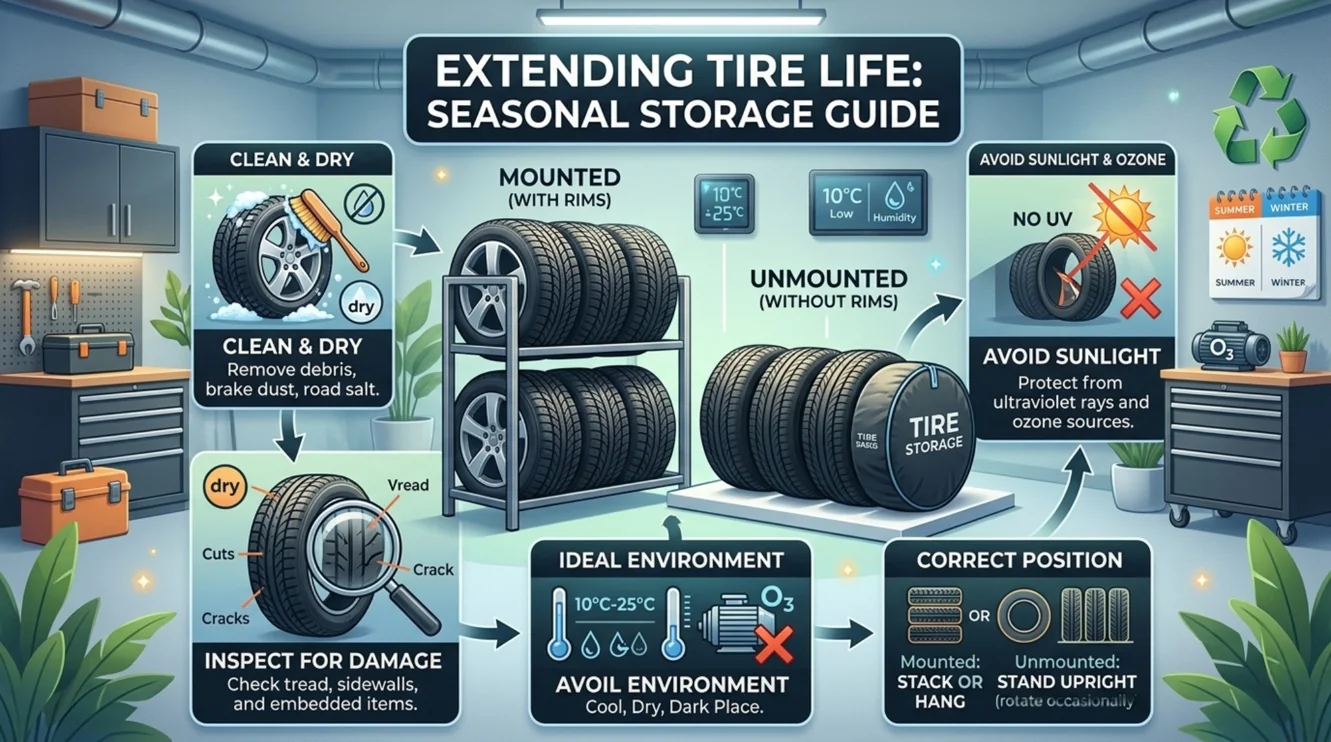
Seasonal tire changes are common in regions with winter and summer driving conditions. However, many drivers overlook an important step after removing seasonal tires: learning how to store tires properly during the off-season. Proper tire storage protects the rubber compound, prevents structural damage, and helps extend overall tire lifespan.
How to store tires properly:
Tires should be stored in a cool, dry environment away from sunlight and ozone sources. Mounted tires can be stacked horizontally, while unmounted tires should be stored upright.
Understanding how to store tires properly during the off-season helps protect the rubber compound, prevent structural damage, and extend tire lifespan. Even when tires are not in use, environmental factors such as oxygen, heat, ultraviolet light, and ozone slowly degrade rubber materials.
Improper storage can cause:
rubber cracking
flat spots
loss of elasticity
premature tire aging
This guide explains the correct methods for off-season tire storage, based on manufacturer guidelines and tire engineering principles.
Why Learning How to Store Tires Properly Matters
Tires are made from complex rubber polymers designed to withstand temperature changes, road friction, and heavy loads. However, rubber compounds naturally degrade over time due to chemical reactions.
The primary factors that cause tire aging include:
oxygen exposure (oxidation)
ultraviolet radiation
ozone
heat
moisture
These factors slowly break down rubber molecules, reducing flexibility and grip.
Proper tire storage helps slow these processes and protects tires from unnecessary damage. It also ensures tires perform safely when they are reinstalled the following season.
If you want to understand the full lifecycle of tires, including aging and environmental effects, see our guide on tire lifespan, storage and environmental impact.
Step 1: Clean Tires Before Storage
Before storing tires for several months, they should be cleaned thoroughly.
Road debris, brake dust, salt, and oils can remain on the tire surface and accelerate rubber deterioration during long storage periods.
How to clean tires before storage
Wash tires with mild soap and water
Remove stones or debris trapped in tread grooves
Avoid petroleum-based tire cleaners
Allow tires to dry completely
Cleaning tires prevents chemical contamination and moisture buildup during storage.
Step 2: Inspect Tires for Damage
Off-season storage is also a good time to inspect tires for potential problems.
Look for:
cuts or punctures
sidewall cracks
uneven tread wear
embedded nails or debris
low tread depth
If a tire shows significant damage or excessive wear, replacing it before the next season may be safer than storing it.
Step 3: Choose the Right Storage Environment
The environment where tires are stored significantly affects their longevity.
Ideal tire storage conditions
Tires should be stored in a location that is:
cool
dry
clean
protected from sunlight
A climate-controlled garage, basement, or indoor storage room is usually ideal.
Recommended storage temperature
Most tire manufacturers recommend storing tires within the range of:
10°C to 25°C (50°F to 77°F)
Extreme heat accelerates rubber oxidation, while large temperature fluctuations can cause material stress.
Choosing the right storage location is one of the most important parts of how to store tires properly, because temperature and sunlight strongly affect rubber aging.
Step 4: Protect Tires from Sunlight, Heat & Ozone
Environmental exposure is one of the main causes of rubber aging.
Avoid direct sunlight
Ultraviolet radiation breaks down rubber polymers and can lead to sidewall cracking.
Avoid ozone exposure
Ozone reacts with rubber compounds and can create small cracks that weaken the tire structure.
Common ozone sources include:
electric motors
generators
compressors
furnaces
battery chargers
Whenever possible, store tires away from these devices.
Step 5: Use Tire Storage Bags
Sealing tires in airtight plastic bags helps reduce exposure to oxygen and ozone.
Benefits of tire storage bags include:
reduced oxidation
protection from moisture
protection from sunlight
slower rubber aging
Large garbage bags or specialized tire storage totes work well.
Removing excess air from the bag before sealing can further slow chemical aging.
Step 6: Store Tires in the Correct Position
How tires are positioned during storage depends on whether they are mounted on wheels.
Should Tires Be Stored With Rims or Without Rims?
The correct tire storage method depends on whether the tires are mounted on wheels or removed from them.
Tires Stored With Rims
Tires mounted on wheels can be stored:
stacked horizontally
hung on tire racks
stored on wall-mounted hooks
Stacking mounted tires helps distribute weight evenly and prevents distortion because the wheel supports the tire structure.
Many tire professionals prefer stacking mounted tires for long-term seasonal storage.
Tires Stored Without Rims
Tires that are not mounted on wheels should be stored:
upright
slightly rotated every few weeks
Storing unmounted tires upright helps prevent sidewall deformation. Stacking them can cause the lower tires to compress under the weight of the tires above.

Why Storage Position Matters
Incorrect storage position can lead to:
tire deformation
uneven rubber stress
flat spots
reduced tire lifespan
Following the correct storage position helps maintain the tire’s shape and structural integrity until the next season.
Step 7: Prevent Flat Spots During Long Storage
Flat spots occur when tires remain under load for extended periods without movement.
The tire’s contact area compresses, creating temporary deformation.
Ways to prevent flat spots
increase tire pressure slightly
move the vehicle periodically
store the vehicle on jack stands
These methods reduce stress on the tire carcass and maintain its shape.
Common Tire Storage Mistakes

Many drivers unintentionally shorten tire lifespan due to improper storage practices.
Avoid these mistakes
storing tires outdoors
exposing tires to sunlight
stacking unmounted tires
storing tires near heat sources
leaving tires dirty during storage
Following correct storage methods can significantly extend tire lifespan.
How Long Tires Can Be Stored
Tires stored in proper conditions can remain usable for several years.
However, rubber aging continues slowly even when tires are not used.
Most tire manufacturers recommend replacing tires:
after six years of service, or
no later than ten years from the manufacturing date
You can determine tire age by reading the DOT code on the sidewall.
Tire Storage and Environmental Responsibility
Proper tire storage also has environmental benefits.
Extending tire lifespan reduces the number of tires that enter the waste stream each year.
Globally, over one billion tires reach end-of-life annually, creating significant recycling challenges.
By storing tires correctly and replacing them only when necessary, drivers help reduce tire waste and environmental impact.
Frequently Asked Questions
How should tires be stored during the off-season?
Tires should be stored in a cool, dry environment away from sunlight and ozone sources. Mounted tires can be stacked horizontally, while unmounted tires should be stored upright.
Can tires be stored outside?
Outdoor storage is not recommended. Sunlight, moisture, and temperature fluctuations accelerate rubber aging and can damage tires.
Do tires expire in storage?
Yes. Tires gradually degrade over time due to oxidation and environmental exposure, even if they are not used.
Should tires be stored inflated?
Mounted tires may remain inflated, although slightly reducing pressure can help relieve stress during long storage periods.
How long can tires be stored safely?
If stored correctly, tires may remain usable for several years. However, most manufacturers recommend replacing tires within six to ten years depending on age and condition.
Conclusion
Learning how to store tires properly during the off-season is essential for preserving tire performance and safety.Cleaning tires, protecting them from sunlight and ozone, storing them in a stable environment, and positioning them correctly can significantly extend their lifespan.
Proper storage also helps reduce unnecessary tire waste and supports more sustainable vehicle maintenance practices.
By following these guidelines, drivers can ensure their seasonal tires remain safe and ready for the next driving season.
