



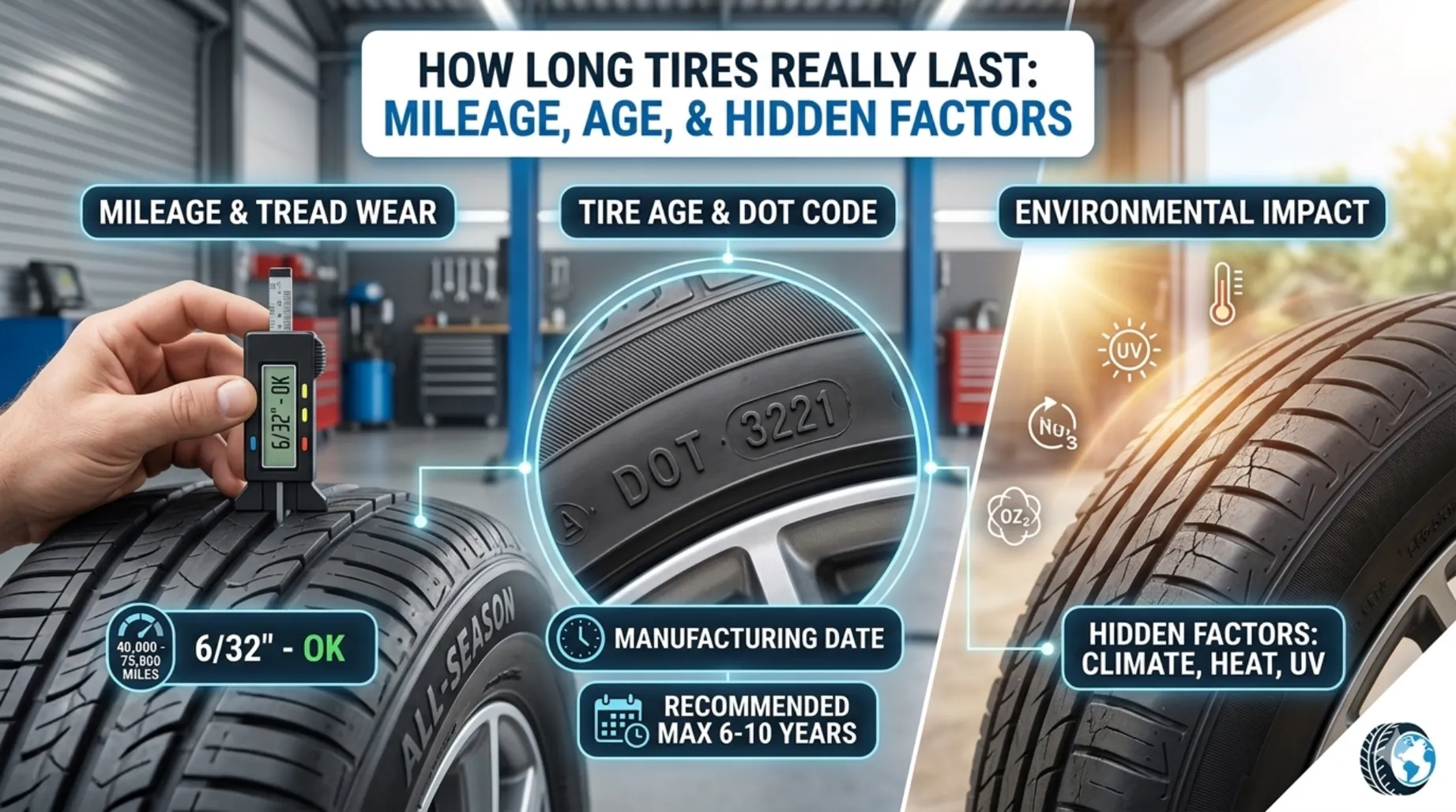
How Long Tires Really Last: Mileage, Age, and Hidden Factors
Understanding how long tires really last is essential for vehicle safety, cost control, and environmental responsibility. If you want to understand the complete tire life cycle, including storage and environmental impact, see our guide on tire lifespan, storage and environmental impact. Many drivers assume tires last until the tread wears out, but tire lifespan depends on several factors including age, climate, driving habits, and maintenance.
Most modern passenger tires are designed to last between 40,000 and 75,000 miles, but mileage alone does not determine how long a tires remain safe to use. Rubber compounds gradually degrade due to oxygen exposure, heat cycles, ultraviolet radiation, and environmental conditions.
This guide explains what factors shorten or extend tire life, and how drivers can identify when replacement becomes necessary.
Average Tire Lifespan: Miles vs Years

Most passenger vehicle tires last within a predictable mileage range depending on tire type and driving conditions.
Typical tire lifespan estimates:
All-season tires: 50,000–70,000 miles
Touring tires: 60,000–80,000 miles
Performance tires: 30,000–50,000 miles
Winter tires: 20,000–40,000 miles
However, tire manufacturers also recommend considering time-based aging.
General manufacturer recommendations include:
Inspect tires after five years of use
Replace tires after six years of service
Avoid using tires older than ten years
Even if tread depth appears acceptable, aging rubber compounds can lose elasticity and traction.
Tire Age vs Tread Wear
One of the biggest misconceptions about tire lifespan is that tread depth alone determines when a tire should be replaced.
In reality, tire age can be just as important as tread wear.
Tread Wear
Tread gradually decreases as tires grip the road surface.
Important tread depth guidelines include:
6/32 inch – recommended for winter traction
4/32 inch – reduced wet grip begins
2/32 inch – legal minimum tread depth
As tread becomes shallower, water evacuation decreases and braking distances increase.
Tire Aging
Rubber compounds slowly degrade due to chemical reactions.
Primary aging factors include:
oxygen (oxidation)
ozone exposure
ultraviolet radiation
repeated heat cycles
As tires age, rubber becomes harder and less flexible, reducing traction and increasing cracking risk.
Because of this process, a tire with good tread may still be unsafe if it is too old.
Factors That Affect Tires Lifespan
Many variables influence tire lifespan beyond mileage alone.
Driving Style
Aggressive driving significantly increases tire wear.
Examples include:
rapid acceleration
hard braking
sharp cornering
high-speed driving
These actions increase friction and heat buildup, accelerating tread wear.
Tire Maintenance
Proper maintenance can extend tire life by thousands of miles.
Important practices include:
maintaining correct tire pressure
rotating tires every 5,000–7,000 miles
balancing wheels
correcting alignment issues
Underinflated tires increase rolling resistance and wear faster.
Climate and Environmental Impact on Tire Lifespan

Climate plays a major role in determining tire lifespan, particularly in regions with extreme heat, freezing winters, or strong ultraviolet exposure.
Hot climates
High temperatures accelerate chemical degradation in rubber compounds.
Drivers in regions with extreme heat often experience:
faster tread wear
increased rubber hardening
shorter tire lifespan
Cold climates
Freezing temperatures can stiffen rubber compounds and reduce traction.
Winter road salt can also accelerate corrosion and tire degradation.
UV exposure
Sunlight contains ultraviolet radiation that slowly breaks down rubber polymers.
Vehicles parked outdoors for long periods may experience faster sidewall cracking.
Because of these environmental effects, geographic location directly influences tire longevity.
Signs Tires Are Reaching the End of Their Lifespan

Drivers should inspect tires regularly for early warning signs of aging, structural damage or excessive tread wear.
Common indicators include:
visible sidewall cracks
uneven tread wear
vibration during driving
frequent air pressure loss
bulges or deformities
These symptoms may indicate internal structural damage or advanced rubber aging.
Ignoring these signs can increase the risk of tire failure or blowouts.
How to Check Tire Age Using the DOT Code
Every tire includes a manufacturing date code printed on the sidewall.
This code appears after the letters DOT.
Example:
This means the tire was manufactured:
week 32
year 2021
The final four digits always represent week and year of production.
Checking the DOT code helps drivers determine the true age of their tires.
How Tire Storage Affects Lifespan
Tire storage is an often overlooked factor in determining overall tires life expectancy.
Improper storage conditions can accelerate rubber degradation.
Correct tire storage conditions include:
cool environment (10–25°C / 50–77°F)
dry and ventilated location
protection from sunlight
minimal exposure to ozone sources
Tires stored improperly may develop:
flat spots
sidewall cracks
rubber hardening
Proper storage can significantly extend usable tire life.
Tire Wear and Microplastic Pollution
A rarely discussed aspect of tire lifespan is tire wear pollution.
As vehicles drive, microscopic rubber particles are released from tire surfaces.
These particles:
enter road dust
wash into waterways
contribute to microplastic pollution
Recent environmental research suggests tire wear particles are among the largest sources of transportation-related microplastics.
Longer-lasting tires and improved tire compounds may help reduce this environmental impact.
Financial Cost of Short Tire Lifespan
Premature tire wear can significantly increase vehicle operating costs.
Examples include:
replacing tires earlier than expected
increased fuel consumption
suspension damage from uneven wear
Underinflated tires alone can reduce fuel efficiency by 3–5 percent.
Proper maintenance and safe driving habits can help drivers maximize tire lifespan and reduce long-term costs.
Conclusion
Understanding how long tires really last requires looking beyond simple mileage estimates. Tire lifespan depends on tread wear, age, maintenance practices, climate conditions, and driving behavior.
Regular tire inspections, proper maintenance, and correct storage practices can significantly extend tire life while improving vehicle safety.
At the same time, longer-lasting tires help reduce environmental waste and microplastic pollution from tire wear.
By paying attention to both mileage and tire age, drivers can make safer and more sustainable decisions about tire replacement.
Frequently Asked Questions
How long do tires really last on average?
Most passenger vehicle tires last between 40,000 and 75,000 miles depending on tire quality, driving habits, and maintenance practices.
Do tires expire even if they still have tread?
Yes. Tires can become unsafe due to rubber aging, even if tread depth appears adequate. Many manufacturers recommend replacing tires after six years of use.
How can I check the age of my tires?
Check the DOT code on the tire sidewall. The last four digits represent the manufacturing week and year.
Example: DOT 3221 means the tire was made in week 32 of 2021.What factors shorten tire lifespan?
Common factors include:
aggressive driving
poor tire pressure maintenance
wheel misalignment
extreme climate conditions
rough road surfaces
Can proper maintenance extend tire life?
Yes. Maintaining correct tire pressure, rotating tires regularly, and keeping wheels aligned can significantly increase tire lifespan.
