


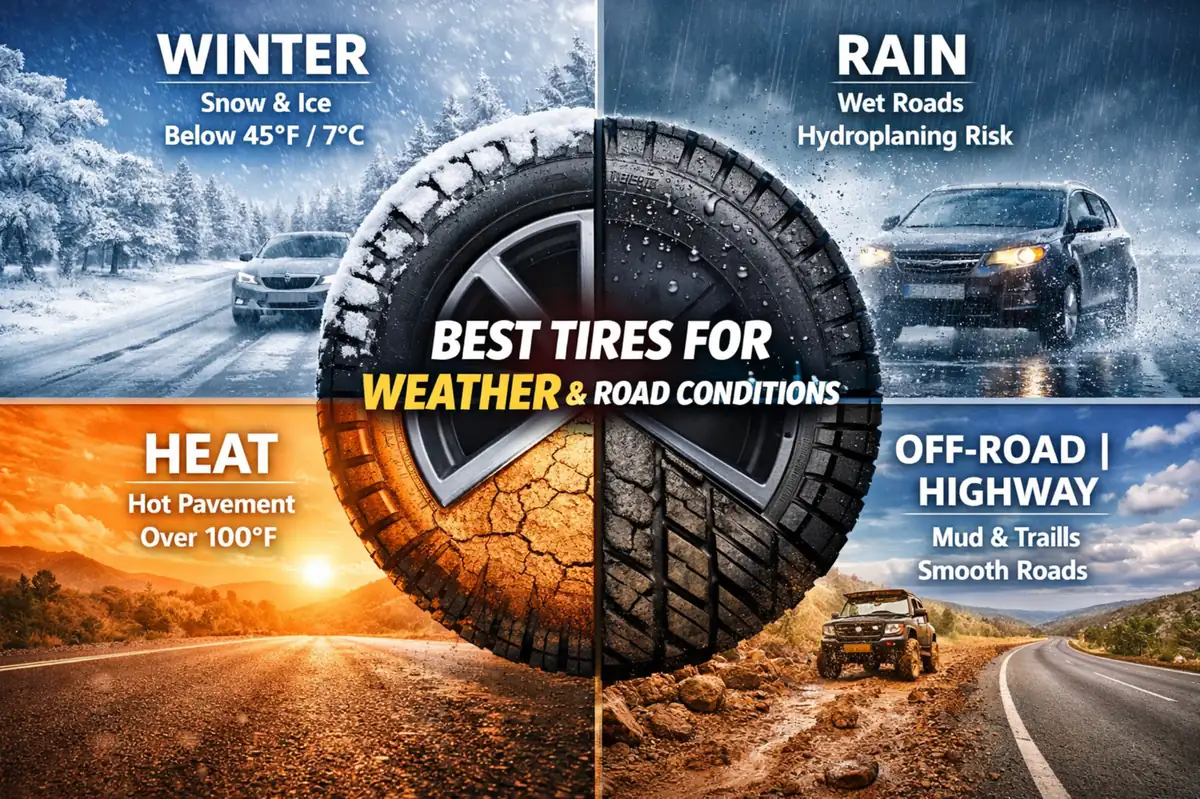
Choosing the best tires for weather and road conditions is not just about comfort. It directly affects braking distance, traction, and vehicle stability.
Most drivers think about tread pattern. However, the real difference between seasonal tires begins inside the rubber compound. Temperature changes how rubber behaves. That behavior determines how safely your vehicle accelerates, corners, and most importantly, stops.
This guide explains how weather impacts tire performance, when you truly need winter tires, and how to build a safe seasonal tire strategy based on climate — not guesswork.
How Weather Impacts Tire Performance
Tires are engineered for specific temperature ranges.
Below 45°F (7°C), traditional summer and many all-season tires begin to stiffen. When rubber hardens, it cannot conform to the microscopic texture of the road surface. As a result, traction decreases and braking distances increase — even on dry pavement.

Cold temperature tire performance depends on compound flexibility. Winter tires use special rubber blends that remain pliable in freezing conditions. This flexibility improves grip on cold asphalt, snow, and ice.
On the other hand, high heat creates a different risk. When pavement temperatures exceed 120°F, internal tire stress increases. Excess heat accelerates rubber degradation and increases blowout risk, especially if the tire is underinflated.
Moisture adds another layer of complexity. During heavy rain, tires must evacuate water quickly to prevent hydroplaning. Without proper tread depth and channel design, a vehicle can lose contact with the road surface.
Weather changes tire behavior more than most drivers realize.
Winter Tires vs All-Season vs All-Weather Tires
Understanding the difference between winter tires vs all-season and all-weather tires is essential for safe driving.
Winter tires are designed specifically for cold weather performance. Most carry the Three-Peak Mountain Snowflake (3PMSF) symbol, which certifies winter traction capability. They provide superior grip in snow, slush, and icy conditions because their compounds remain flexible in freezing temperatures.
All-season tires aim to provide balanced performance throughout the year. However, they are a compromise solution. In extreme cold, their rubber becomes firmer than winter tires, reducing braking performance.
All-weather tires bridge the gap. They carry the 3PMSF rating but are engineered for year-round use. In regions with mild winters, they provide better snow traction than all-season tires without requiring seasonal changeovers.
However, in climates with prolonged freezing temperatures, dedicated winter tires remain the safest option.
The difference is not marketing language. It is temperature engineering.
When You Actually Need Winter Tires
Many drivers wait for visible snowfall before installing winter tires. This approach is outdated.
The real trigger is sustained temperature.
If your region experiences consistent temperatures below 45°F for weeks or months, winter tires provide measurable braking advantages. Independent testing consistently shows shorter stopping distances compared to all-season tires in cold conditions.
Mountain roads, shaded highways, and early morning commutes increase risk. Ice can form even when roads appear dry.
All-wheel drive does not replace winter tires. AWD improves acceleration, but braking performance depends entirely on tire grip.
If your climate remains cold for extended periods, winter tires are not optional — they are appropriate.
The comparison below shows how different tire types perform in rain and snow conditions.

Driving in Rain, Ice, and Slush
Driving in rain and snow presents different traction challenges.
Rain creates a thin water layer between the tire and pavement. When water cannot escape quickly enough, hydroplaning occurs. Hydroplaning risk increases significantly once tread depth falls below 4/32 inch.
Wet-weather tires use high-silica compounds and deep circumferential grooves to improve water evacuation and maintain contact with the road.
Ice is even more demanding. Winter tires contain thousands of sipes that create biting edges for additional grip. Studded tires, where legal, enhance ice traction but increase road noise and pavement wear.
Slush combines elements of snow and water. Tires must clear heavy, semi-liquid buildup efficiently. In some cases, narrower tires perform better in slushy conditions because they apply more pressure per square inch.
Weather-specific performance is not just about tread pattern — it is about compound chemistry and channel design.
Tires for Hot & Extreme Climates
Tires for hot weather require different engineering priorities.
In extreme heat, pavement temperatures can exceed 140°F. Heat accelerates compound breakdown and increases structural stress. Underinflation compounds the problem by generating additional internal friction.
Summer tires are built with heat-resistant compounds that maintain stability at high temperatures. They provide excellent dry traction and steering precision. However, their performance drops sharply in cold weather.
Drivers in consistently hot climates benefit from tires optimized for heat durability and strong wet braking during sudden summer storms.
Proper tire pressure maintenance becomes critical in high heat. Temperature fluctuations affect pressure, and incorrect inflation increases failure risk.
Extreme climates demand climate-specific tire choices.
Off-Road vs Highway Tire Differences in Seasonal Conditions
Off-road and highway tires respond differently to weather.
All-terrain and mud-terrain tires feature aggressive tread blocks for loose surfaces. However, large void areas may reduce surface contact on wet highways, increasing stopping distance.
Highway touring tires prioritize consistent contact patch and efficient water evacuation. As a result, they often perform better in heavy rain than aggressive off-road tires.
Drivers who rely on all-terrain tires during winter should verify the presence of the 3PMSF rating. Without it, snow traction may be weaker than expected.
Appearance does not determine seasonal safety — engineering does.
Seasonal Tire Change Timing (The 45°F Rule)
A practical seasonal strategy relies on temperature consistency.
When daily average temperatures remain below 45°F (7°C), winter tires outperform all-season alternatives. When temperatures consistently rise above that threshold, switching back prevents premature wear.
Waiting too long in autumn can leave drivers exposed to early frost. Delaying spring changeovers accelerates winter tire degradation.
Store off-season tires in a cool, dry, UV-protected environment to prevent compound aging.
Seasonal timing should follow temperature trends, not isolated weather events.
Can You Use Winter Tires Year-Round?
Technically, yes.
However, winter tires wear significantly faster in warm temperatures. Their softer compounds reduce handling precision and may slightly lower fuel efficiency.
In moderate climates, all-weather tires may provide a better year-round balance. In severe winter regions, seasonal switching remains the safest and most cost-effective approach.
Choosing the best tires for weather and road conditions depends on climate patterns — not convenience.
Frequently Asked Questions
What are the best tires for weather and road conditions overall?
The best option depends on climate. Winter tires are best for sustained cold, all-weather tires work well in mild winters, and summer tires perform best in hot climates.
Are all-season tires safe in snow?
They can handle light snow but provide longer braking distances compared to winter tires in freezing temperatures.
When should I switch to winter tires?
Switch when average daily temperatures consistently remain below 45°F (7°C).
How does heat affect tire safety?
High temperatures accelerate rubber degradation and increase blowout risk, especially if tires are underinflated.
What tread depth is safe for rain driving?
Replacing tires before tread depth reaches 4/32 inch significantly improves hydroplaning resistance.
Final Takeaway
Weather is the single most important factor influencing tire performance.
Cold stiffens rubber. Heat stresses internal structure. Water reduces contact. Ice demands flexibility. Slush requires efficient evacuation.
The best tires for weather and road conditions are not universal — they are climate-specific.
A thoughtful seasonal tire strategy improves braking, stability, and long-term tire lifespan. More importantly, it provides a critical safety margin when road conditions change unexpectedly.
